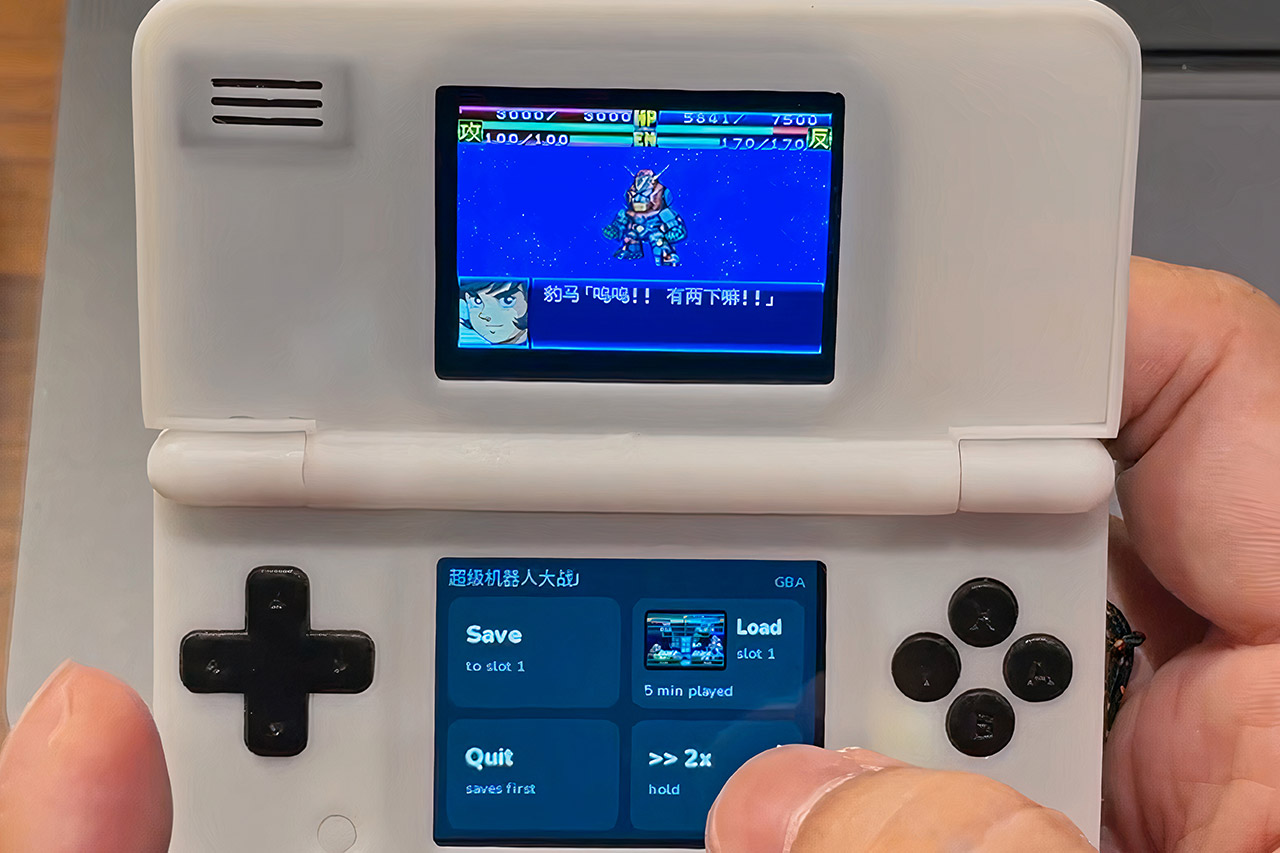
Ivan has spent months hand-assembling a clamshell, called LILVO, that closes to 85 by 46 by 18 millimeters, roughly the footprint of a bank card and about twice the size of a FunKey S. Both halves carry independent IPS screens locked to the original Nintendo DS resolution of 256 by 192 pixels, so Nintendo DS games render one-to-one without scaling or black bars. A steel pin runs through the real hinge, a Hall sensor watches the lid, and the whole shell snaps together with only four screws.
Opening the lid turns on the device, while closing it saves any progress you’ve made and shuts down, ensuring you don’t lose anything. Inside, you’ll find an Allwinner T113 dual-core processor, a 1200mAh battery, a secret SD card slot, a USB-C connector, and a 3.5mm headphone socket. The shoulder buttons, d-pad, face buttons, and capacitive screen on the lower screen are all functional on the first prototype, which was assembled in mid-November. DraStic allows you to boot up DS titles on both screens, but other systems, such as the Game Boy, GBA, NES, and PS1, employ open source cores and provide a convenient quick-access menu on the bottom screen for storing, loading, and fast forwarding.

- Save $37.98 on everything you need to play with this bundle
- Includes Nintendo Switch 2, the most powerful Nintendo system yet
- Includes the Mario Kart World digital game download
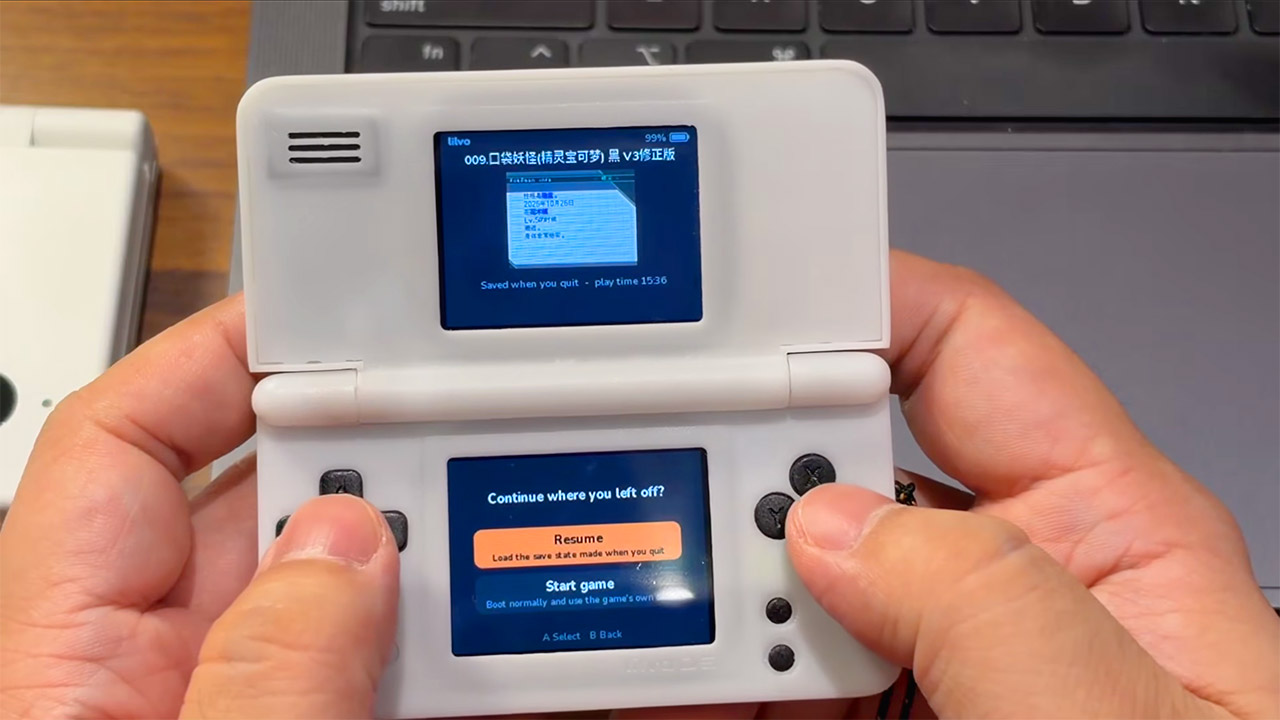
The LILVO System launcher, which is based on Linux and linked to the FunKey OS, shows each console as a miniature spinning 3D model on the top screen, with games displayed as cartridges below. You may customize the design with four different themes, ranging from a warm, nostalgic look to a more modern monochrome style. With no SD card slot since the board is simply too small, you may instead connect it to your computer and it will serve up a local webpage at lilvo.local. From there, you may drag and drop games, covers, saves, bios files, and firmware updates, with the added benefit of automatic backups prior to any modifications.
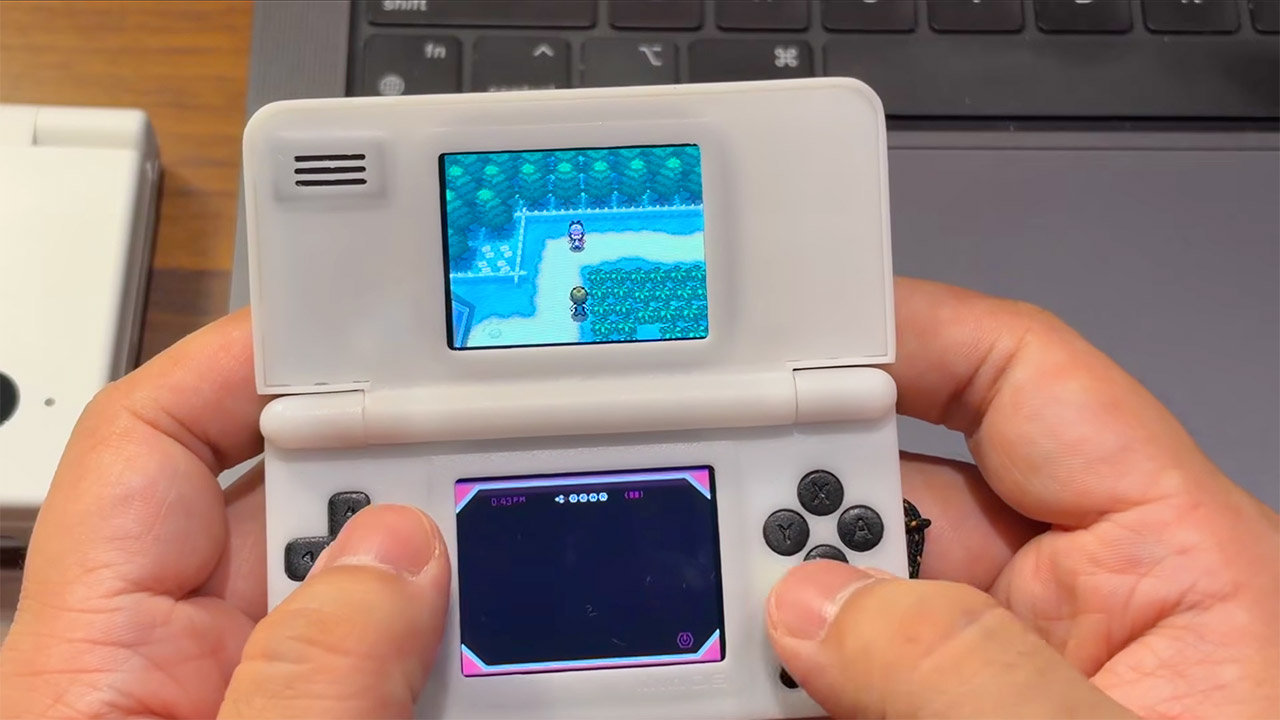
You can play Pokémon Black on both screens at once, while Super Robot Wars J runs in native GBA resolution. The shell’s design files will be made publicly available soon, so anybody can try to fix or rebuild the snap-together case. Right now, the white prototype is a little rough in places and could use some more oomph from the speakers and better button travel, but Ivan still plays with it every day as this project moves closer to production and the promise of a proper, dual-screen handheld.