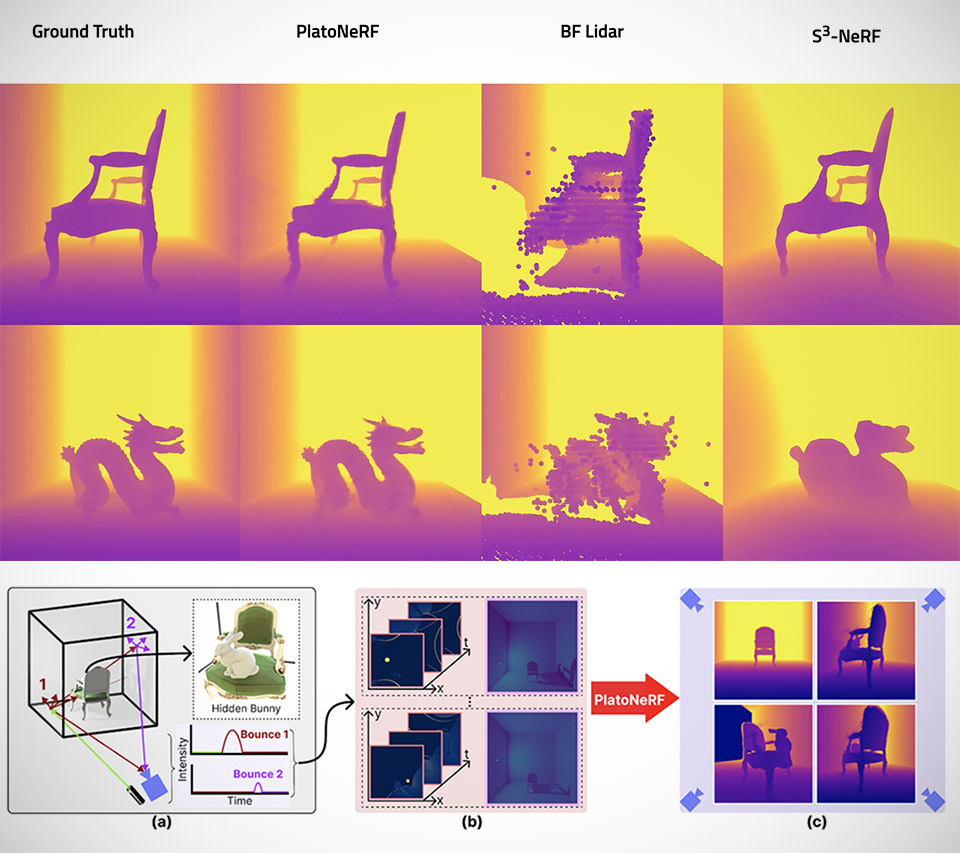
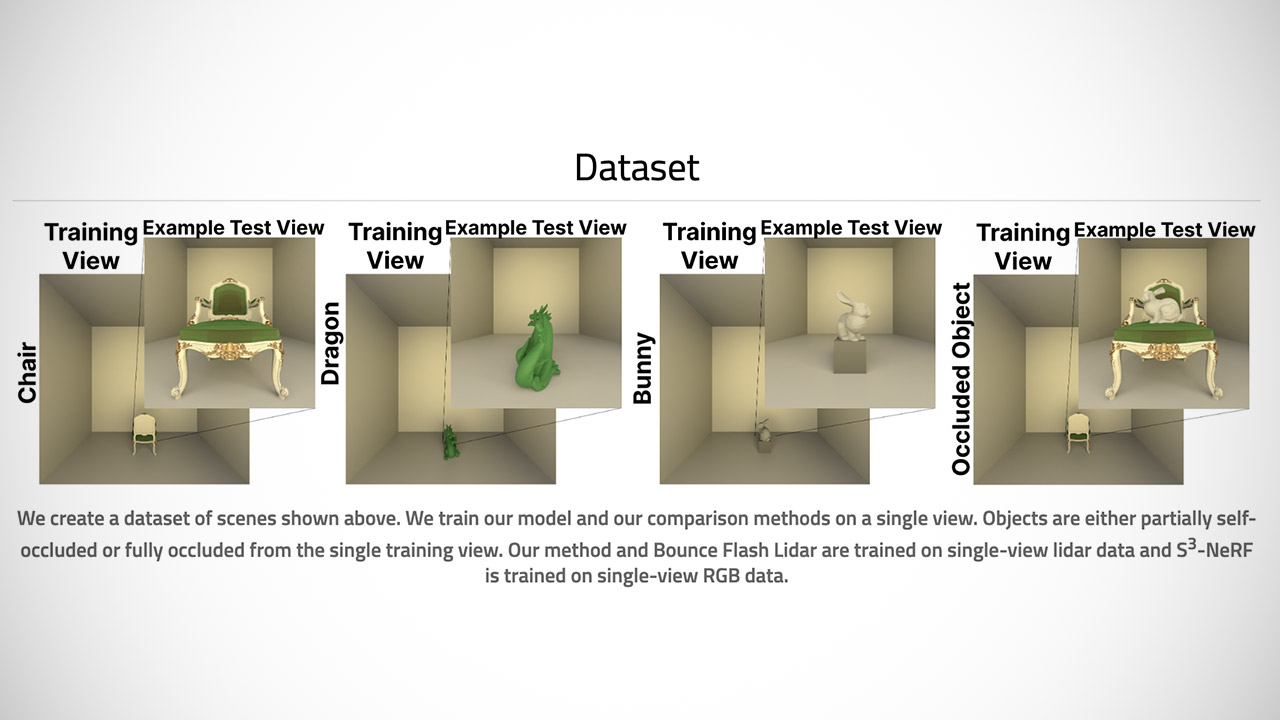
MIT and Meta researchers have developed PlatoNeRF, an AI-powered computer vision technique that can use shadows to model 3D scenes, including objects blocked from view.
Its name may be based on Plato’s allegory of the cave, but the technique combines LiDAR (light detection and ranging) technology with machine learning. This enables PlatoNeRF to generate more accurate reconstructions of 3D geometry than some existing AI techniques. In the real world, it could make AR/VR headsets more efficient by enabling a user to model the geometry of a room without needing to walk around taking measurements.
- GO THE DISTANCE: Withstand whatever adventure with the wildly reliable T7 Shield; It’s designed for the elements with water1, dust2 and drop...
- YOUR CONTENT CAPTURED: Take on the project, then transfer all your heavy files within seconds with the USB 3.2 Gen 2 Portable Solid-State Drive...
- SHARE IDEAS IN A FLASH: The T7 is embedded with PCIe NVME technology that brings you fast read and write speeds up to 1,050/1,000 MB/s4, making it...
Our key idea was taking these two things that have been done in different disciplines before and pulling them together — multibounce lidar and machine learning. It turns out that when you bring these two together, that is when you find a lot of new opportunities to explore and get the best of both worlds,” said Tzofi Klinghoffer, an MIT graduate student in media arts and sciences.