
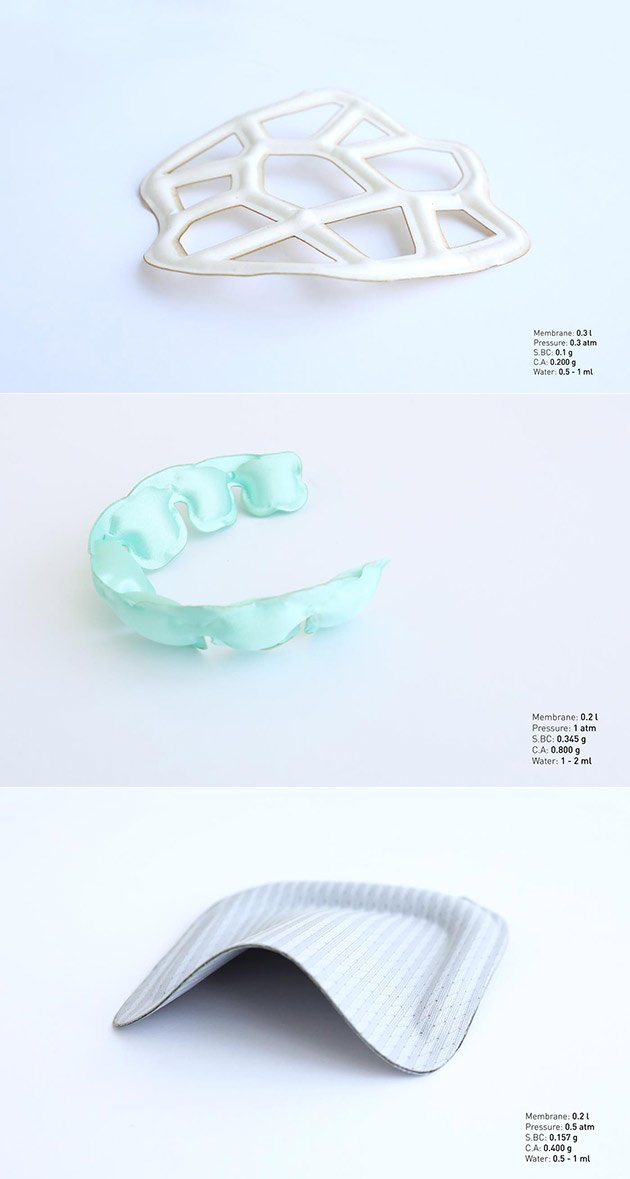

MIT researchers reveal their latest project, “auto-inflatables,” which explores the design space of self-inflating structures. How do they work? Well, by using chemical reactions as a source of carbon dioxide on-demand, the team was able to induce a wide range of interaction-triggered transformations in their designs, including changes of shape, volume, texture, temperature, color, and movement.
With these techniques, self-contained actuation can be achieved without the need for external hardware to activate material changes, making them great in safety devices (helmets, vests, etc.). The possibilites for these auto-inflatable structures are endless, especially in the medical field where access to materials can be scarce in emergency scenarios.

- Resume Printing Function: no worry to the immediate power outage or electric circuit error, Ender 3 has the ability to resume printing even after a...
- Creality Ender 3 3d printer, it is the most basic 3d printer model, more students and beginners can learn the 3d printer by this model, it can help to...
- Advanced Extruder Technology: Ender 3 upgraded extruder greatly reduces plugging risk and bad extrustion; V-shape with POM wheels make it move...

