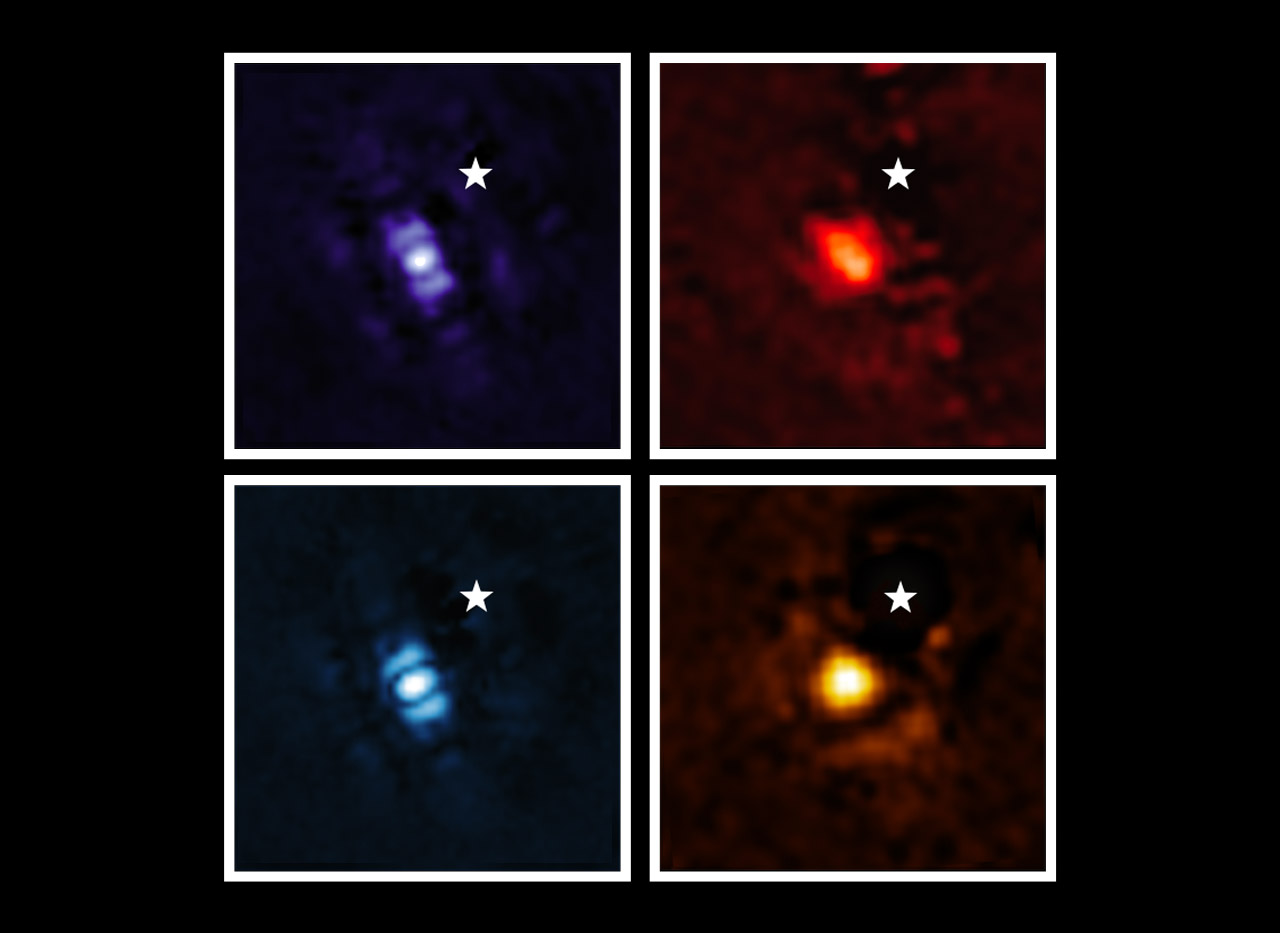

For the first time ever, NASA’s James Webb Space Telescope (JWST) has captured the first direct image of an exoplanet outside of our solar system, called HIP 65426 b. It’s approximately 6-12 times the mass of Jupiter, and as young as exoplanets can be (15-20 million years old), especially when compared to our 4.5-billion-year-old Earth.

This exoplanet was first observed using ESO’s SPHERE instrument with the Very Large Telescope in Chile, but Webb’s view provides us with a better view at longer infrared wavelengths./ The images reveal new details that ground-based telescopes normally would not be able to detect because of Earth’s intrinsic infrared glow from its atmosphere. Why does HIP 65426 b appear more clear than other exoplanets captured previously? It lies 100-times farther from its host star than Earth is from the Sun, enabling Webb to easily separate the planet from the star in the image. JWST should definitely capture an image of this rocky 10-billion-year-old Super Earth.

- LEGO NASA Space Set - This adult LEGO set features the Space Shuttle Discovery and the Hubble Space Telescope from NASA’s 1990 STS-31 mission...
- Solar System Exploration - Unlock the mysteries of our solar system with this engaging 2,354-piece project, packed with authentic details and...
- Shuttle Features Galore - The space shuttle model has an opening payload bay, retractable landing gear, opening cockpit, moving elevons, space arm...
This is a transformative moment, not only for Webb but also for astronomy generally. It was really impressive how well the Webb coronagraphs worked to suppress the light of the host star,” said Sasha Hinkley, associate professor of physics and astronomy at the University of Exeter in the United Kingdom.