NASA used their LCRD (Laser Communications Relay Demonstration) to send pet photos to the ILLUMA-T (Integrated LCRD Low Earth Orbit User Modem and Amplifier Terminal) on the space station at 1.2 gigabits per second, much faster than most home internet speeds.
The media began their journey on a computer at a mission operations center in Las Cruces, New Mexico. From there, technicians routed the data to optical ground stations in California and Hawaii. Teams then modulated the data onto lasers and sent the signals to NASA’s LCRD (Laser Communications Relay Demonstration) located 22,000 miles above Earth in geosynchronous orbit. Lastly, the LCRD relayed the data to ILLUMA-T (Integrated LCRD Low Earth Orbit User Modem and Amplifier Terminal), a payload currently mounted on the outside of the ISS.

- ADVANCED TECH MEETS ICONIC DESIGN: The NexStar 6SE pairs Celestron’s legendary orange tube with a fully computerized GoTo system—ideal for those...
- 6-INCH SCHMIDT-CASSEGRAIN OPTICS: The large 6" aperture gathers enough light to reveal fine lunar details, cloud bands on Jupiter, and deep-sky...
- FULLY AUTOMATED GoTo MOUNT WITH NEXSTAR+ HAND CONTROL: Use the NexStar+ hand control to select from a 40,000+ object database. The computerized mount...
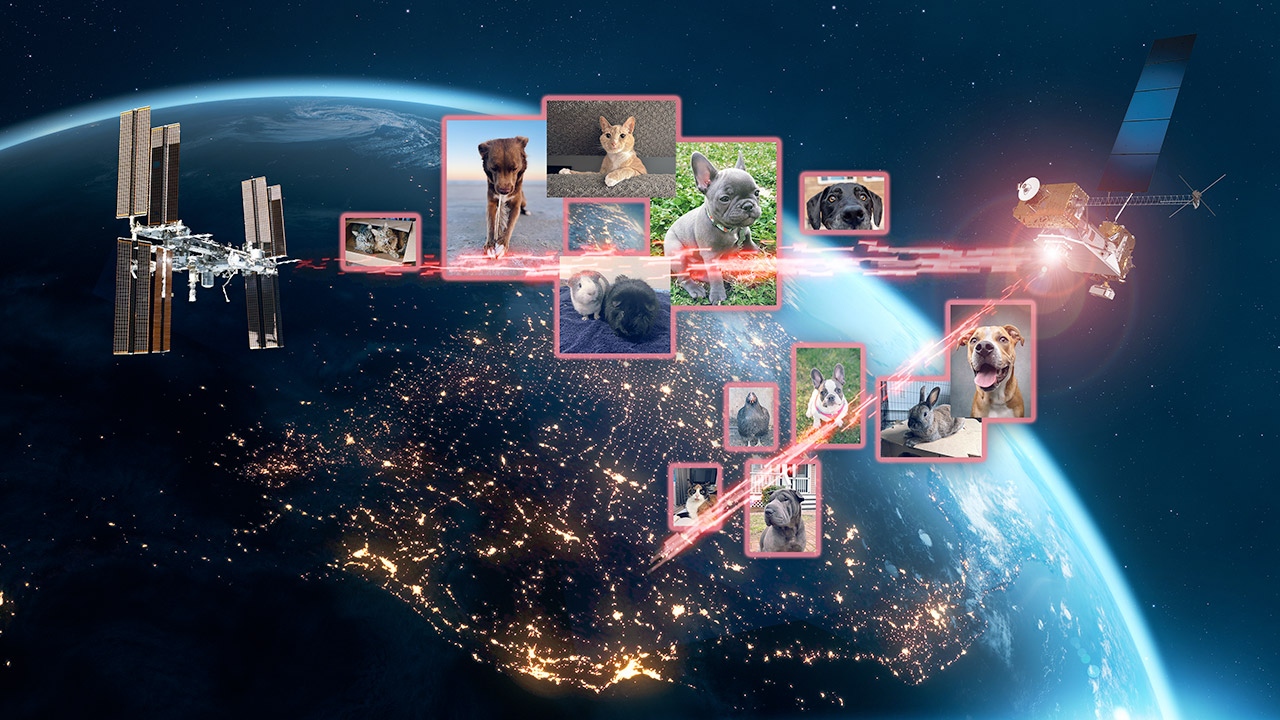

The pet imagery campaign has been rewarding on multiple fronts for the ILLUMA-T, LCRD, and HDTN teams. Not only have they demonstrated how these technologies can play an essential role in enabling NASA’s future science and exploration missions, it also provided a fun opportunity for the teams to “picture” their pets assisting with this innovative demonstration,” said Kevin Coggins, deputy associate administrator and SCaN program manager at NASA Headquarters in Washington.