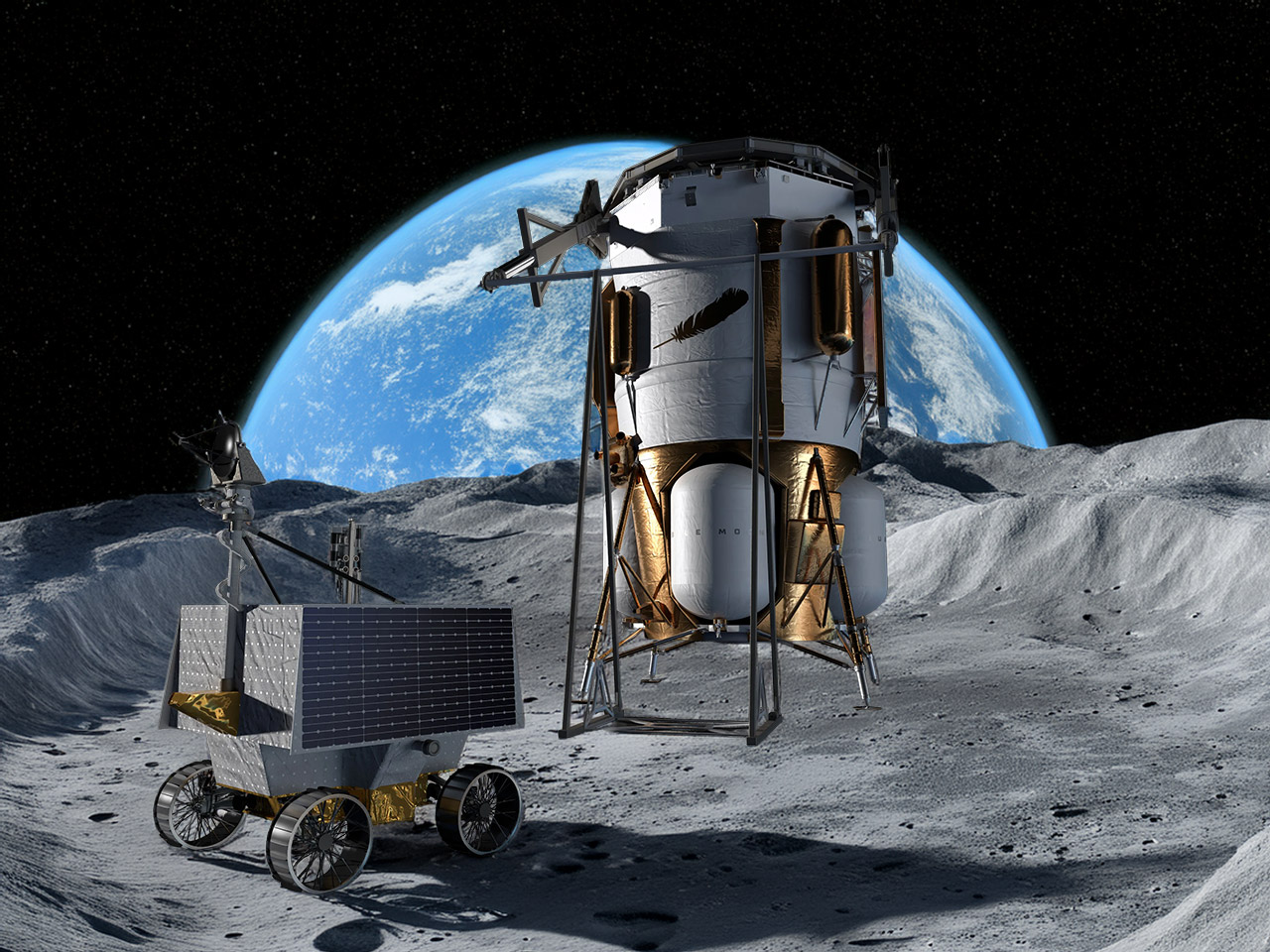
NASA’s Volatiles Investigating Polar Exploration Rover, or VIPER, is back from the dead. After being cancelled in 2024 and pissing off scientists and lawmakers, NASA has contracted Blue Origin to take this golf cart sized rover to the moon’s south pole in late 2027. This is part of NASA’s Commercial Lunar Payload Services (CLPS) program and is a big step towards unlocking the moon’s secrets and paving the way for humans to live off the land in space.
VIPER’s mission is simple but bold: find and analyze water ice and other resources at the moon’s south pole. This isn’t about taking pictures or planting flags. The rover, about the size of a small car, will spend 100 days roaming the lunar surface, avoiding craters and enduring extreme cold in permanently shaded areas where the sun never shines. VIPER, with a drill and three spectrometers, will dig into the lunar soil for water, hydrogen and minerals. Water ice may be processed into drinking water, breathable oxygen, and even rocket fuel. Knowing where these resources are and how to obtain them is critical to NASA’s Artemis project to establish a permanent human presence on the Moon. VIPER’s data will assist identify where future astronauts should camp, transforming the moon into a stepping stone for further space missions such as Mars.

- NASA rocket model kit – Launch into a creative project with the LEGO Icons NASA Artemis Space Launch System model building project for adult space...
- What’s in the box? – This creative building set includes everything you need to craft a multistage rocket with 2 solid-fuel boosters, an Orion...
- Features and Functions – This NASA-themed rocket model features retractable launch tower umbilicals, rocket support and crew bridge, detachable...
Blue Origin’s involvement in this mission is significant since the company, founded by Jeff Bezos, has been building its lunar credentials and this is their second CLPS task order. Their Blue Moon Mark 1 lander, a robotic workhorse, will deliver VIPER to the lunar surface after successfully completing a mission later this year. That first mission will carry NASA’s Stereo Cameras for Lunar-Plume Surface Studies and a Laser Retroreflective Array to the same south pole location. If that goes well, NASA will greenlight VIPER to ride on a second Mark 1 lander which is already in production. Blue Origin’s responsibilities go beyond the drop off; they will build the cargo accommodations and ensure the rover is safely deployed on the moon. Meanwhile, NASA will take over rover operations and science planning with teams from the Ames Research Center and Johnson Space Center leading the charge.
VIPER was scheduled to travel aboard Astrobotic’s Griffin lander for $199.5 million in 2020. Despite the fact that the majority of the rover had already been built, NASA decided to abandon the mission in July 2024 due to delays and cost overruns. Scientists were upset, as VIPER data was critical to understanding the moon’s resources and the evolution of the solar system. NASA didn’t sit idle. By August they were putting out a call to CLPS vendors to find a way to get VIPER to the moon without breaking the bank. Blue Origin was the only one to respond, likely because VIPER’s 450 kg weight rules out smaller landers like Firefly Aerospace or Intuitive Machines. Astrobotic was committed to other customers and declined to bid. NASA’s “base plus option” contract structure is a clever hedge: Blue Origin is paid to build and test the lander’s accommodations now, but the final approval for the landing is contingent on their first mission’s success.
Why the lunar south pole? It’s a scientific and practical goldmine. The region’s permanently shadowed craters are thought to contain water ice, frozen deep in the cold where temperatures can drop below -200°C. These are tough places to explore – dark, harsh and unforgiving – but they’re critical to NASA’s long term goals. Water ice is about more than just survival; it’s about long term sustainability. Hauling resources from Earth is expensive so using what’s already on the moon could save a lot of money on future trips. VIPER’s 100 day sprint will map these deposits, giving scientists a better picture of where the ice is and where it’s accessible. Beyond practical applications, the rover’s discoveries will shed light on how water and other volatiles got to the moon, and the processes that shaped the solar system.