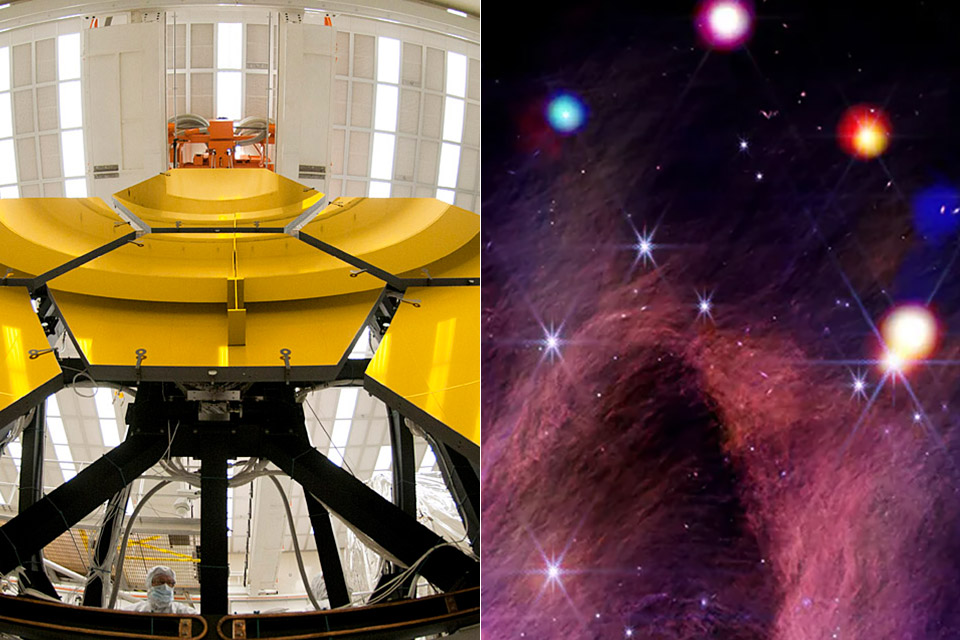
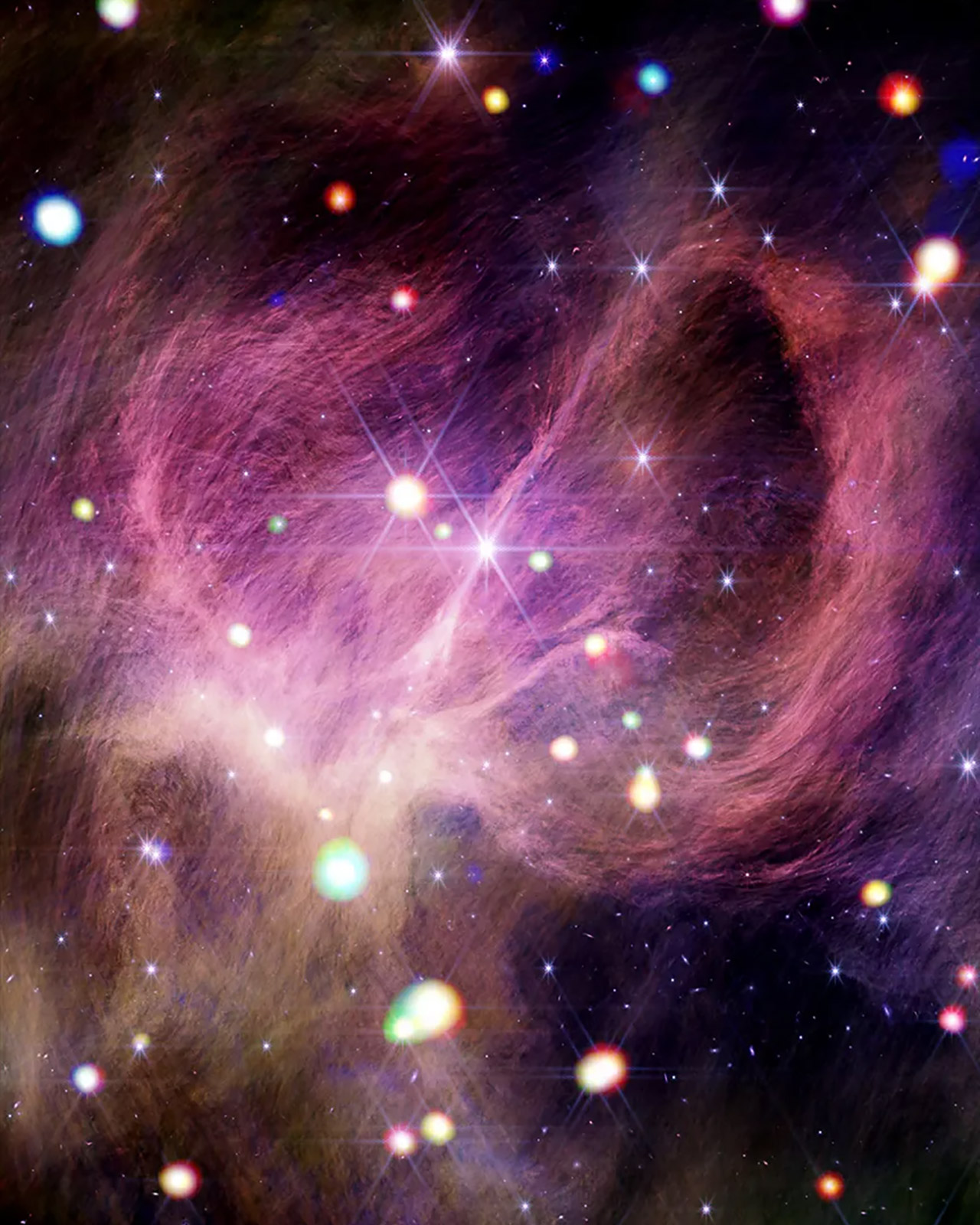
A thousand light-years away, in the constellation Perseus, a cosmic nursery is humming with life. NASA’s James Webb Space Telescope and Chandra X-ray Observatory have imaged IC 348, a star-forming region in our Milky Way, and it’s a beautiful picture of galactic creation.
IC 348 is a small star nursery nestled in our galaxy, about half a light-year across. Webb’s Near-Infrared Camera (NIRCam) shows wispy filaments—interstellar material that glows softly as it reflects the light of new stars. Astronomers call these pink, orange, and purple structures a reflection nebula. Unlike nebulae that emit their own light, this one is a cosmic mirror, reflecting the light of the stars inside it. This ethereal haze contains carbon-based chemicals called polycyclic aromatic hydrocarbons (PAHs) which add chemical richness to the image and hint at the complex materials that will one day seed planets.

- Superior Optics: 400mm(f/5.7) focal length and 70mm aperture, fully coated optics glass lens with high transmission coatings creates stunning images...
- Magnification: Come with two replaceable eyepieces and one 3x Barlow lens.3x Barlow lens trebles the magnifying power of each eyepiece. 5x24 finder...
- Wireless Remote: This refractor telescope includes one smart phone adapter and one Wireless camera remote to explore the nature of the world easily...
In the center of this cluster, a pair of B-type stars—massive, blazing giants—rule the roost. These twin stars, locked in a gravitational waltz, are IC 348’s heavyweights, their stellar winds forming a stunning loop in the right half of the nebula. They outshine the dozens of smaller stars scattered across the scene, each a point of light with its own story of formation. Chandra’s X-ray vision adds another layer by painting young stars in red, green and blue. These X-rays show the high-energy tantrums of stars in their youth as they mature.
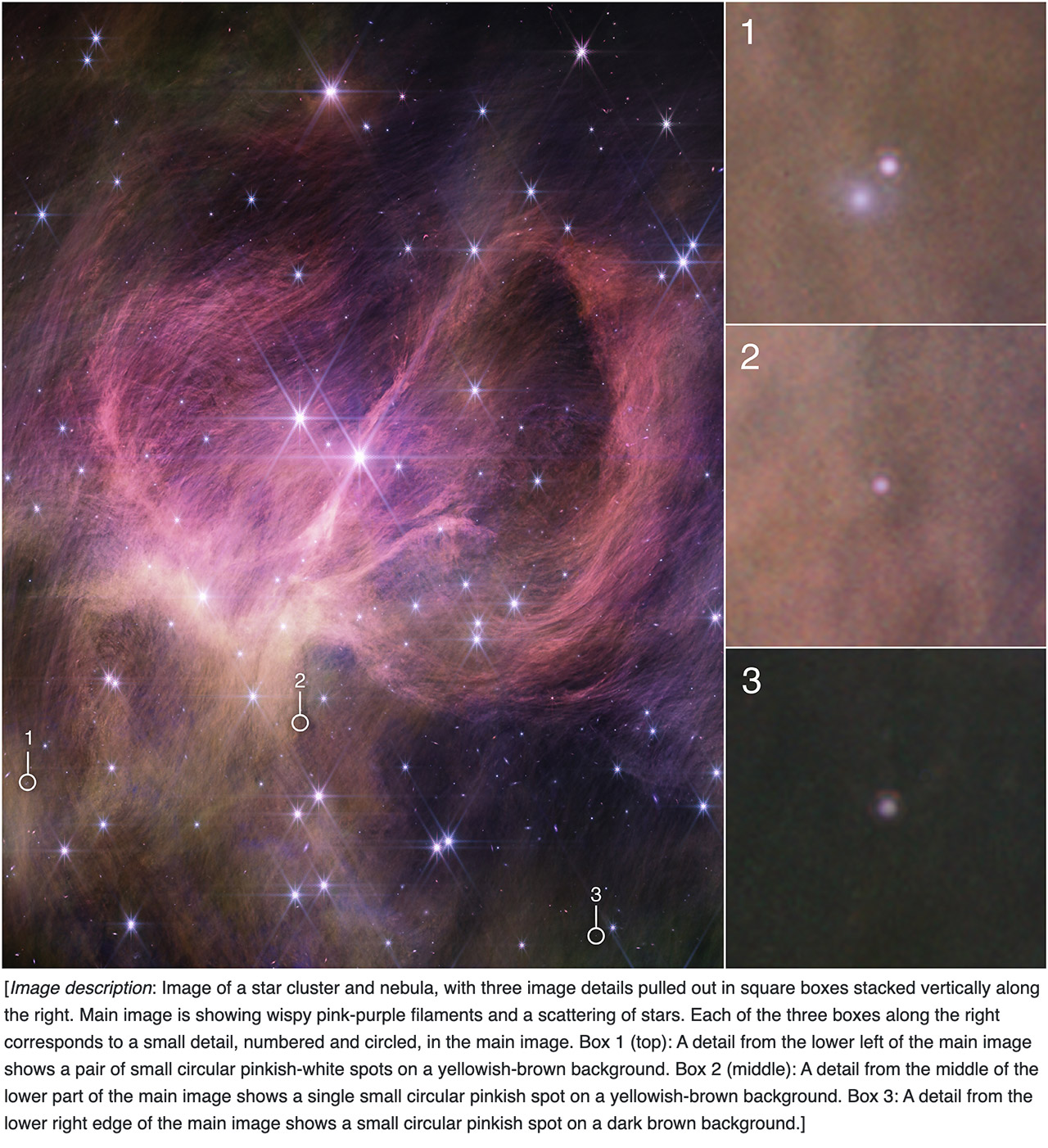
Astronomers have been studying IC 348 for years, but Webb’s recent observations have revealed something new: three small brown dwarfs, each a unique object. These objects are too small to ignite as stars but larger than planets. They challenge our understanding of how cosmic objects form. The smallest of the trio weighs only three to four times Jupiter’s mass, making it one of the smallest free-floating brown dwarfs ever found. Finding such lightweight objects in a cluster as young as IC 348, which is thought to be only a few million years old, calls into question the limits of star formation. Are these dwarfs the runts of the stellar litter or do they indicate completely new mechanisms at work?
This is 1,000 light-years from Earth, a stellar nursery where objects are still finding their place in the universe. Brown dwarfs, gas loops and the interaction of light and matter all suggest a dynamic place where creation is happening. Each star, dwarf and nebula tells a story of gravity, heat as well as time on a tiny and impossible scale.
[Source]