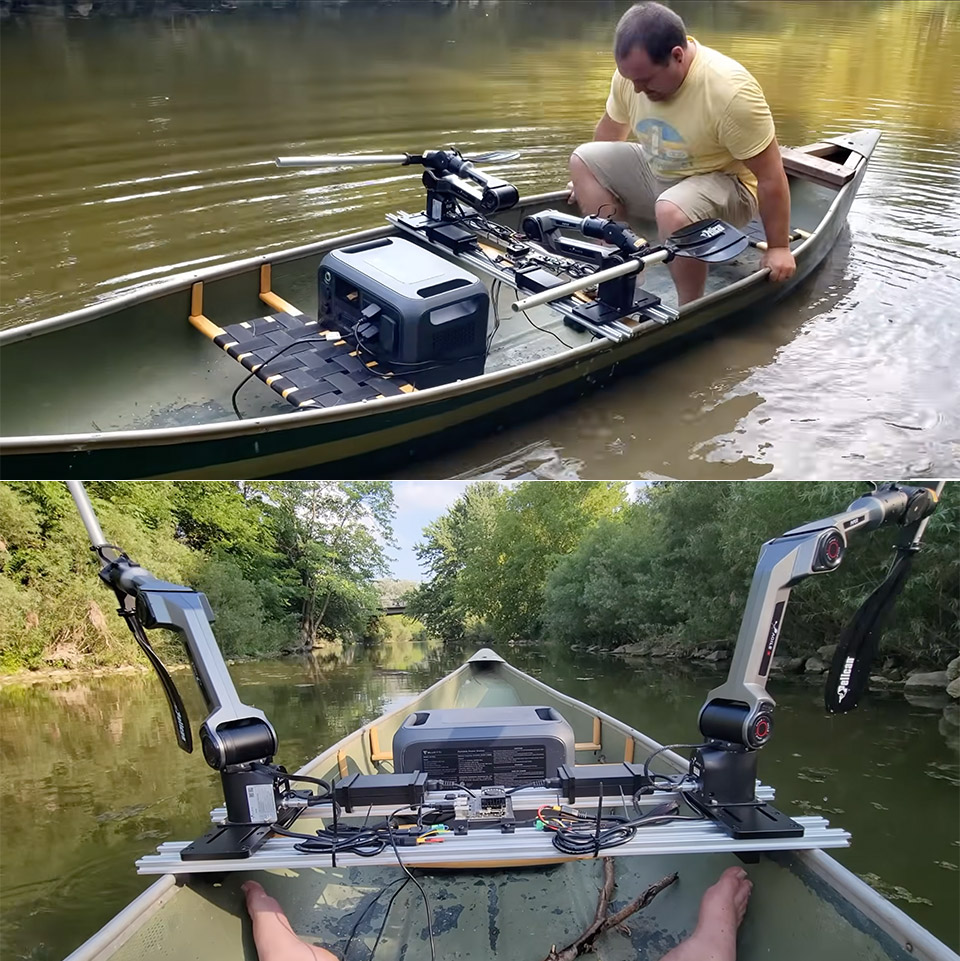
Dave Niewinski, a robotics engineer who enjoys escaping the daily grind, chose to redefine pleasure on the sea. What is his solution? A canoe that paddles itself using two robotic arms and an NVIDIA Jetson Orin Nano.
Niewinski’s idea began with a simple question: how can one glide along a river without paddling?Borrowing a friend’s canoe, he had the challenge of designing a system that wouldn’t affect the boat’s structure. His solution was a lightweight frame made of aluminum extrusions that were pressure-fitted to span the width of the canoe. These strong yet removable rails served as the foundation for mounting two Agilex Robotics PiPER robotic arms with six degrees of freedom each. Each arm could carry a 1.2 kg load and was just powerful enough to wield a split kayak paddle, so the boat could move without disrupting the delicate balance of a canoe’s design.
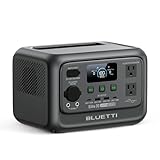
- [288Wh On-the-Go Power] - Only 9.4 lbs lightweight, carry it anywhere during storms! 288Wh capacity meets daily & outdoor needs—camping, road trips...
- [600W Continuous & 1500W Surge Power] - Get a full 600W output—twice as much as others. When you need serious power, activate Power Lifting Mode for...
- [50% Lower Power Consumption] - Upgraded UltraCell tech & smart cooling system cut power consumption by 50%. Enhances overall energy efficiency...
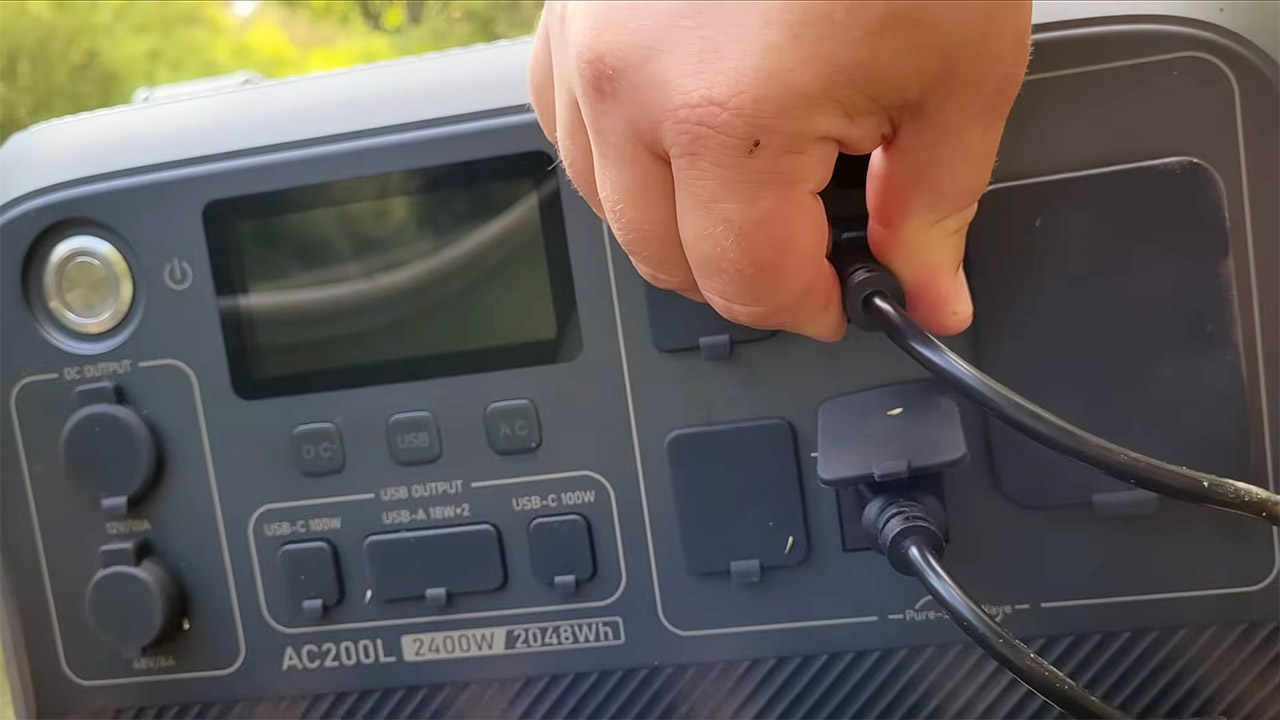
Since canoes don’t have electrical outlets, powering this setup required some planning. So Niewinski went with the BLUETTI AC200L Power Station. With 2 kW of capacity, it had enough AC and DC outputs for long river trips. The system’s solar recharging capabilities meant longer journeys, which was perfect for an engineer who wanted to be perpetualy relaxed. The power station’s Bluetooth app let Niewinski monitor battery levels from his phone, so he had a touch of modern comfort in his rustic retreat.
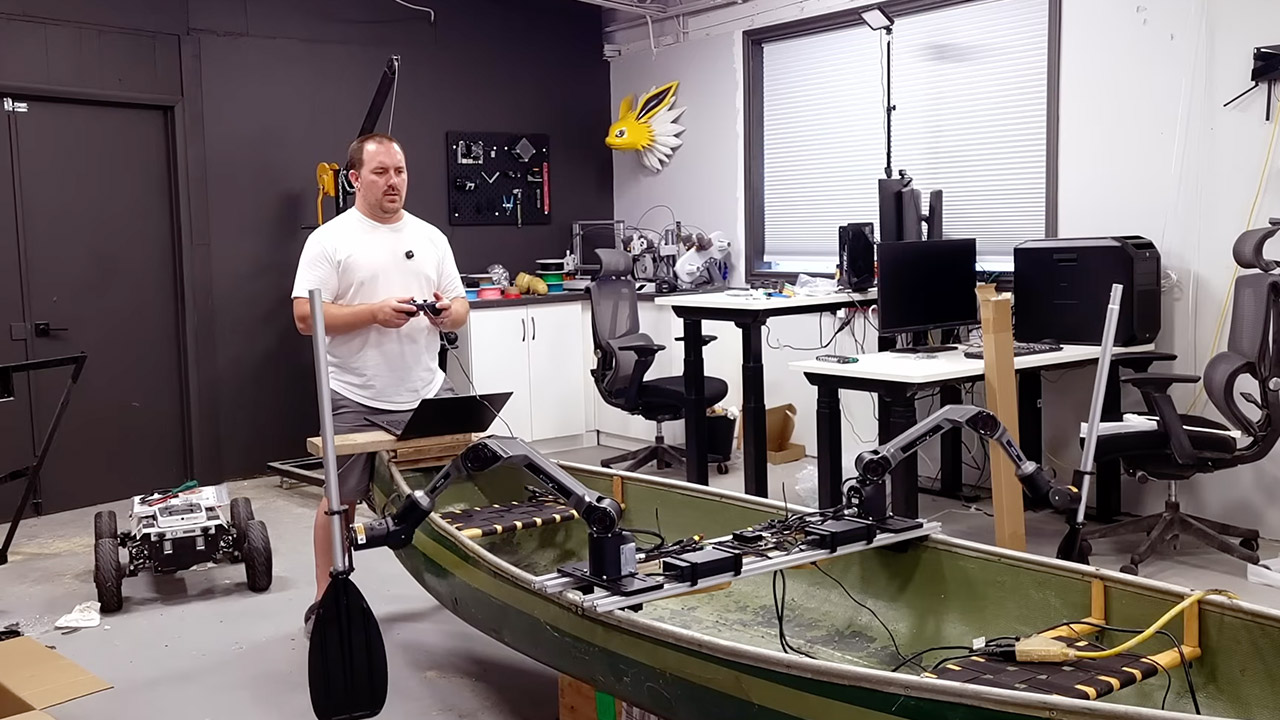
The NVIDIA Jetson Orin Nano, a small but powerful computer running the Robot Operating System (ROS) framework, is the heart of the project. Niewinski’s software solution was clever: he treated the robotic arms as wheels on a differential drive system, just like a Roomba navigates a living room. A video game controller translated human commands into paddle strokes. The system used inverse kinematics to determine the position of each arm, so the paddles would move in sync to push and steer the canoes. This let Niewinski control speed and direction with the ease of a video game, all while relaxing in the boat.
The robotic arms, designed for light activities like pick-and-place or AI training, were pushed to their limits. Niewinski’s mounting solution had to be light to not overload them and the aluminum pieces, machined by JLC CNC for strength and precision, were anodized black to match the arms. Assembly required a lot of attention to make sure the frame didn’t flex when the arms moved. During testing, software issues were found and Niewinski admitted to patching errors in the driver code he had written himself. But each hurdle was tackled with a tinkerer’s determination and a workable, if not fast, robot boat was born.
On a local river, the canoe proved itself useful when the arms dipped and pushed the paddles in a rhythm that while not smooth, felt like human paddling. Speed wasn’t the goal; relaxation was. The boat glided along, matching the laid back atmosphere Niewinski was looking for. The vibrations from the underpowered arms were noticeable but didn’t interfere with the experience. For Niewinski, the project was a success, proof of what happens when an engineer’s ingenuity meets a desire for peace.
[Source]