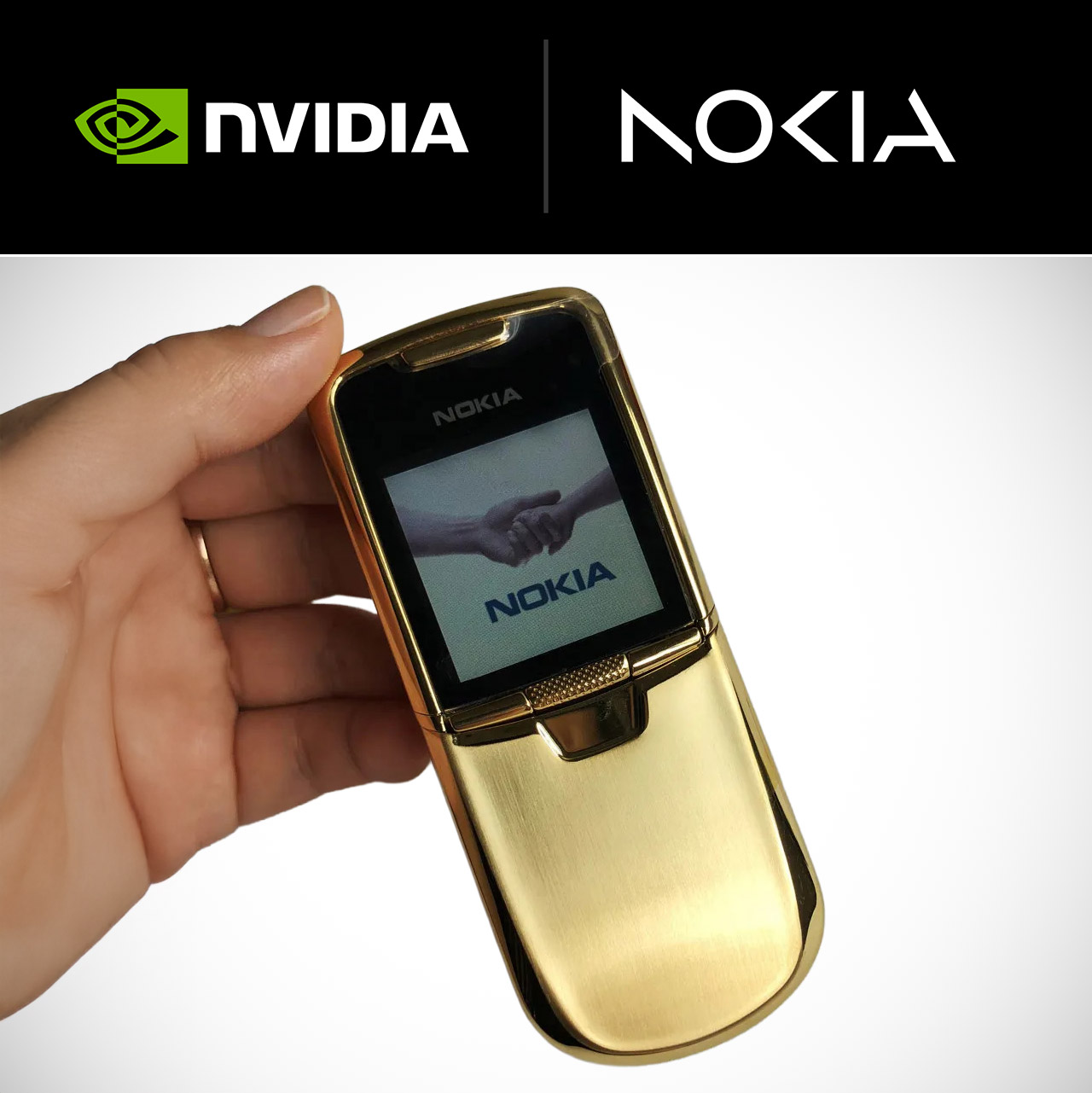
NVIDIA’s keynotes are always big, but few expected the spotlight to shine on a Finnish telecom veteran like Nokia. During the company’s GTC, Jensen Huang, NVIDIA’s founder and CEO, announced a partnership that feels like a quiet pivot for the entire industry. With a $1 billion investment in Nokia’s shares, NVIDIA is staking its claim on the networks that will carry the next wave of computing.
Huang didn’t mince words during his speech, calling telecommunications the “digital nervous system” of the economy and security, a backbone that’s been drifting out of U.S. hands for years. By teaming with Nokia, he’s bringing that control back home. The deal involves NVIDIA buying about 166 million new Nokia shares at $6.01 each, for a 2.9% stake. Nokia will use the cash for AI projects and everyday ops, but the real prize is what comes next: a joint push to build radio access networks that run on NVIDIA hardware. These systems will handle the flood of data from apps that generate text, make decisions or guide physical devices, all while keeping connections smooth and efficient.

- Powered by the NVIDIA Blackwell architecture and DLSS 4
- Quad-fan design boosts air flow and pressure by up to 20%
- Patented vapor chamber with milled heatspreader for lower GPU temperatures
Nokia’s side of the equation brings decades of hardware expertise. The company, once synonymous with indestructible cell phones, now supplies the gear that powers 5G towers around the world. Under new CEO Justin Hotard—who jumped from Intel’s data center division earlier this year—Nokia has doubled down on expanding into areas where AI lives. Hotard called the shift from 5G to 6G more than a speed bump; it’s a full redesign to push smarts from massive server farms right to the devices in our pockets. Their collaboration starts with Nokia embedding NVIDIA’s computing platform into its radio lineup, creating products that telcos can deploy today for better 5G and upgrade tomorrow for 6G without ripping everything out.
At the heart is NVIDIA’s new Aerial RAN Computer Pro, or ARC-Pro for short. This boxy device combines connectivity, processing and sensors in one unit, designed to sit at the edge of the network—those spots close to users where latency can kill a video call or a drone flight. Manufacturers can take the blueprint and build their own, whether off-the-shelf or custom. Nokia jumps in by running its 5G and 6G software on NVIDIA’s CUDA system, the software layer that makes their chips tick. The result? Base stations that can be updated with simple software changes, mixing old cards with new ones in Nokia’s modular AirScale setup. Dell Technologies adds its PowerEdge servers, built for scalability and minimal downtime, to turn these edge points into rock solid hubs for heavy lifting.