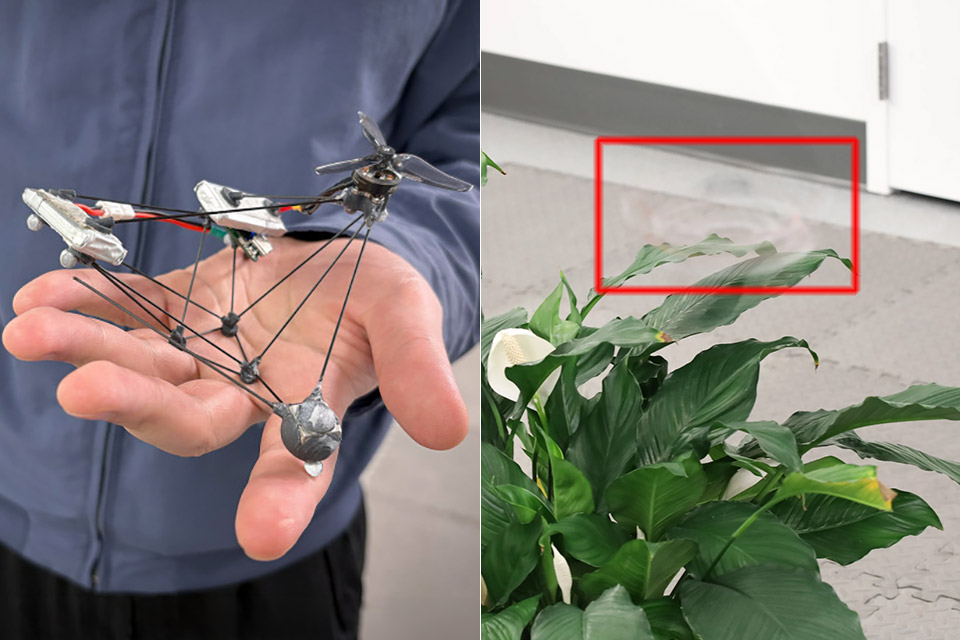
Engineers at Northwestern University have built a small flying machine that fades from view by rotating faster than eyes can follow. Phantom Twist earns its name through a constant twist that turns solid parts into a soft smear against the sky or ground below.
Standard drones attract attention since they essentially sit there with all of their weight focused in the center. Its four whirling blades lift it off the ground, but a giant still frame in the middle stands out like a sore thumb. People and animals can immediately recognize the motionless shape. A new version of this removes the “still” reference by relocating the entire assembly. In this unique design, a single motor drives only one propeller in one direction, but the rest of the system, including the batteries and control boards, spins in the opposite way and travels simultaneously. That way, you have a nice, smooth balance, and the entire piece does not hang in one spot. The only thing holding everything together are some support cables and a counterweight to keep it spinning smoothly.

- Due to platform compatibility issue, the DJI Fly app has been removed from Google Play. DJI Neo must be activated in the DJI Fly App, to ensure a...
- Lightweight and Regulation Friendly - At just 135g, this drone with camera for adults 4K may be even lighter than your phone and does not require FAA...
- Palm Takeoff & Landing, Go Controller-Free [1] - Neo takes off from your hand with just a push of a button. The safe and easy operation of this drone...
When this drone is flying at top speeds of up to 25 revolutions per second, the human eye can only capture a fraction of a second. It only opens for a flash, just like a camera sensor. When you move so quickly, the image blurs and loses its clear edges. What’s left on the drone is a faint, hazy muddle that you scarcely see unless you look for it specifically. Using a human vision model, researchers evaluated the craft against a variety of backdrops, and it scored around 10 times lower on visibility than a normal quadcopter of similar size. Not because of any fancy colors or coatings, but simply because it moves so quickly that your eye doesn’t have time to lock onto it.
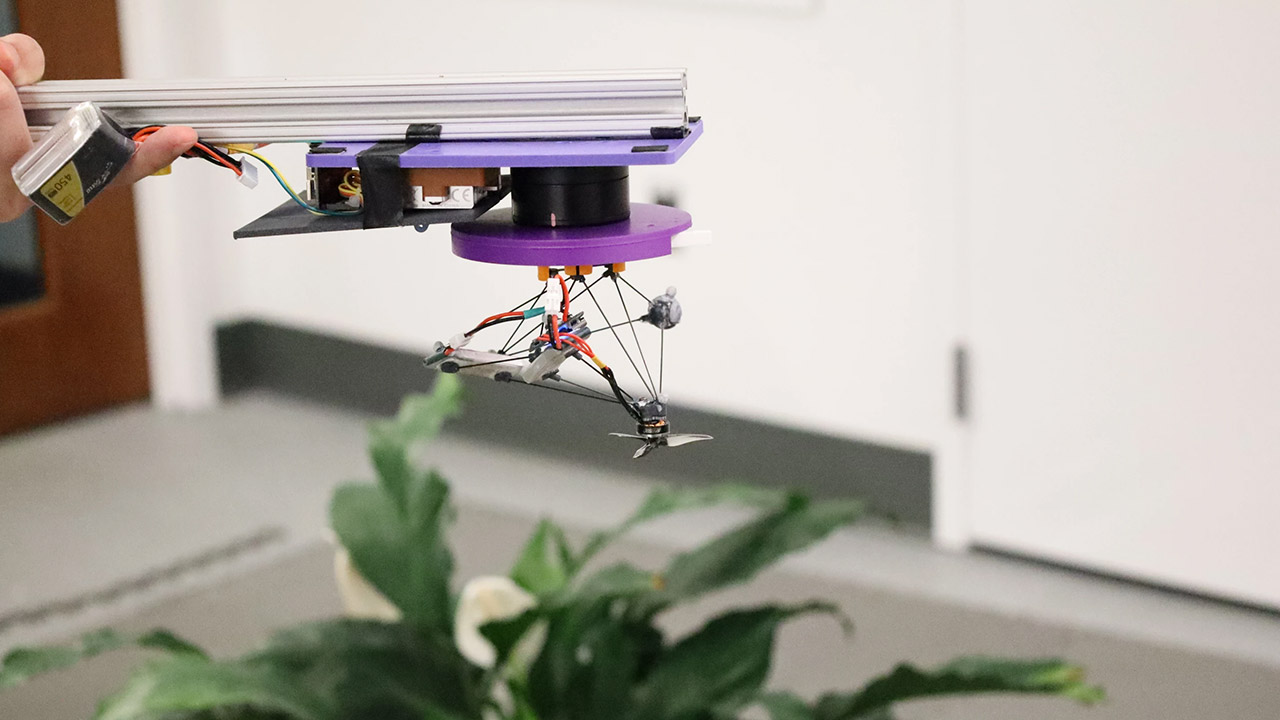
Before settling on the final design, a team led by Professor Michael Rubenstein used computers to experiment with almost 20,000 potential designs. Each one had its flight capabilities and stealth verified in simulation before the software eliminated the weaker designs and allowed the stronger ones to proceed to the production stage. He explained that the fundamental difference with this project was that instead of attempting to hide the drone to blend in with its surroundings, they were looking at how to construct the machine in such a manner that it tested the limits of human motion perception. Emma Alexander noted that human vision forms an image over time, and moving quickly enough prevents that picture from ever solidifying clearly. Essentially, the eye receives an averaged out image of the drone blended with its surroundings, which fuses into a beautiful soft haze.
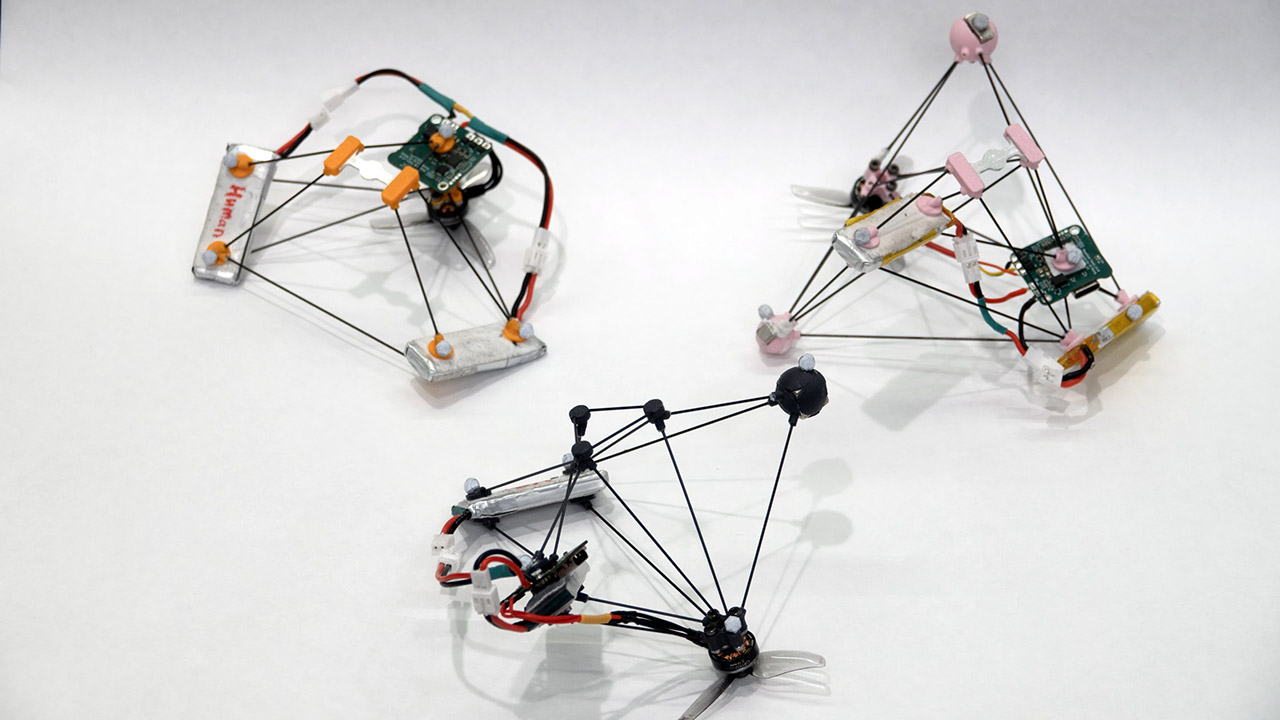
Wildlife researchers will be the first to take advantage of this. You can use an invisible drone to film nesting birds or monitor animals in wetlands without disturbing or influencing their activity. You can have a guy standing on the ground evaluating bridges, towers, or pipelines while the drone hovers overhead, and he has no idea. However, there are certain limitations to this technology, such as the noise produced by spinning propellers and the tiny rods that nonetheless capture the eye in the correct light. For the time being, these factors preclude complete concealment. Future generations, however, attempt to close the gap by improving the plastics and motors. Each step should get us closer to a veil that is nearly undetectable.
[Source]