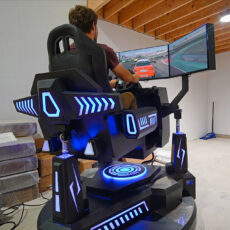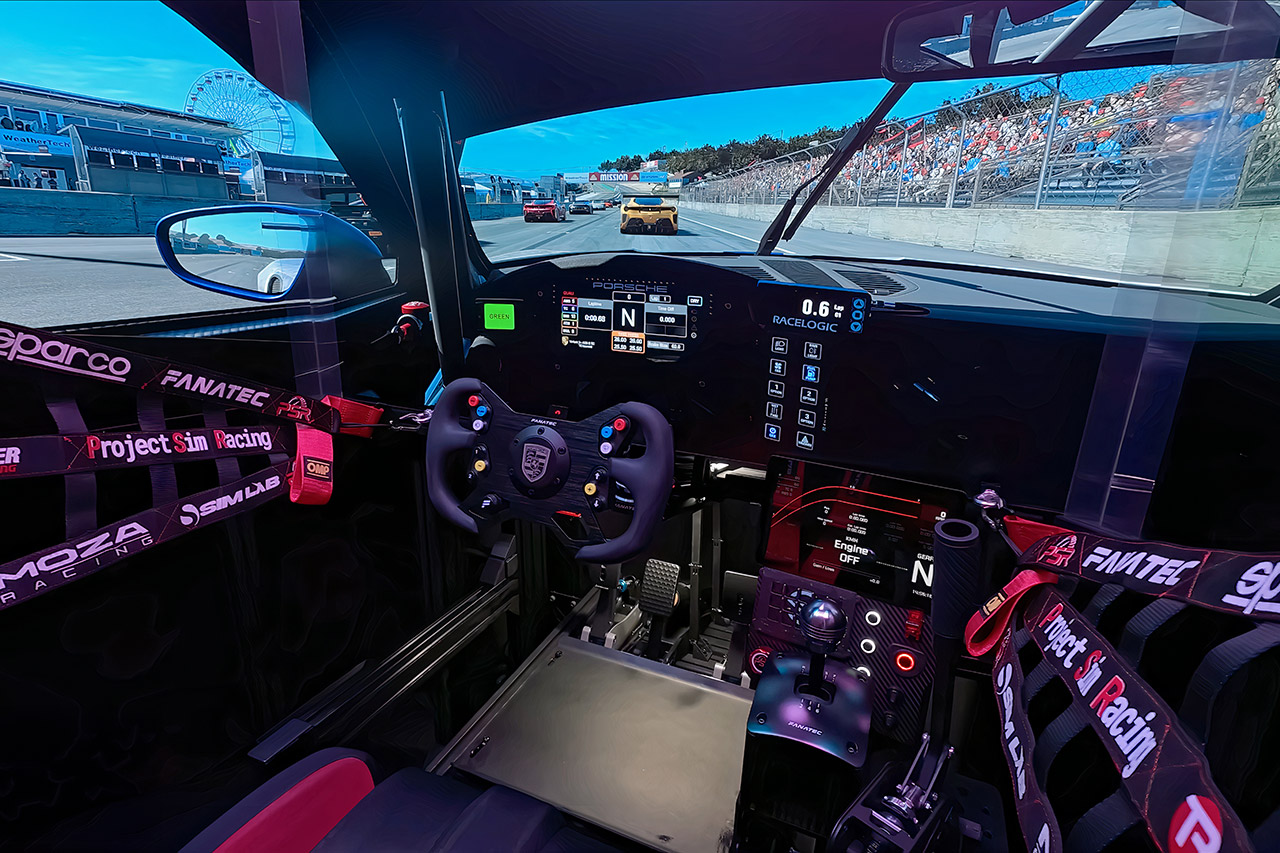
Most racing sims start with a chair bolted to a frame and a wheel on a desk. Project Sim Racing’s current build starts somewhere else entirely. A full Sim-Lab P1X Pro aluminum cockpit sits on four Qubic System QS-210 linear actuators. Those actuators deliver pitch, roll, and heave with under eight milliseconds of latency, a 60 mm stroke, and enough force to move more than 250 kilograms of rig, seat, and driver. Add the Qubic belt tensioner that pulls the four-point harness tighter under sustained loads, and the whole assembly begins to behave less like furniture and more like a car.
The clever part is how the steering works, as the wheelbase is attached to a separate piece of structure that also houses the monitors. When the platform pitches forward under braking or approaches a corner, the driver’s body moves while the wheel and three screens remain stationary in relation to each other, much like in a real car where the chassis bumps around you while the controls remain immovable in your line of sight. By mimicking that relationship, the action appears to be more like driving a car than sitting in a high-tech toy.

- The patented, revolutionary design sets a new standard for the ultimate, immersive racing experience. The frame is made out of lightweight carbon...
- Developed with Playseat's Innovative Actifit️ Material, this seat comfortably conforms to your body, giving you the best support, allowing you to...
- The fully adjustable pedal and steering plates gives you ultimate flexibility in wheel and pedal positioning. Tilt forward or backward, move up or...
The view is made up of three huge LG C4 55-inch OLED TVs, which means there are no bezels because the image stretches from left to right. At that scale, you don’t need any virtual reality crap, because the road, the barriers, and the car in front of you are all right there in front of you, filling your peripheral vision completely. A PC with an Intel Core i9-13900K and an RTX 5090 powers it all, providing enough power to keep the images clear and the motion data flowing smoothly without stuttering.
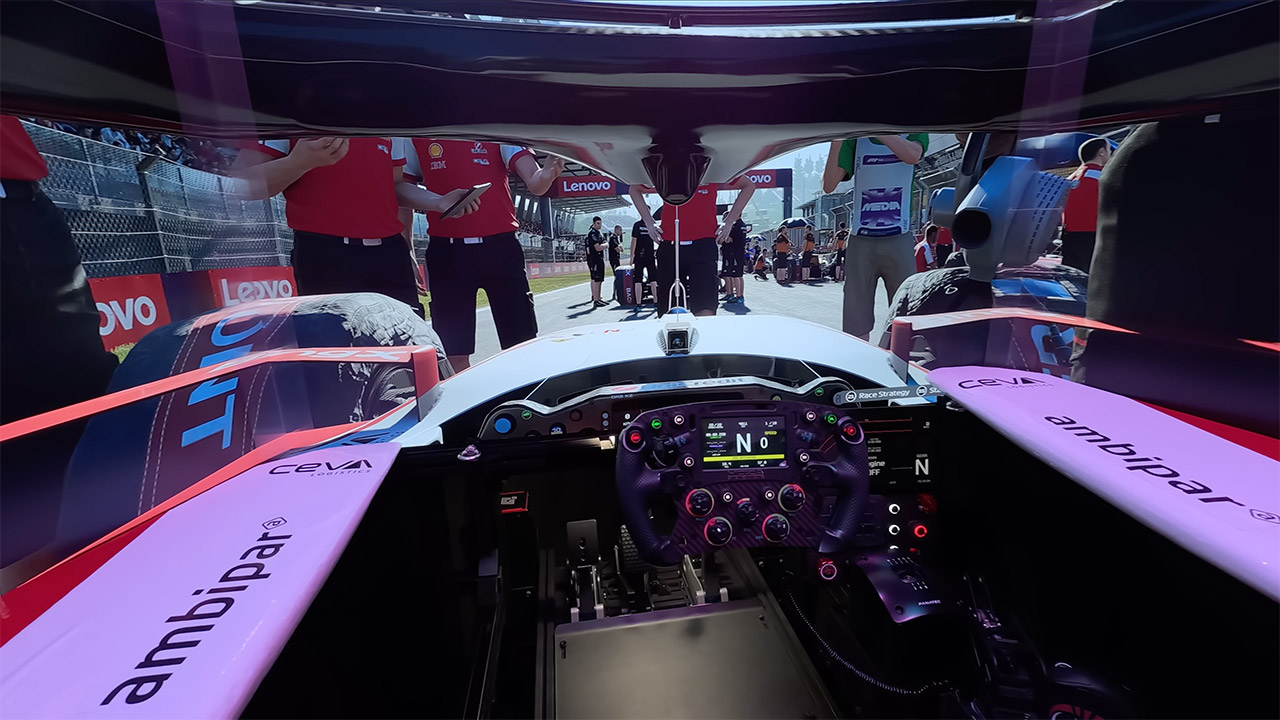
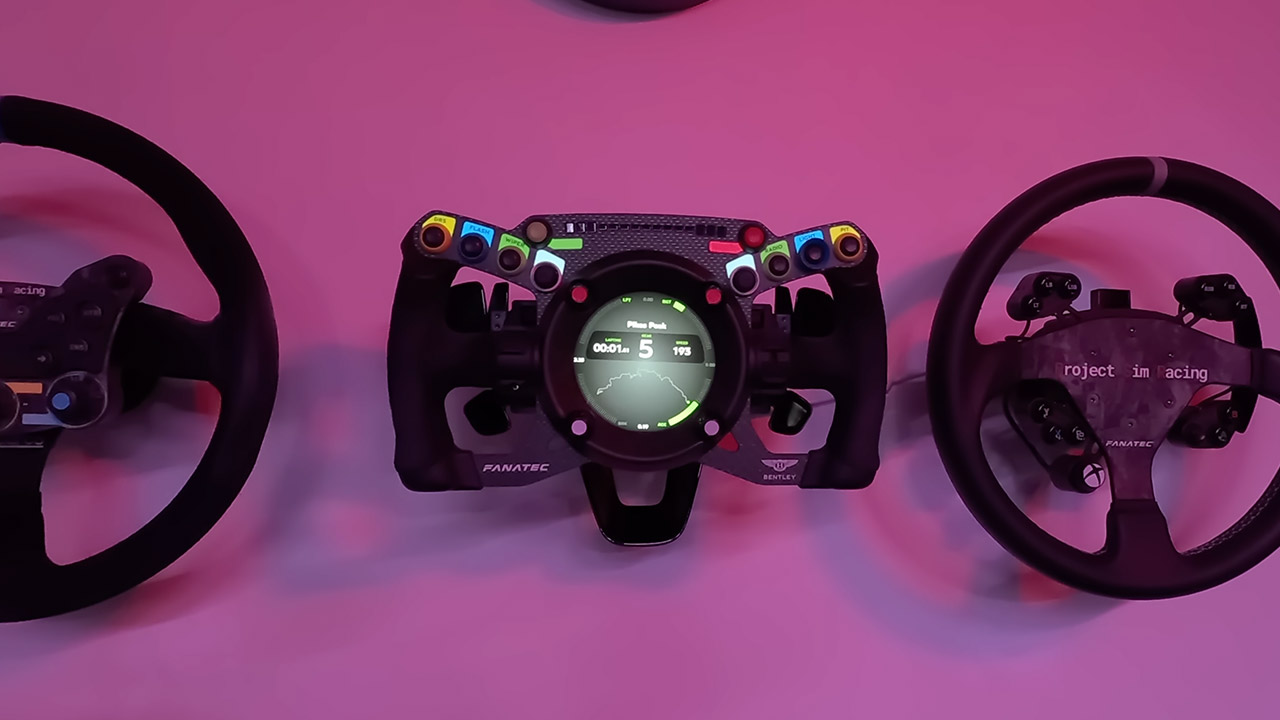
The force feedback is often delivered by a high-end Fanatec direct-drive base, but if you receive a wheel that is an especially good match for the car you’re driving, they’ll replace it with a Moza. The pedals are made up of a Sim-Lab XP1 load-cell set for the clutch and throttle, as well as a Moza mBooster active brake that can push back with varied resistance. A Fanatec sequential shifter and a load-cell handbrake can also be found nearby. Everything else is controlled by a button box and a Stream Deck, allowing you to keep your hands on the wheel for the majority of the time.
Philips Hue strips and panels control the lighting, which can change color to match the track or time of day. Some safety nets are in place to keep stray elbows and cameras out of the path of the moving parts. The cost of the computer, screens, motion gear, and wheels is expected to be around $50,000.
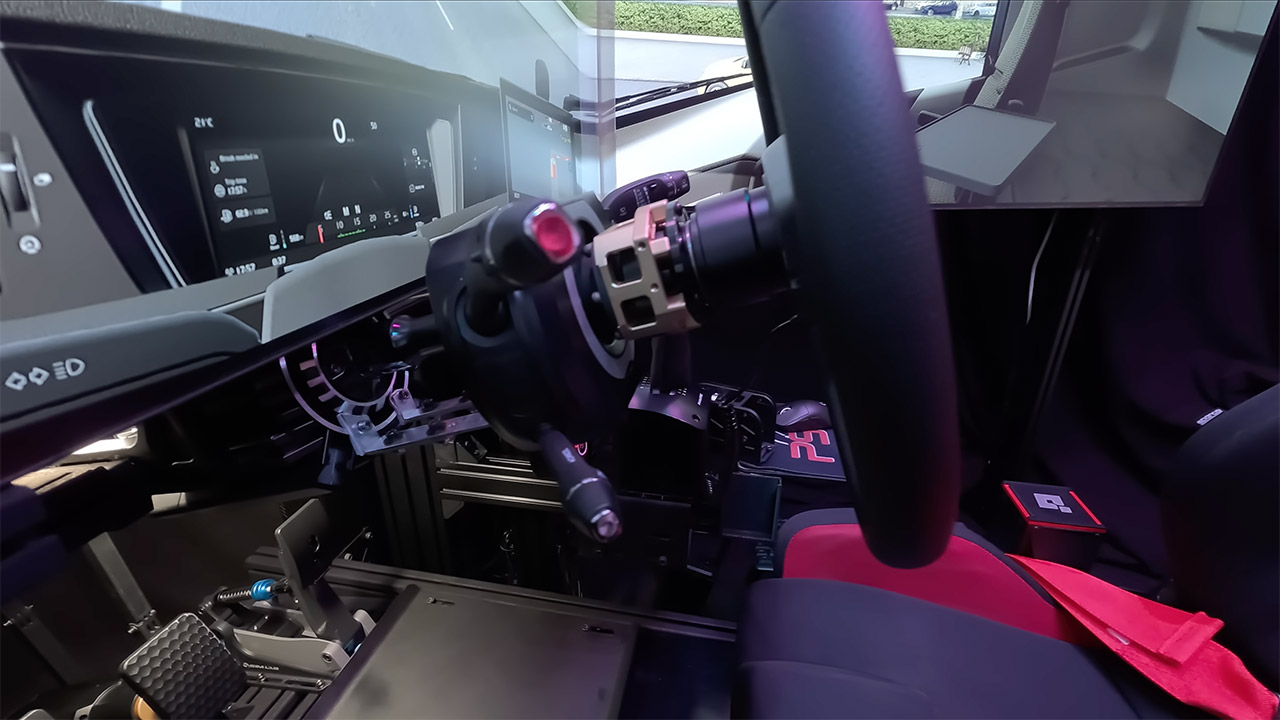
Get into the seat, strap in, and you’ll sense a difference from the first hard braking zone. The platform leans you forward as the harness tightens across your shoulders. When you go over a curb, the actuators give you a severe shock. Zoom through a high-speed corner, and the roll angle and constant tension on the harness combine to make it feel like you’re actually experiencing weight transfer, rather than just some awkward tilt, and because the actuators can handle frequencies up to the system’s limits, you also get a sense of road texture in the form of a series of fine vibrations.