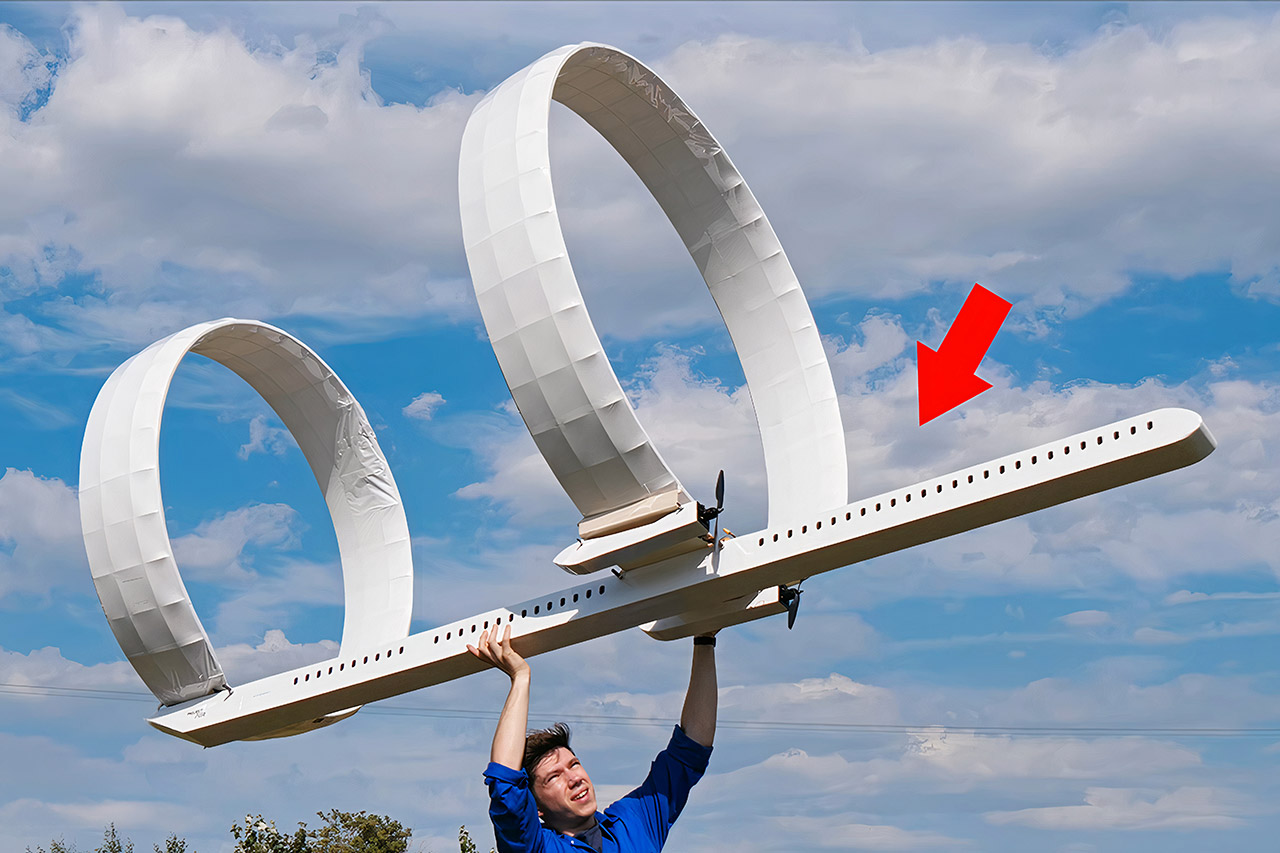
James Whomsley, better known as ProjectAir, has spent nearly a decade turning odd ideas into flying machines. His latest project takes one of the simplest shapes possible and asks whether it might outperform the wings we see every day. He built a giant radio-controlled plane whose main lifting surfaces form complete circles, then put the concept through the same cycle of prototypes, crashes, and rebuilds that defines so much of his work.
The idea began with a paper plane he made as a child. A small ring-shaped flier that flew farther and straighter than his normal dart creations. Several years later, he sought to apply the same techniques to something far larger. The first models were made of lightweight balsa and propelled by elastic bands. One had a standard straight wing, while the other had a circular wing of similar proportions. In a light breeze, the straight wing model fought for around seven seconds before wobbling and tumbling to the earth; in contrast, the circular version remained aloft for more over ten seconds, naturally correcting itself in the wind and landing with far less drama. That tiny triumph paved the way for something far bigger.

- THE POWERUP 4.0 - Fly the first ever smartphone-controlled paper airplane with this Balsa Wood airplane Kit! Not yet familiar with the POWERUP RC...
- BALSA WOOD GLIDER - Known for its high quality and performance, the Tornado Updraft 12 Balsa wood airplane kit has a fast and maneuverable flight...
- CONNECTED FLYING - Pair your plane with the POWERUP App to maneuver your plane, keep a robust flight log, compete with other flyers on the...
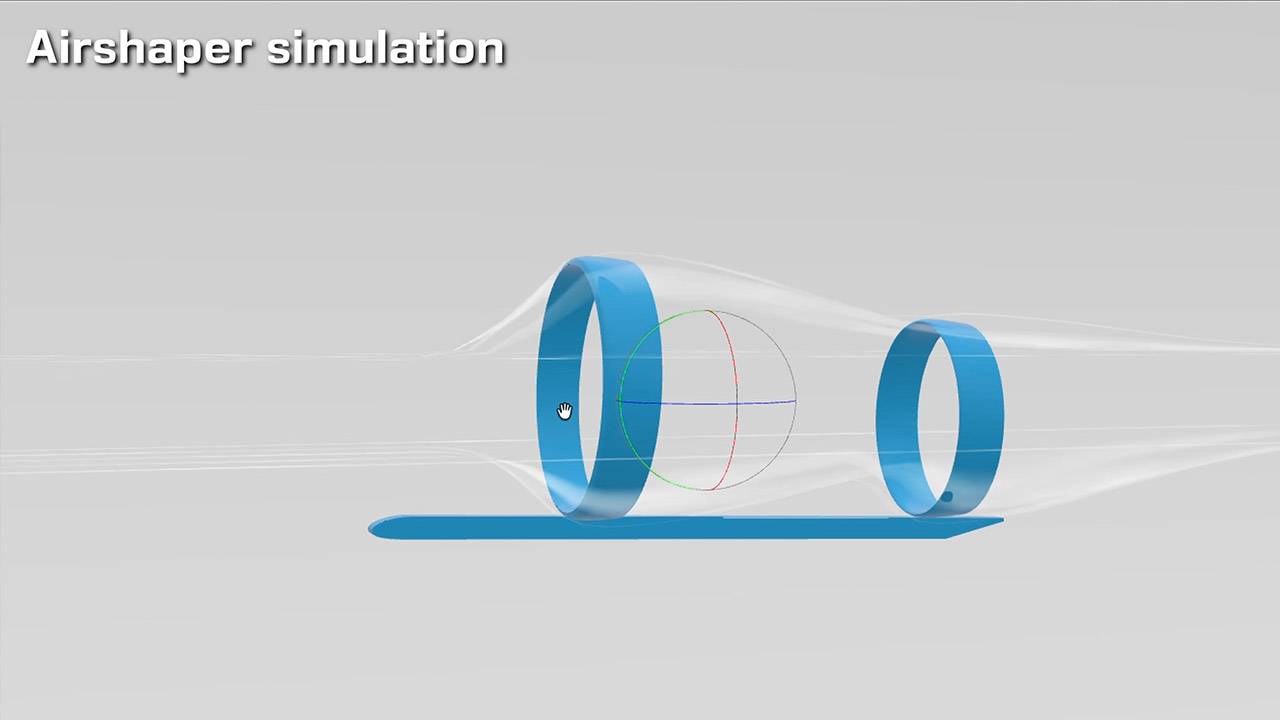
The full-size plane was created in CAD so that the sections could be laser cut from balsa sheets and put together like a giant jigsaw puzzle. The two circular wing frames weighed little over 2 kg. A long box fuselage had bulkheads strong enough to hold the rings in place, and heat shrink film covered the whole surface. Before he ever considered power, early glide tests revealed that the plane required considerable weight in the front and a somewhat steep angle of attack to gain any usable lift from the symmetrical airfoils. After they figured out the balance, it floated fairly nicely.
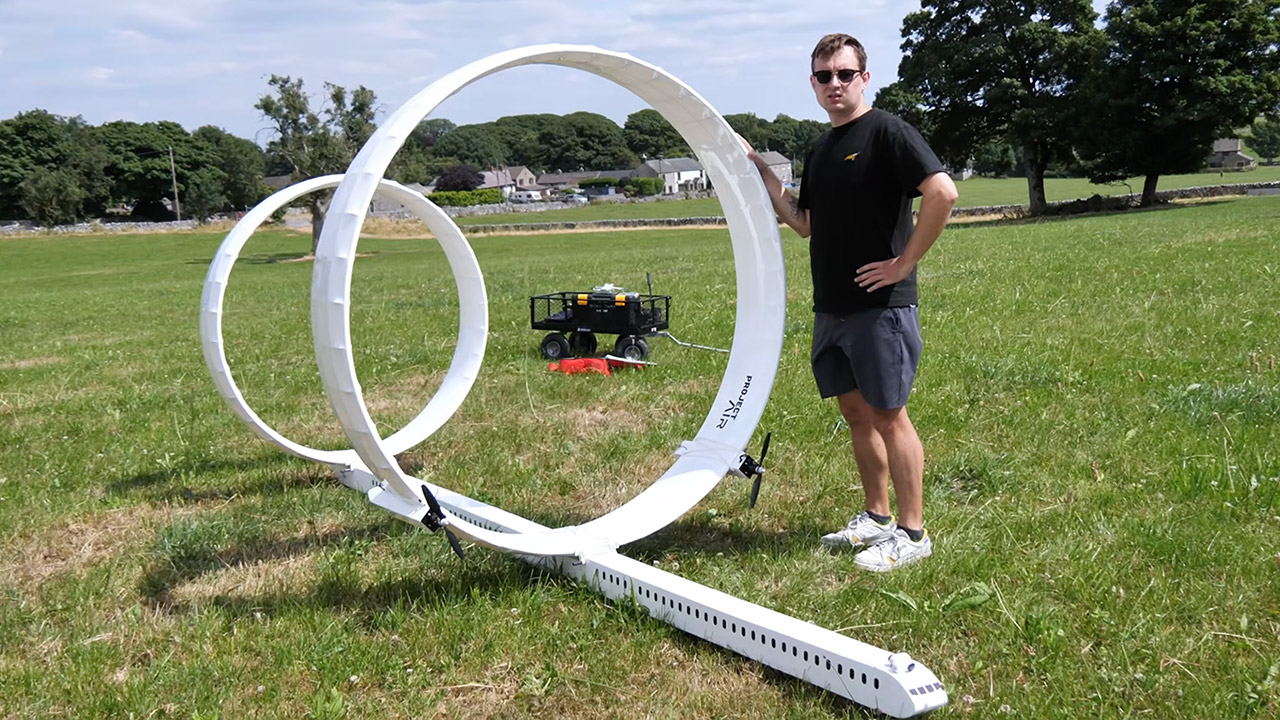
Then they turned on the power, and two electric motors positioned high up on the aircraft formed a thrust line that pulled the nose down fairly hard, which is when everything began to go wrong. The first powered launches resulted in catastrophic collisions that snapped the main spars. Balsa is good for keeping things light, but it’s not very forgiving if you get the layout wrong. A second attempt used what remained of the rear circle as the primary wing and added a conventional tail for greater control, but the same propulsion problem reappeared, claiming another wing.
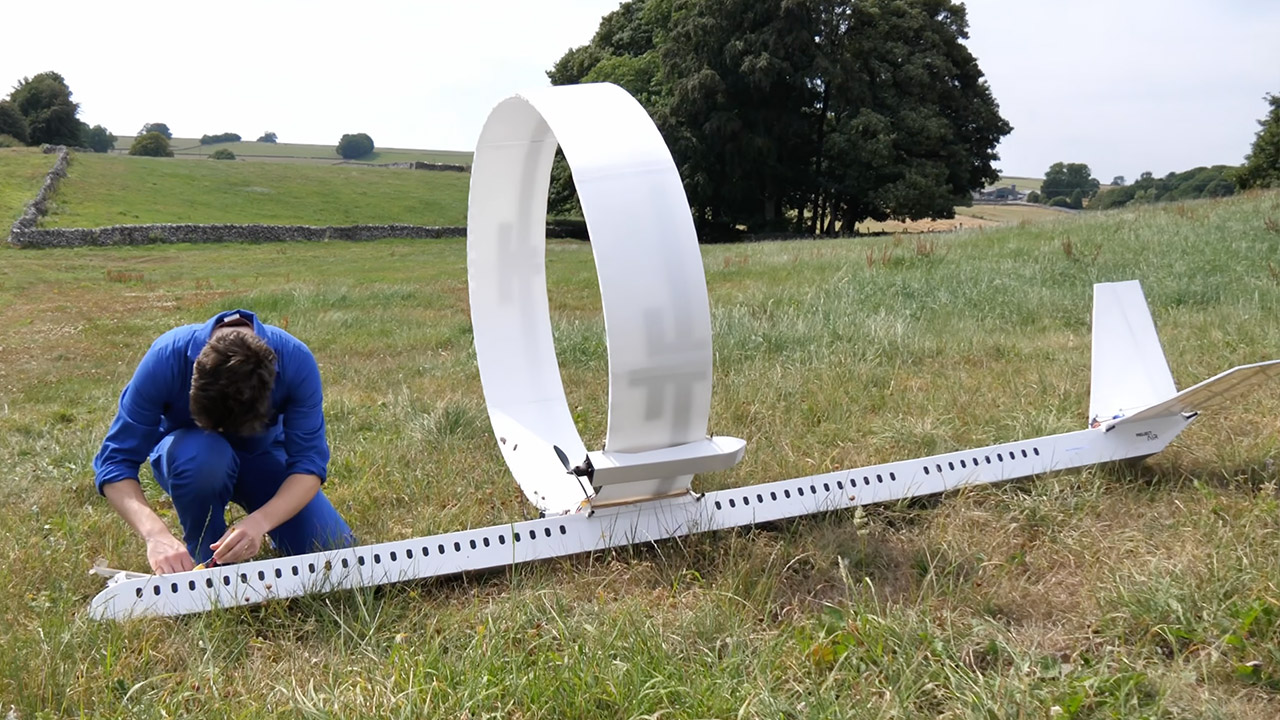
At this time, the crew opted to switch materials. A new circular wing made of foam and aluminum tube bent rather than breaking as the motors started up, a central strut protected the ring from expanding under strain, and the motors were anchored down much more securely this time. On the following launch, the plane lifted off cleanly, cruised smoothly thru gusts, and responded to control inputs like a normal plane, even displaying slightly more roll stability than expected. It flew until the batteries died, then returned to a safe landing with everything intact.
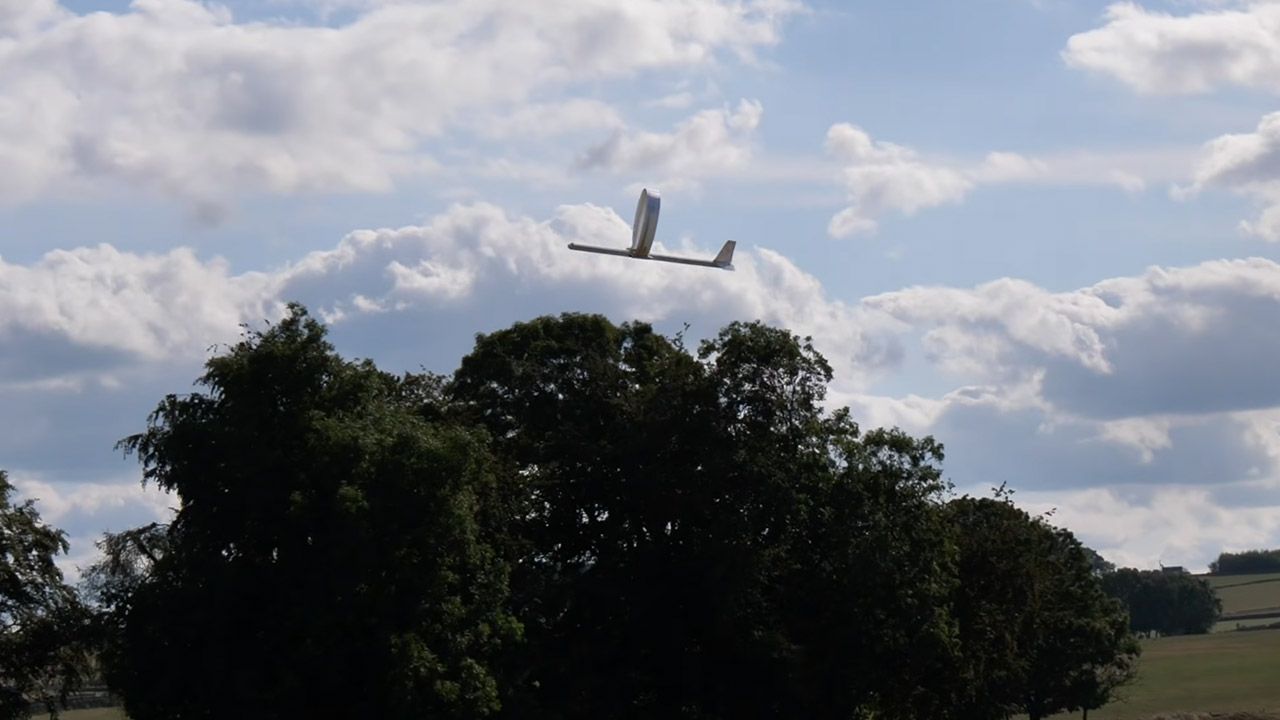
Circular wings, sometimes known as annular or ring wings, have appeared on numerous times throughout aviation history. Designers have experimented with them for structural efficiency and reducing those pesky tip vortices, and in the wind tunnel, they’ve discovered some instances where a ring can match or even outperform the efficiency of a conventional wing of the same size, but it’s never as simple as that, because extra drag and pitching behavior muddy the waters. Whomsley’s large-scale model never claimed to be a game changer in terms of aerodynamics. All it did was show that the design is functional, controlled, and controls wind far better than you may expect if you sort out the framework and how the motors are connected.