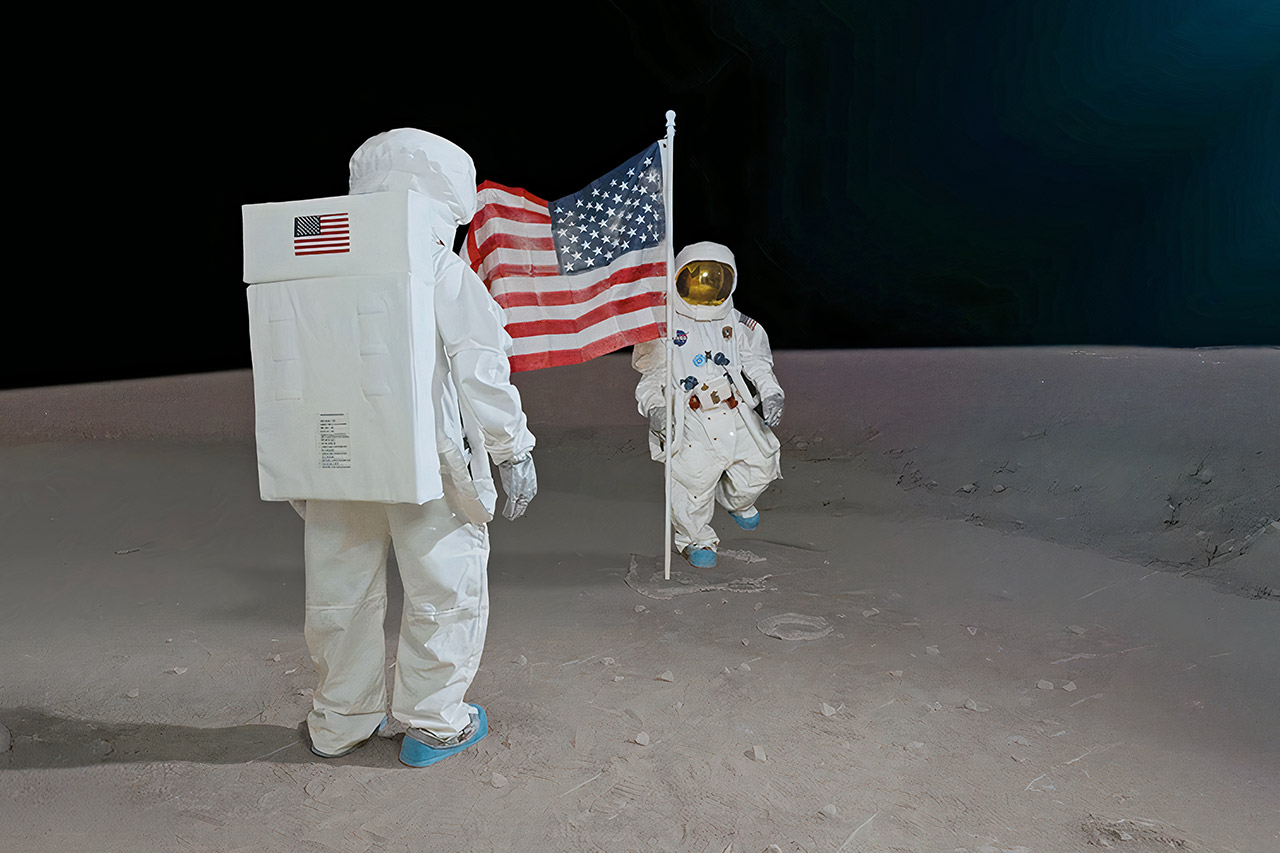
Isaac Carlton decided one afternoon to tackle a project that most people would dismiss as impossible. He wanted to film the most famous moments from the Apollo moon landings without rockets, without a massive budget, and without stepping outside his own property. The result looks so close to the original NASA footage that viewers keep pausing to check whether they are watching history or something built from scratch in a garage.
Carlton began with a realistic goal: order a replica of the NASA spacesuit. When it arrived, he tried it on and was surprised to find that the fit worked perfectly for close-up photos. The moon’s surface came next. In his garage, he chopped out pieces of Styrofoam, sculpted them into craters and bumps, and then powdered everything with chinchilla bath powder to replicate the texture of lunar dust seen in old photographs. Black drapes obscured the walls, giving the scene a sense of infinite space.

- Build a realistic LEGO Technic lunar rover model – This LRV building kit for adults is packed with authentic details including seats, steering...
- NASA model for adults – Enjoy a mindful project assembling all the details of the rover and equipment including the battery pack, heating and...
- A build for NASA fans – Remember the Apollo 17 mission with a display that features the lunar roving vehicle alongside 3 detailed equipment...
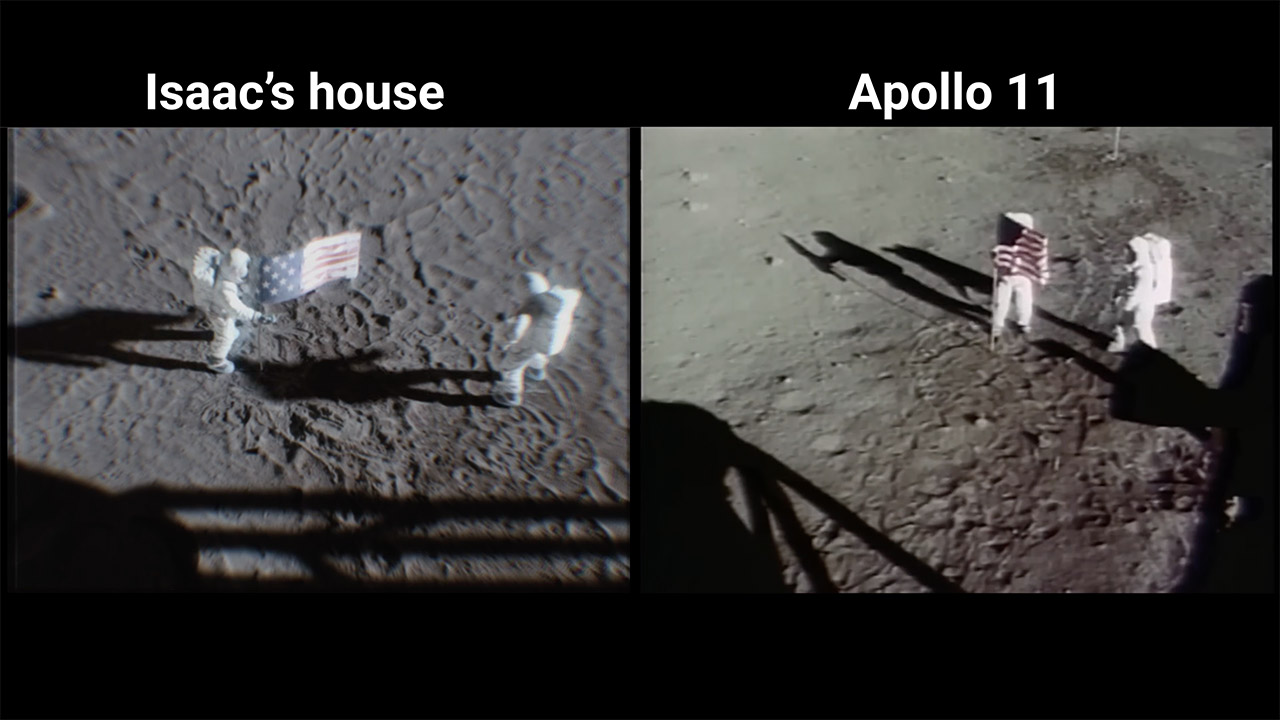
Three different scenes made the final cut, beginning with a bird’s-eye view of the astronauts planting the American flag. Carlton came up with an idea for using stop-motion. He purchased some action figurines, bent thin wire into their limbs to control their positions, and stuffed paper towels into the crevices to make the joints appear smooth as silk under the camera. Each minuscule movement necessitated a new photo, dozens of them, until the flag would raise and wave as it had in 1969.
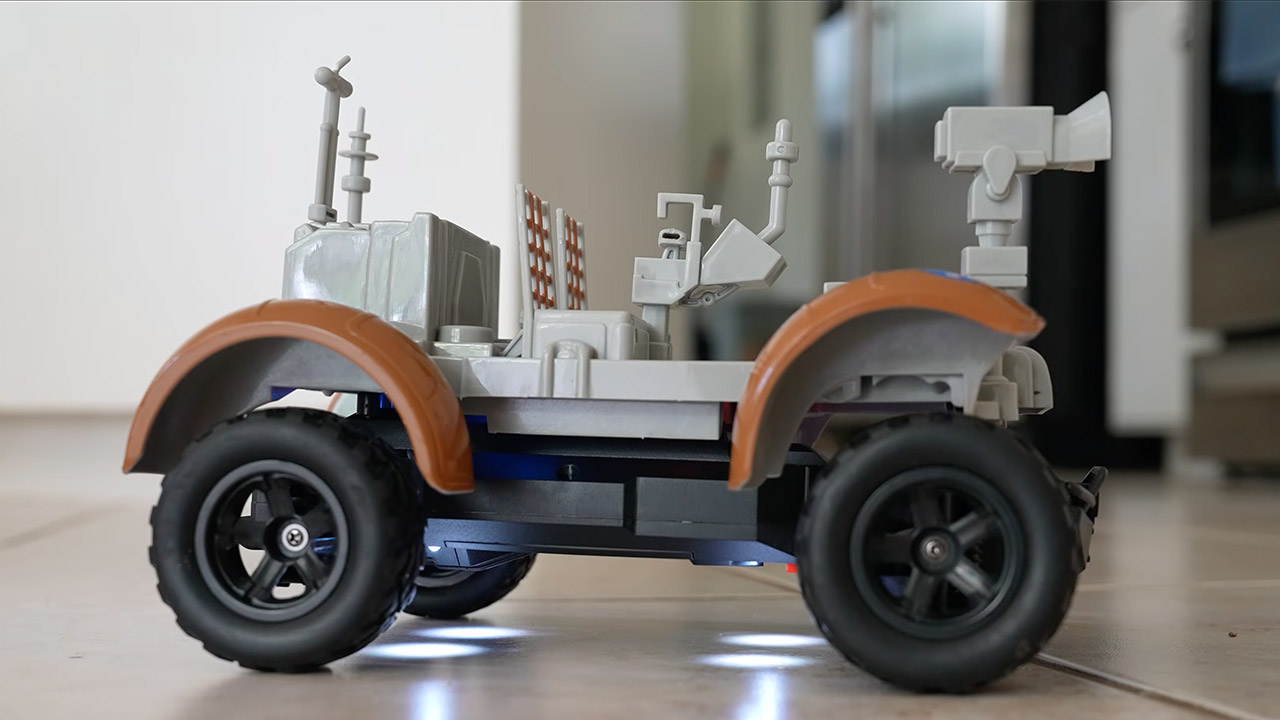
In contrast, the lunar rover sequence required motion rather than stillness. Carlton purchased a vintage mini rover on eBay and matched it with a remote-controlled buggy he discovered online. He then drove his buggy over the Styrofoam countryside while the camera rolled. Then he combined numerous passes and slowed the footage down to make it appear as if the rover was bouncing across the surface under low gravity. The end effect was eerily similar to the original footage.
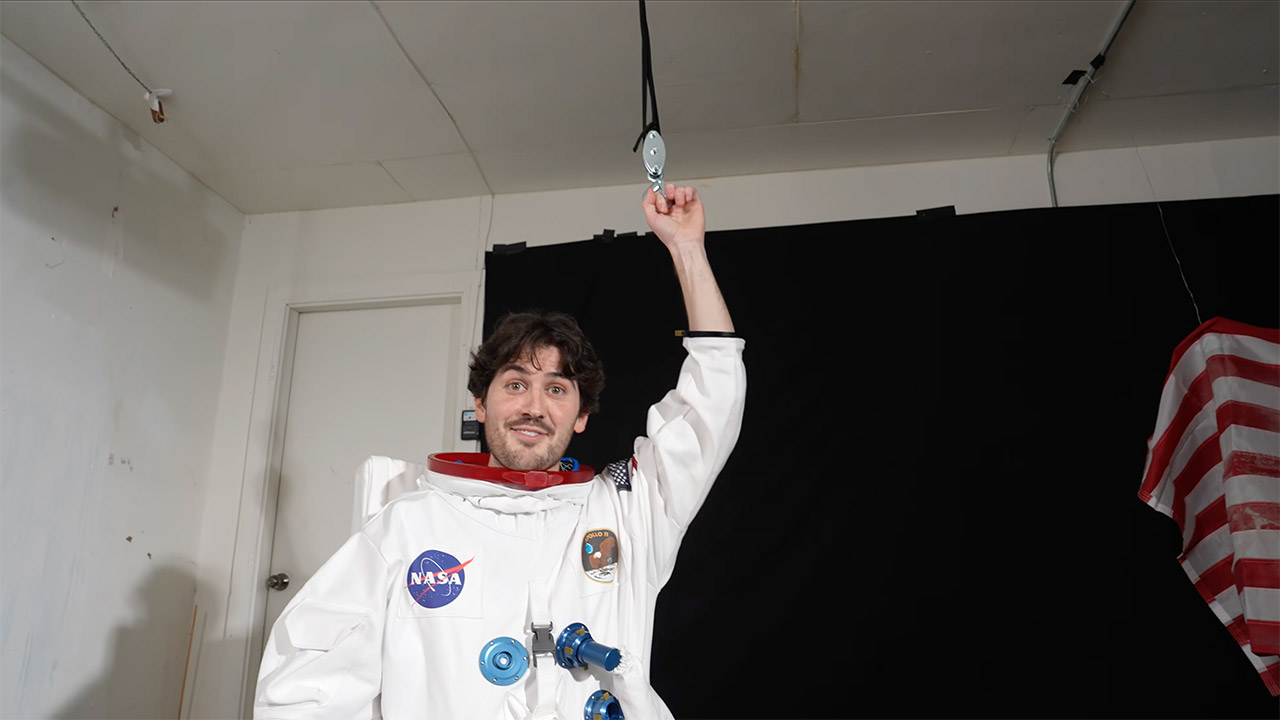
The zero-gravity jump from Apollo 16 was likely the most physically difficult. Carlton attached a basic pulley system to the rafters in his garage. He bought an Amazon harness and then asked a couple of friends to pull the ropes for him. They filmed at a snail’s pace to make it appear as if he was floating higher when the ropes hauled him up, and then the editor worked his magic to remove all trace of the cables and mix the takes together so it looked smooth and seamless.
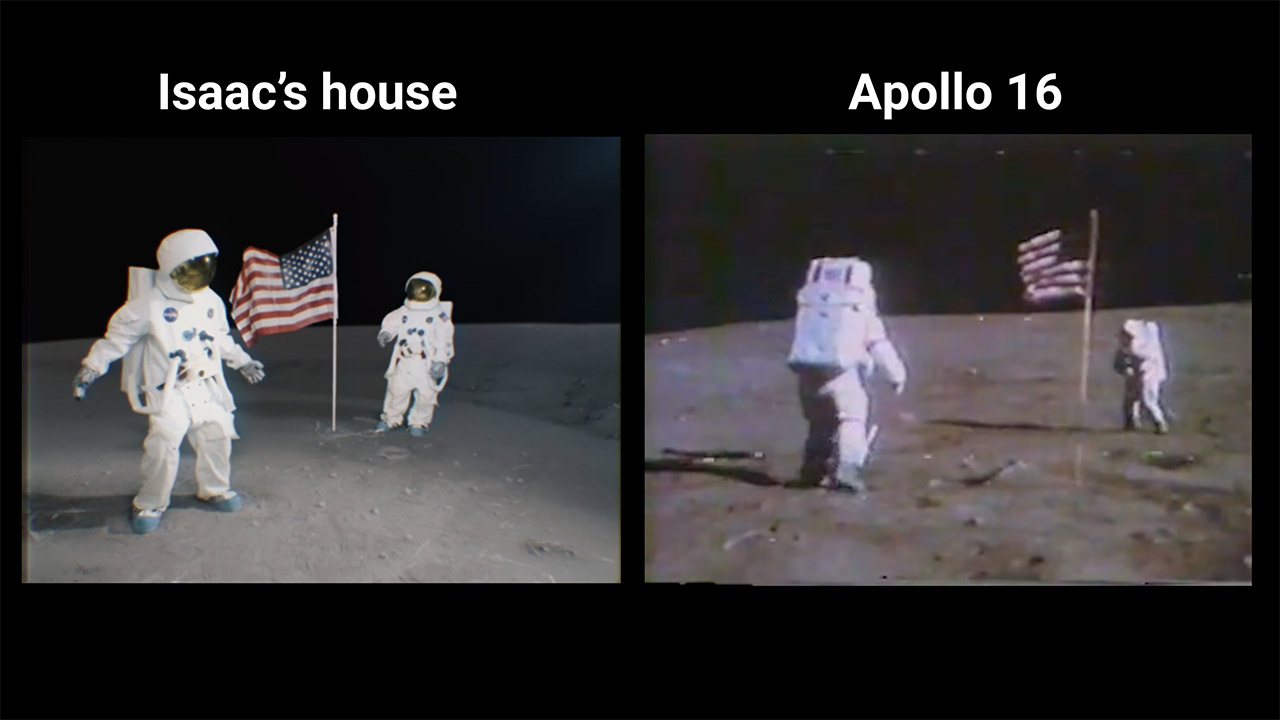
Editing required a significant amount of effort, arguably as much as filming. Carlton and his friend Levi spent hours perfecting the color, adding grain to make it look antique, and painting light scratches to make it look like it was shot sixty years ago. They digitally stretched each set’s boundaries, causing the draperies to disappear. Every wire, contemporary shadow, and telltale trace of a home project disappeared in the editing suite.