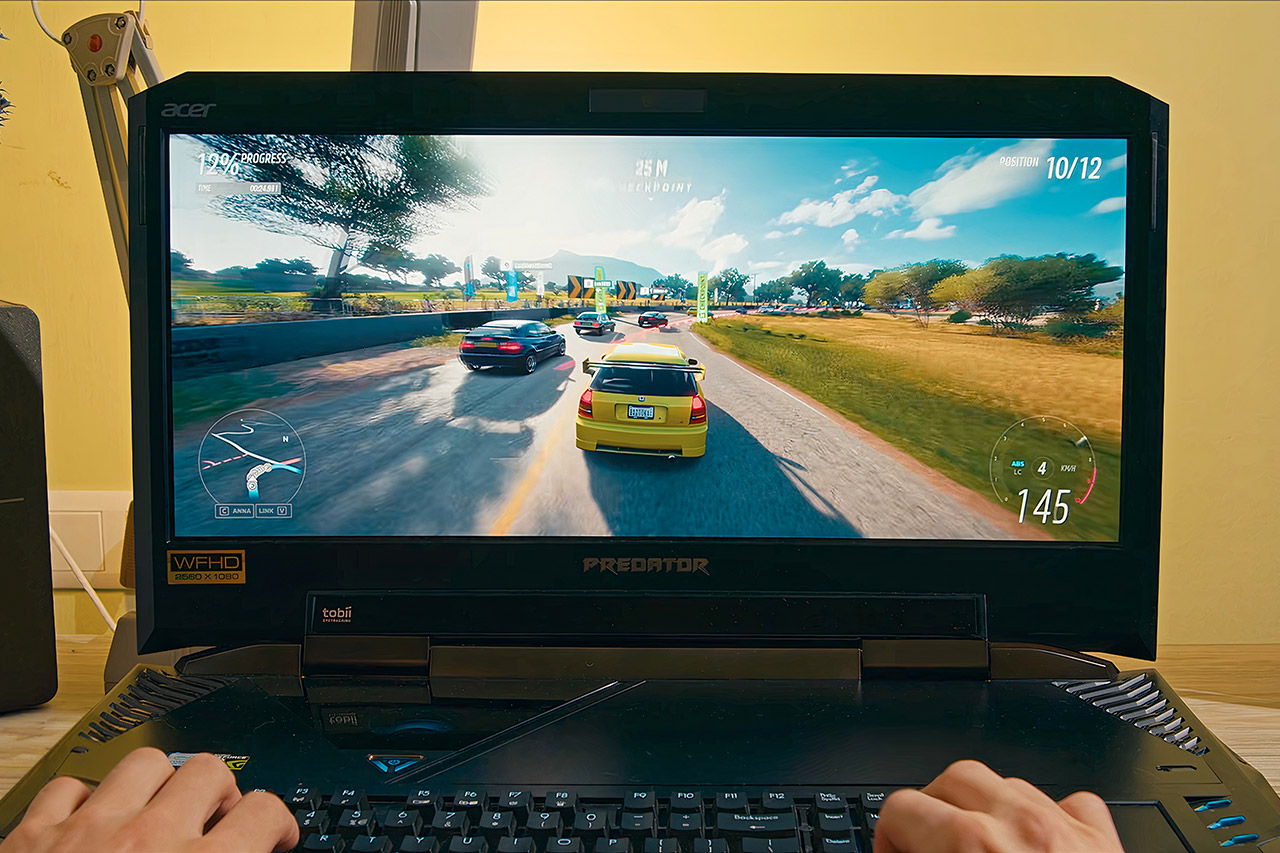
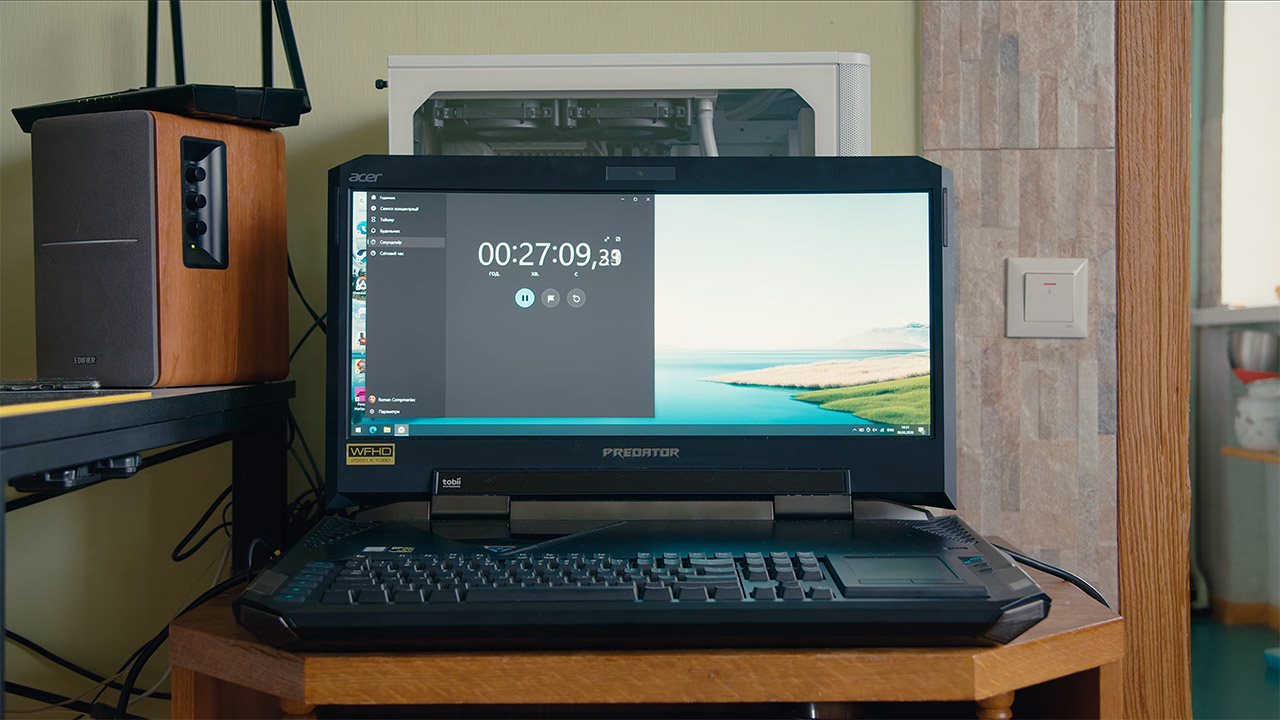
Acer built the Predator 21X in 2017 as a limited run of a few hundred machines that carried dual GTX 1080 graphics cards in SLI, an unlocked Core i7-7820HK, 64GB of memory, and a 21-inch curved 2560 by 1080 panel that refreshed at 120Hz with G-Sync. The package arrived in its own suitcase and cost close to ten thousand euros. Rozor tracked one down years later and kept it on his desk for three full months to see what daily life actually felt like with hardware that once held the title of the world’s most powerful laptop.
Opening that lid still delivers the same instant wow impact it has since launch. The screen curves out in front of you in a magnificent wide view, revealing a Cherry MX mechanical keyboard that is proudly lit up. A magnetic touchpad flips over fluidly to become a number pad, and Tobii eye tracking is located at the bottom of the bezel. Storage-wise, you get a RAID 0 pair of NVMe drives and a hard disk, with room for additional. Just keep in mind that its dual 330w power bricks are required for full operation, and you’ll need to exercise caution when transporting the entire 8.5 kilogram beast from room to room; moving it has suddenly become a deliberate decision rather than something done on a whim.

- HIGH-LEVEL PERFORMANCE – Unleash power with Windows 11 Home, an Intel Core i7 Processor 14650HX, and an NVIDIA GeForce RTX 5060 Laptop GPU powered...
- FAST MEMORY AND STORAGE – Multitask seamlessly with 16GB of DDR5-5600MHz memory and store all your game library on 1TB of PCIe Gen 4 SSD.
- DYNAMIC DISPLAY AND SMOOTH VISUALS – Immerse yourself in stunning visuals with the smooth 165Hz FHD+ display for gaming, creation, and...
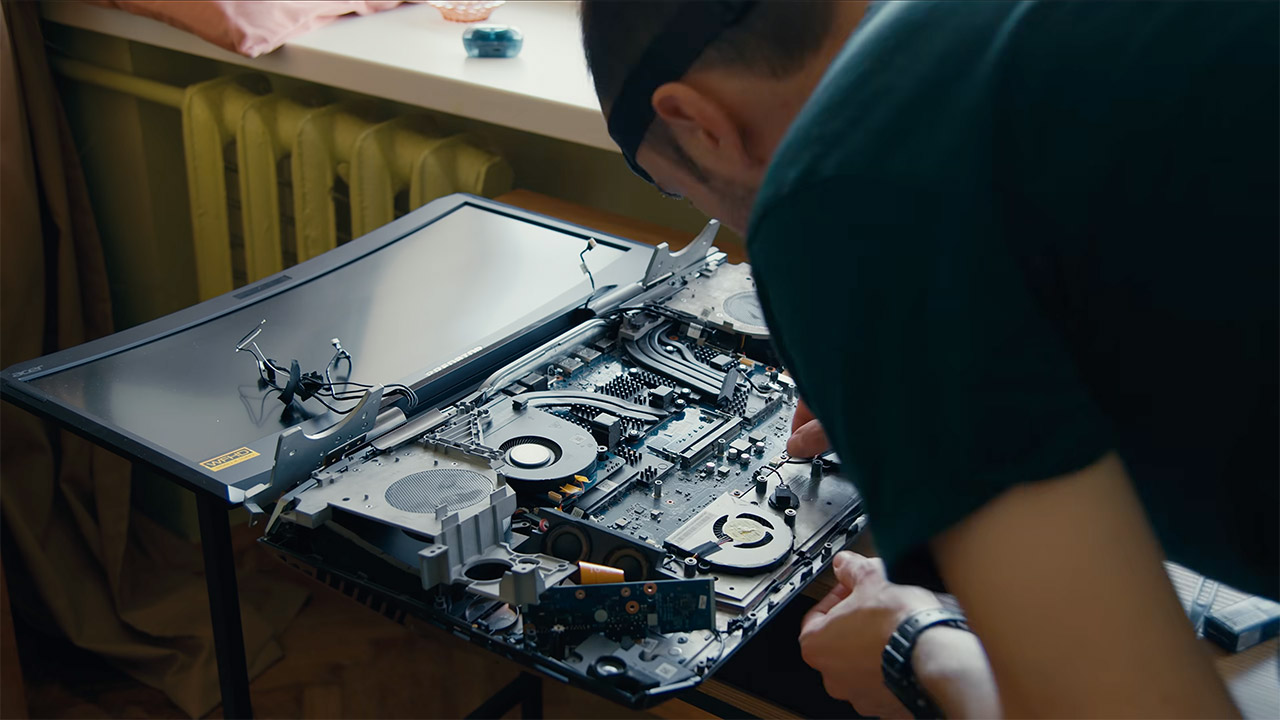
After about a decade, its cooling system was in desperate need of maintenance. Rozor opened the machine, cleaned the five fans and heat pipes, and installed new thermal material. Temperatures gradually dropped to a usable level once the work was completed, but the fans still have a tendency to spin up under load, and you can hear the continuous whoosh of air they produce even in a quiet environment. The battery life is still so low that you’ll most likely use it as a desktop replacement that folds up.
Dual graphics cards can still produce good frame rates in older games at native resolution, but almost every new game ignores the second card or only provides a minor boost with SLI. When you compare upscaling and frame creation, you’ll notice that its performance lags much behind that of contemporary mid-range mobile GPUs, and the older design implies no new ray tracing features.
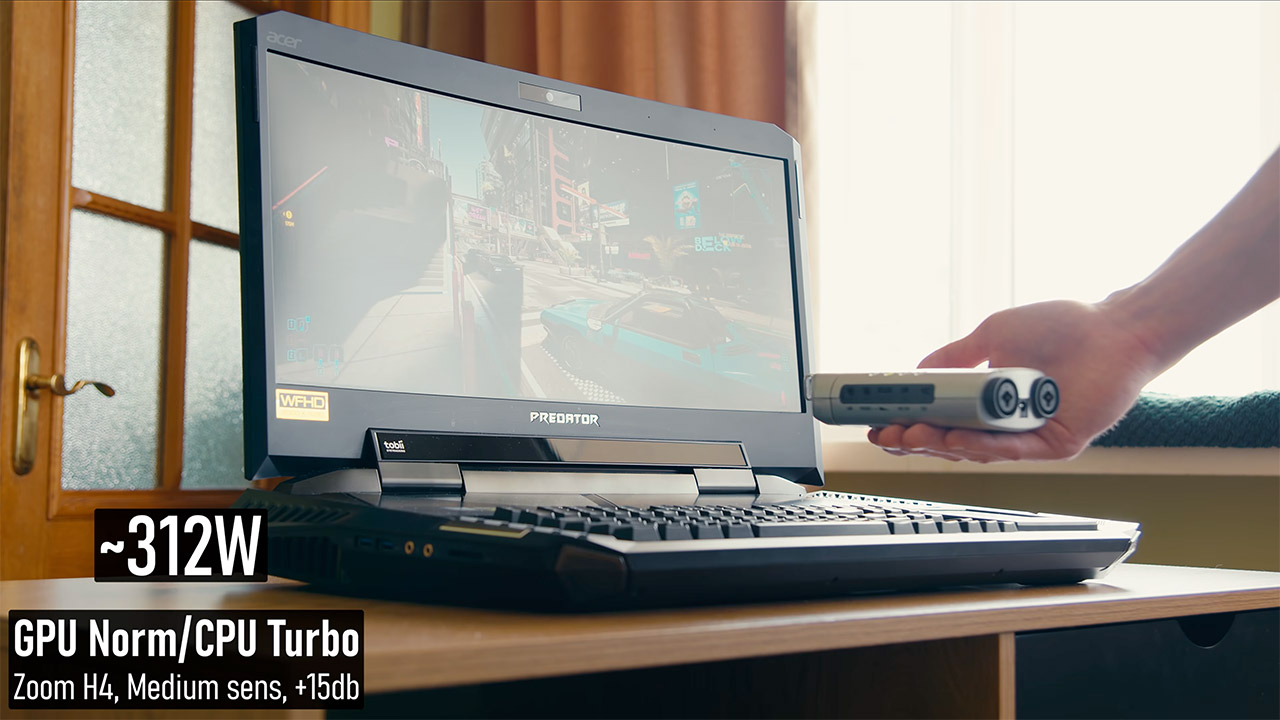
After three months of living with this beast, you really get a feel of its practical limitations, which the earlier reviews could only guess at. Games that still support the hardware look fantastic on the ultrawide panel and respond just as quickly with the mechanical keyboard. Eye tracking is still functional in the few titles that understand how to use it. The machine, however, turns heads every time someone walks into the room, and it has nothing to do with the software; it is just its size and the fact that nearly no one else has one like it that piques people’s interest.
Hauling around two power bricks and attempting to find space for them on a desk or in a car quickly becomes second nature. For Rozor, the hardware still provided a fairly unique experience for the games it was designed to run, but the weight, power requirements, and limited software support put it squarely in the ‘specialized tool’ category rather than a general replacement for newer systems. So the three-month trial concluded with the laptop back in storage, its suitcase closed, and the distinct impression that Acer had created something that was still head and shoulders above the competition, even if the insides were already being outdone.