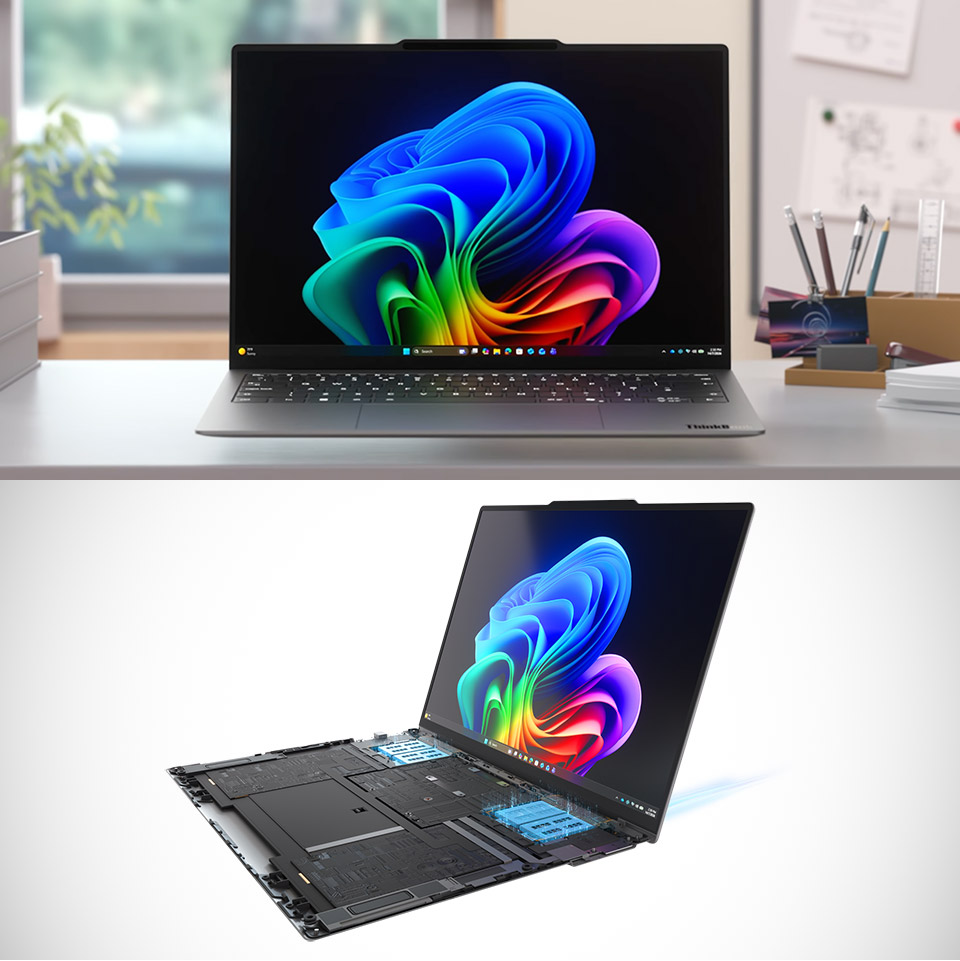
Apple’s new entry-level MacBook Neo comes in at $599, which is sure to pique your interest, but the true brilliance happens inside the aluminum body. A teardown video from the well-known Aussie repair channel Tech Re-Nu shows us just how effortlessly this machine takes apart. As it turns out, all you need are normal Torx drivers, no expensive prying tools, no heat guns, and, in most cases, no adhesive at all.

Slim laptops, as expected, promise the world in terms of portability, but all too frequently they sacrifice something important in the process, namely consistent performance. Heat accumulates in these little chassis faster than you’d expect, and the fans have to spin faster to compensate, all before the processor has a chance to throttle back at the worst possible time. Inventec chose to tackle this issue front on with the VeilBook, a 14-inch prototype laptop that manages to stay under 10 millimeters thick while providing adequate cooling and typing comfort.

Apple debuted the MacBook Neo on March 4, 2026, and units begin arriving in customers’ hands tomorrow (March 11th). The laptop starts at $599, or a modest $499 for students thanks to educational pricing. That alone has a lot of people sitting up and taking note, and with good reason, given that past entry-level MacBooks were priced at $999 or higher.

Apple released the PowerBook Duo 230 in October 1992 at a hefty $2,610 ($6,050 today), and what a powerhouse it was. This small laptop, weighing only 4.2 pounds and measuring 1.4 inches by 10.9 by 8.5 inches, fits neatly into a briefcase or bag, eliminating the bulk that made other portables of the time difficult to transport. The reason for its slim appearance is that the internal floppy drive had just been removed totally, and engineers went to town on reducing weight wherever possible, a move that reflected what they had done previously with the PowerBook 100, but on a whole new level.

In 1996, families looking for a home computer had the same old problem: a cluttered desk with different boxes, cables strung out everywhere, and setting it all up felt like launching a small rocket. Compaq responded with the Presario 4402, a stylish (for the time) all-in-one system that combined all of the necessary components into a single, large package.

Logitech’s ERGO M575S, priced at $39.99 (was $50), provides a compelling argument to abandon the traditional action of a mouse in favor of a trackball. People who swear by trackballs are typically individuals who have been turned off by years of wrist strain, and this model delivers on exactly what keeps them coming back, as in no more constant arm flailing.
![]()
Logitech’s POP Icon Combo, priced at $39.97 (was $70), is a low-key travel companion for those looking to pack little yet still have some style and comfort while on the go. This Logitech keyboard and mouse combo delivers the goods: it’s compact enough to fit into a backpack or laptop sleeve, wireless performance is dependable, and it has enough charm to make a sterile airport table feel a little less dull.

Apple just revealed its latest MacBook Pros, which are powered by the M5 Pro and M5 Max CPUs. Engineers crafted the M5 Pro and M5 Max around a new Fusion Architecture. Separate dies combine into one seamless system-on-a-chip, optimized entirely for AI workloads alongside traditional computing demands.

When Billet Labs began on this project, they faced an unexpected challenge: transforming a Victorian-era antique into a functional living room display. When fully loaded with water, the finished creation weighs a massive 99 kilograms (218 pounds), combining the elegance of ancient heating technology with some seriously modern components, and its background as a Victorian radiator just adds to its charm.

Compal Electronics, the company that makes many of the laptops you see under famous brand names, has introduced a concept called the AI Book. This design replaces the traditional palm rest and trackpad with a color E Ink touchscreen. You can rest your hands on an active display that shows information, allows you to tap it in, and even accepts stylus input for handwriting or sketching.