Gav and Dan from The Slow Mo Guys went deep into a Colorado mine to film their latest experiment. By sending 50,000 volts through a thin wire and recording at 5 million frames per second, they’ve created a visual feast.
Inside a 20 person refuge chamber that feels more like a bunker than a lab, the setup is simple: a metal box with 4 50,000 volt capacitors wired in parallel, connected to a nickel-chromium wire. The goal is to overload the wire so much it vaporises and creates plasma, fire and shockwaves. To capture this split second event Gav and Dan use two high speed cameras: a Phantom TMX 7510 at 1.75 million FPS and a Shimadzu HPV-X2 at 5 million FPS. And Schlieren imaging – a technique that visualises air density and shockwaves using mirrors.

- Big Views, Brilliant Quality - Groundbreaking 1-inch 360° imaging [1] delivers excellent low-light for sharper shots on every adventure. Now with...
- Stunning, Day or Night - Capture every detail with 8K 360° videos and store them effortlessly with 105GB Built-in Storage. Whether you're exploring...
- No Pole, All Action - 1.2m Invisible Selfie Stick turns your Osmo 360 into a cameraman that follows you. Shoot super-smooth 4K/120fps and magical...
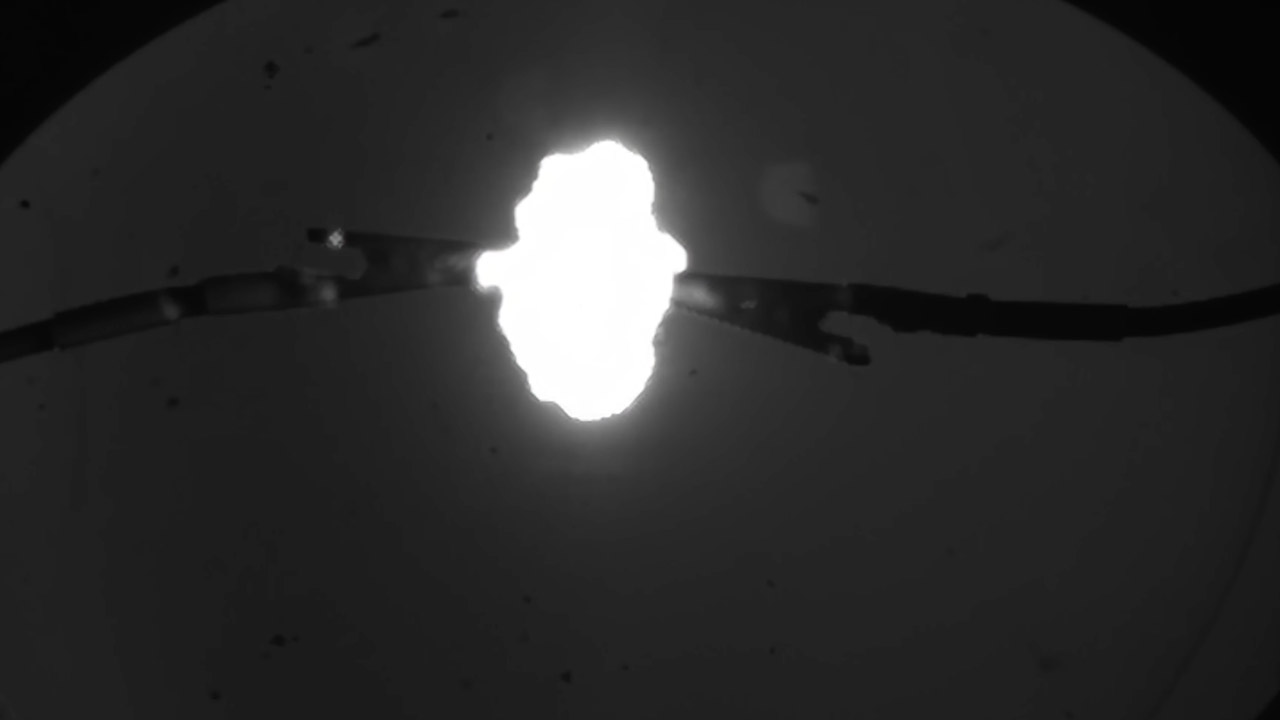
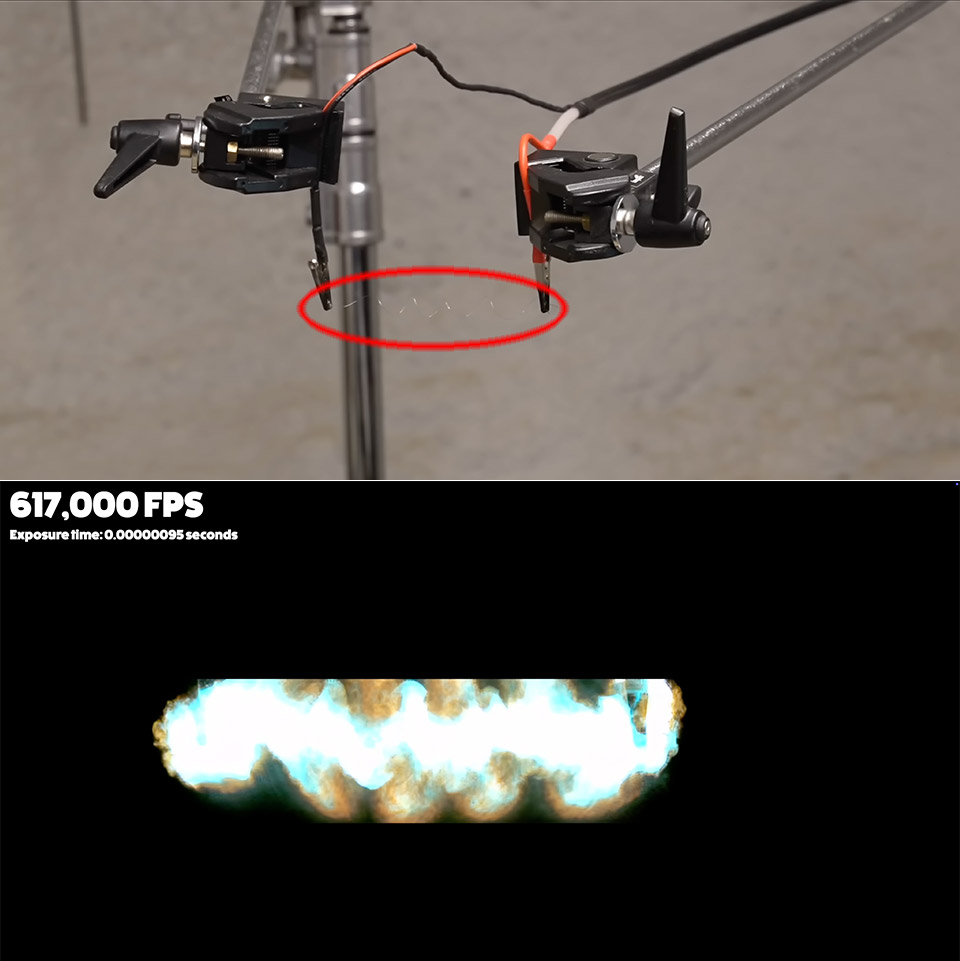
At 80,000 FPS the wire doesn’t just burn out, it erupts into a fireball that Gav compares to the Eye of Sauron. The initial flash is so intense it overwhelms the camera and creates a white hot glow followed by a blue plasma arc. As they crank up the frame rate to 617,000 FPS the sequence becomes clearer: the wire vaporises uniformly with no discernible travel of energy from one end to the other. It’s as if the whole length of the wire decides to give up the ghost all at once. By the time they hit 1.75 million FPS the footage shows a “fluffy” cloud of vaporised metal followed by a secondary discharge that looks like lightning threading through the chaos.
The Shimadzu camera at 5 million FPS is a whole other level. With only 256 frames to play with every image is gold. The footage shows the wire dematerialising into tiny particles, micro-arcs forming in the gaps where the wire once was. Schlieren imaging adds another dimension, showing shockwaves rippling out in a perfect sphere. These waves bounce back and forth creating patterns that reveal the wire’s uneven thickness or imperfections.
A weird anomaly shows up in the footage: blue dots below the wire, visible for one frame at 80,000 FPS and six frames at 1.75 million FPS. Gav thinks it’s a camera artifact but the dots are aligned vertically and persistent. This is where Mehdi Sadaghdar comes in, the electrical engineer behind ElectroBOOM, to investigate. After ruling out physical explanations like ultrasonic waves or stray sparks (sound wouldn’t even reach the camera in the timeframe captured) they conclude it’s likely a lens or sensor issue caused by the event’s extreme brightness. The mystery remains unsolved, but it adds to the experiment.
For the final test Gav and Dan swap the straight wire for a coiled one, still at 50,000 volts. The result is amazing: the arc follows the spiral and doesn’t jump. It’s a reminder that even at its most powerful, electricity follows the path of least resistance. The coiled wire leaves a whirling plasma trail that looks like Elvish script in the dark. The 5 million FPS footage shows the arc bursting into existence in one or two frames.