
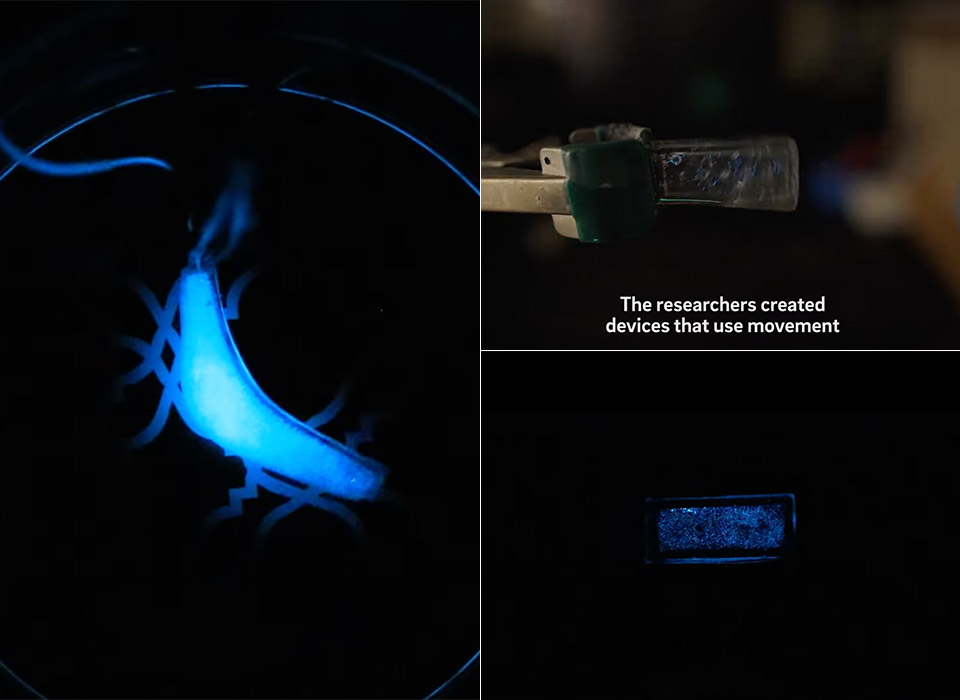

Dolphins in bioluminescent water is a sight to behold, but what if that phenomenon could be harnessed to power soft devices? Researchers from UC San Diego’s Jacobs School of Engineering are attempting to do just that by creating soft devices that contain algae and glow in the dark when experiencing mechanical stress, such as being squished, stretched, twisted or bent.
Since these devices don’t require any electronics to light up, it makes them perfect for building soft robots capable of exploring the deep sea and other dark environments. How did the researchers make these soft devices? Well, they first had to inject a culture solution of the dinoflagellate Pyrocystis lunula inside a cavity of a soft, stretchy, transparent material. This shape-shifting material can be contorted a number of ways, thus enabling the researchers to test a variety of shapes including flat sheets, X-shaped structures and small pouches. When it’s pressed, stretched, or deformed, the dinoflagellate solution begins to glow.
No products found.
This is a neat demonstration of using living organisms for an engineering application. This work continues to advance our understanding of bioluminescent systems from the basic research side while setting the stage for a variety of applications, ranging from biological force sensors to electronics-free robotics and much more,” said Michael Latz, a marine biologist at UC San Diego’s Scripps Institution of Oceanography.


