

The Boeing Starliner CST-100 spacecraft has successfully docked with the International Space Station as of 7:28pm Central Time (0028 UTC). This marks the completion of Orbital Flight Test-2 (OFT-2)’s primary goal with no astronauts on board, thanks to the autonomous systems and ground controllers in Houston who guided the vehicle through a carefully choreographed series of maneuvers. It then recharged its batteries using solar arrays installed on the service module.

It’s official, the Boeing Starliner has been hoisted atop a United Launch Alliance Atlas V rocket ahead of the company’s second uncrewed Orbital Flight Test-2 (OFT-2) for NASA’s Commercial Crew Program. The launch is targeted for 6:54 p.m. EDT on Thursday, May 19 from Space Launch Complex 41 at Cape Canaveral Space Force Station in Florida.


The Boeing T-7A Red Hawk advanced trainer jet has officially been delivered to the U.S. Air Force. What sets this next-generation trainer aircraft apart from the others is that it incorporates a red-tailed livery in honor of the Tuskegee Airmen of World War II who made up the first African American aviation unit to serve in the U.S. military.


The legendary Boeing 737, a narrow-body aircraft, completed its first flight in April 1967 and entered service in February 1968 with Lufthansa. Since then, a total of 15,099 Boeing 737s have been ordered and 10,926 delivered. Yes, some of these aircraft have been converted into private jets, but the cost to do so is reserved for those with a net worth in the hundreds of millions. However, one aviation enthusiast has created the next best alternative.


Lockheed Martin Sikorsky-Boeing’s SB>1 DEFIANT successfully completed FLRAA mission profile test flights, including a technology demonstration, confined area landings and low-level flight operations. If tests continue to go well, this aircraft will eventually replace the Black Hawk, especially since its coaxial rotors were able to achieve a top speed of 272 mph in level flight.
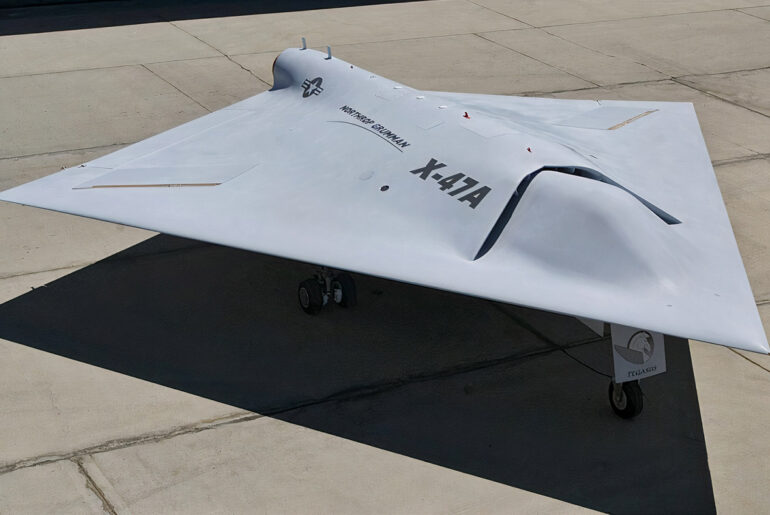

China is reportedly working on a hypersonic plane, based on the now defunct Boeing Manta X-47C program. More specifically, Tang’s Two-Stage Vehicle (TSV) X-plane design, which consists of two separate engines on each side. When traveling at lower speeds, the engines function as standard turbine jet engines. Since there are no moving parts, this design enables the aircraft to quickly switch to high-speed mode to accelerate to over five times the speed of sound.
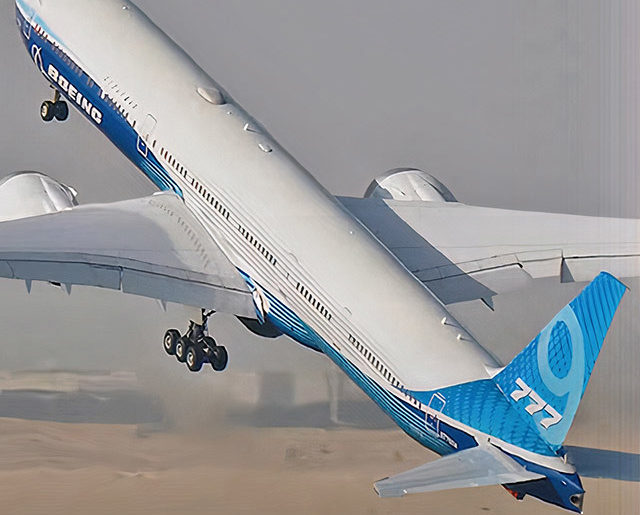

The new experimental Boeing 777X arrived at Dubai World Central for the Dubai Airshow, and it made a nearly 15-hour nonstop flight from Seattle’s Boeing Field, the first international flight and longest flight to date for the aircraft as it undergoes a rigorous test program. This model builds upon the success of the 777 and 787 Dreamliner families, making it the world’s largest as well as most efficient twin-engine jet.


Boeing, in collaboration with the U.S. Air Force and Qatar Emiri Air Force (QEAF), officially unveiled Qatar’s advanced F-15, the F-15QA, in St. Louis yesterday. The first batch of F-15QA jets will be delivered to Qatar later this year following the completion of pre-delivery pilot training. The company will also establish and operate an aircrew as well as maintenance training facilities for the QEAF at Al Udeid Air Base in Qatar through 2024.


You may have seen refueling planes in-action, but what about an unmanned MQ-25 Stingray drone? Boeing recently tested its advanced manned-unmanned teaming (MUM-T) capabilities by communicating with other manned aircraft without the need for an air vehicle operator on the ground. This happened in a virtual environment with the MQ-25 communicating with the E-2D Advanced Hawkeye airborne command and control aircraft and the F/A-18 Super Hornet fighter jet.


The Pentagon’s Defense Advanced Research Projects Agency (DARPA) announced last year that Boeing dropped out of its experimental space plane program, but the XS-1 Phantom Express is definitely worth taking a closer look at. Despite looking similar to NASA’s space shuttle, this vehicle is comprised of two major components, a space plane powered by a single AR-22 reusable cryogenic rocket engine and an expendable upper stage.