Photo credit: Brenda Ahearn / Michigan Engineering, Communications and Marketing
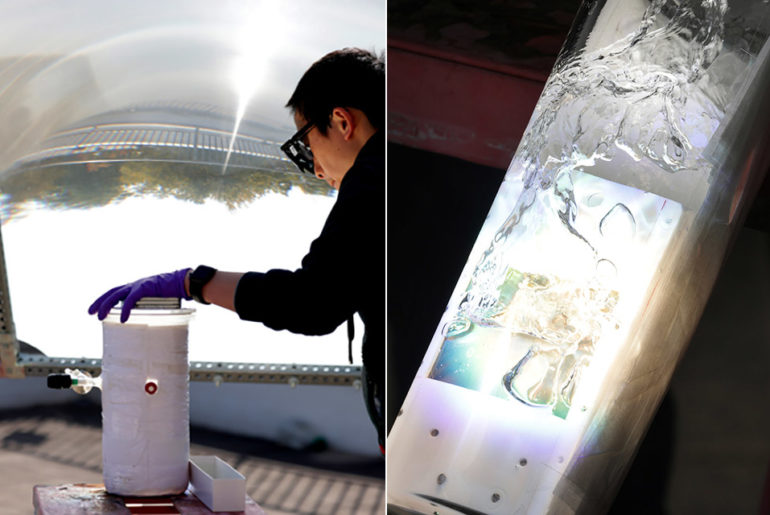
University of Michigan researchers have developed an innovative new kind of solar panel that can harvest cheap, sustainable hydrogen through artificial photosynthesis. In other words, this new process is around 10-times more efficient than previous water-splitting experiments of its kind while also driving down the cost of sustainable hydrogen.
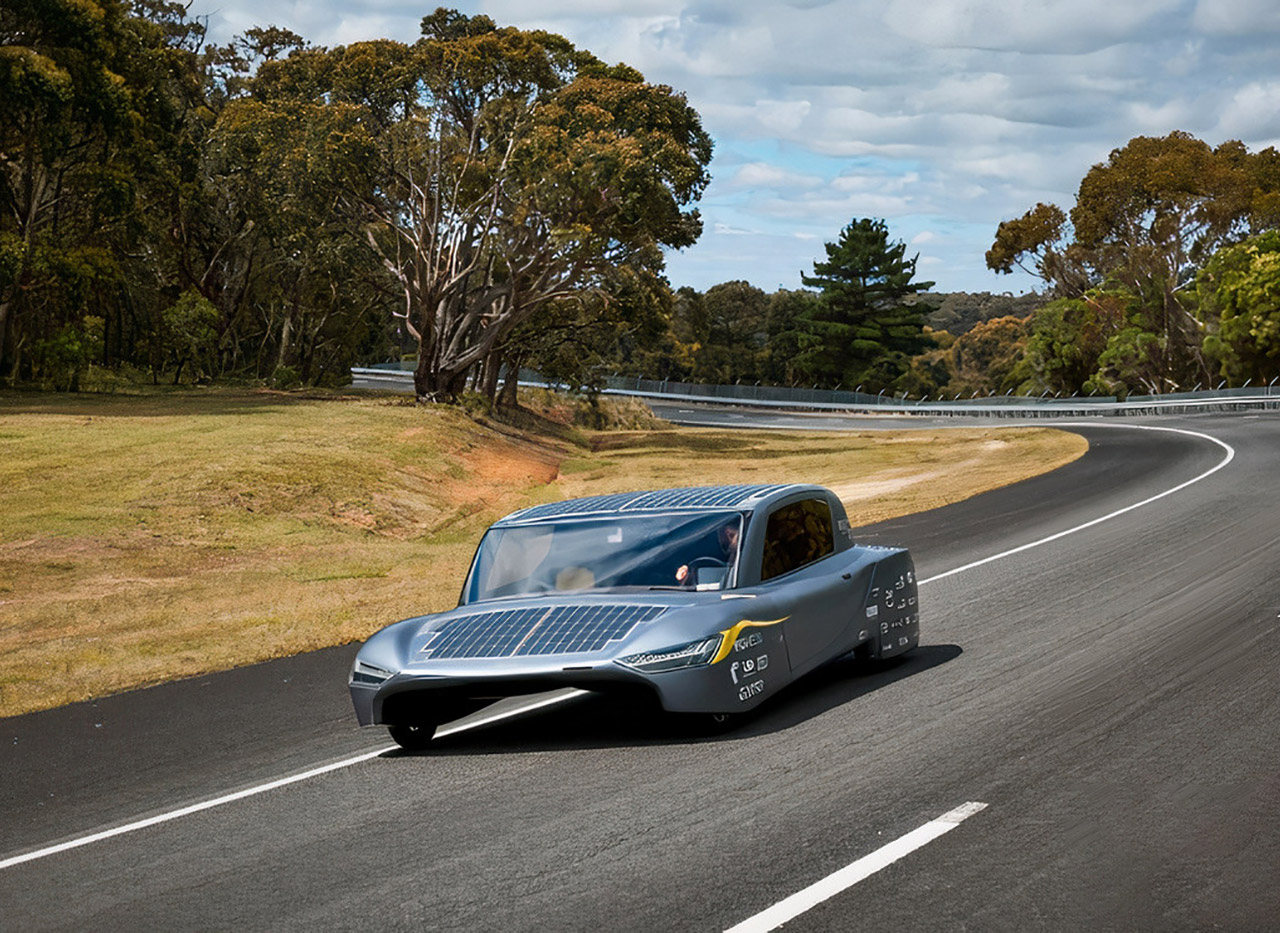
The Sunswift 7 solar electric vehicle would be perfect with this solar-powered floating home, as both help you live completely off-the-grid. However, the former was built by students at UNSW Sydney, and it just set a new Guinness World Record by traveling over 621-miles (1000-kilomters) on a single charge in under 12-hours.

If the U-Boat Worx NEMO 2 personal submarine is a little too pricey for your budget, you could always buy a sailboat for $23,000 and transform it into a solar-powered floating home. Journeyman and sailor Daniel did just that after he picked up a 1984 Beneteau Idylle sailboat. It may not be the most luxurious of living space, but this sailboat does offer him the opportunity the maximize the amount of time he can spend exploring off-grid.

Photo credit: Melanie Gonick, MIT
Living in a floating solar home is nice, but imagine if you could cover it in paper-thin solar cells? MIT engineers have developed just that, and these fabric solar cells can turn nearly any surface into a power source. Each one is thinner than a human hair and glued to a strong, lightweight fabric, making it a breeze to install on fixed surfaces.

First, there was the Starburst House, now Jeep Japan has unveiled their very own modular, solar-powered container house designed for off-the-grid living. The idea is that you would be able to quickly pack up its foldable sides and move to another location without having to worry about disassembling anything.

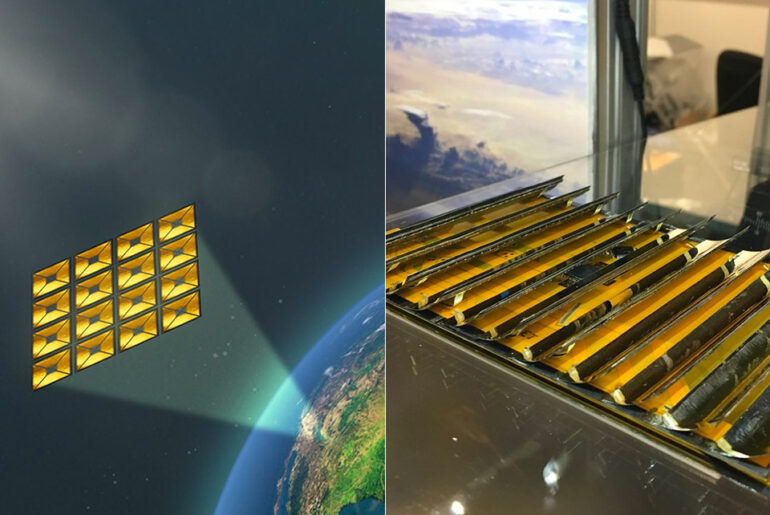
There’s solar-powered headphones, and soon, Caltech’s Space Solar Power Project (SSPP), which aims to provide a global supply of clean and affordable energy. It would consist of a constellation of modular spacecraft designed to collect sunlight, transform it into electricity, and then wirelessly transmit the power to wherever it is needed.

Charlie built an off-the-grid floating home 25-years-ago after retiring from his foresting job and has been living there ever since. His wife Ellen joined him in 2016 on this solar-powered living space that spans 900-square-feet over 2-levels. Most of the wood used in the build was milled by Charlie himself, while a hydraulic splitter can be found in the workstation to make splitting the pieces easier for additions.

The new solar-powered Adidas RPT-02 Sol wireless headphones may not be the first, but are one of the only with Exeger’s Powerfoyle technology built into the headband. Powerfoyle is unlike typical solar cells, as it a light-cell material that can draw power from both natural and artificial light sources. It’s so efficient that a full charge is good for up to 80-hours of continuous use.

Urbanista Phoenix are the world’s first true wireless earphones powered by Powerfoyle solar cell technology designed to provide an always-on audio experience. That’s right, you won’t need any cords or charging cables, as there is built-in solar cell material, which means the earphones charge automatically when in the USB-C charging case. All you need is either indoor or outdoor light for endless playtime.

The solar-powered Zephyr Unmanned Aerial System (UAS) has just set a new flight record by staying in the air for 36-days…so far. It’s still flying over the Yuma Proving Ground in Arizona, doubling as a geostationary satellite. A second Zephyr flight is set launch in the coming weeks and travel over the Pacific Ocean.