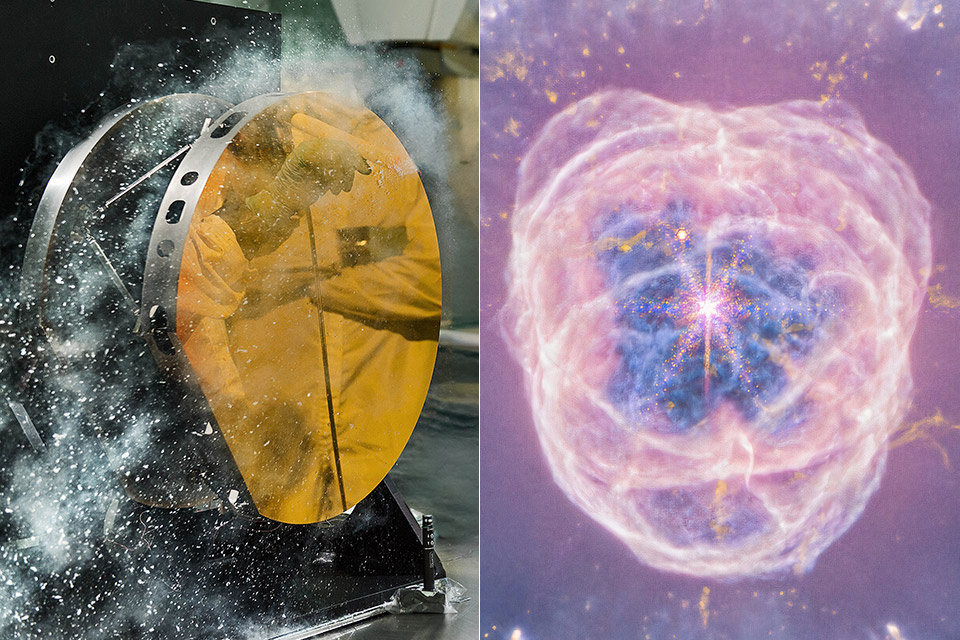
Astronomers have long known NGC 2392 by several names, yet the latest images from NASA’s James Webb Space Telescope make the Lion Nebula nickname feel newly earned. Released today, the views combine near-infrared light from NIRCam and mid-infrared light from MIRI to show a planetary nebula roughly 5,000 light-years away in the constellation Gemini. What appears is a glowing, roughly circular structure about 2.6 light-years across, its center dominated by a bright point that looks for all the world like a button nose.
Hubble captured a photo of this same object in 2000, and it was a sight to behold, a hazy halo of comet-like features stretching out like an ethereal mane, but Webb’s infrared look at the same location adds new complexity to the image. The basic shape remains unchanged, but the details become much apparent. You can see clumps of dust sticking out like jagged islands in a sea of space, and in the spaces between them, a gentle haze of ionized gas appears to be seeping thru, indicating that a lot of change has occurred over several thousand years and is still continuing.

- Interactive model – Inspire kids to build a representation of the Earth, Sun and Moon in orbit with this LEGO Technic Planet Earth and Moon in Orbit...
- Educational space toy – Kids can turn the crank to see how the Earth and the Moon orbit around the Sun
- Includes months and moon phases – This solar system toy includes printed details, like the month and moon phases to help kids see how the Earth’s...
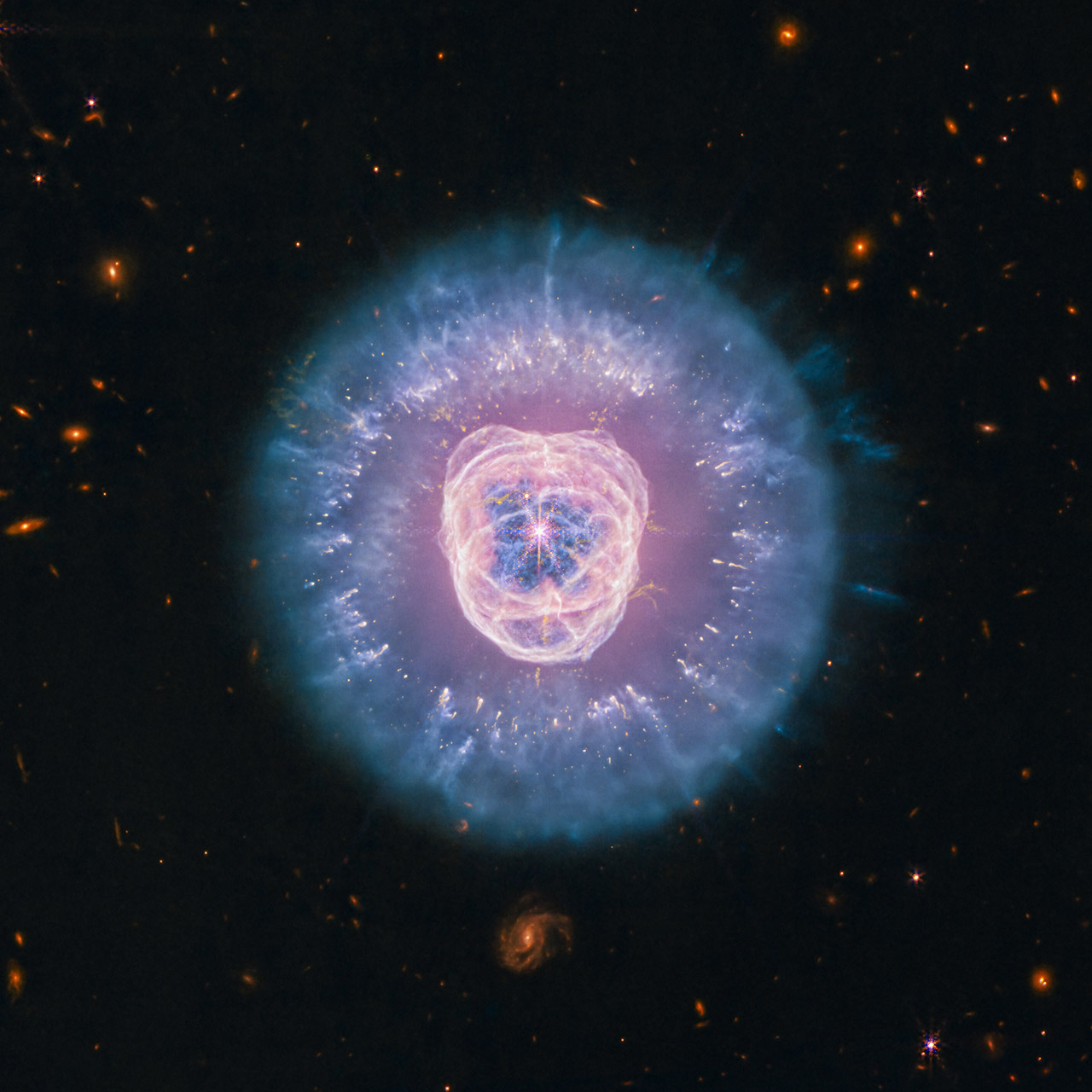

Each of these nebulae includes a dying star with essentially no energy. This one, like our own Sun, was a bit of a lightweight, but it has ran out of nuclear fuel and is now emitting gas into space. That gas forms a shell around a very hot, tiny star called a white dwarf, which continues to emit energy, ionizing all of the gas and forming a large, growing bubble in the shape of a lion’s face. As the bubble swells, it sweeps up and flattens everything in its path, leaving behind rings and shells of gas that look to have been set up solely for display.
The ‘mane’ that is so fancy and cometary-looking? That is actually the inside of a larger dust shell that has just been illuminated from within by that small white dwarf. Some dust particles are so dense that they may remain intact even when bombarded by high radiation, acting as shields for the objects behind them, which is why you can see them lingering around when other dust simply dissipates. The MIRI mid-infrared peek shows that certain dust particles are just eroding away while neighboring filaments continue to function normally.
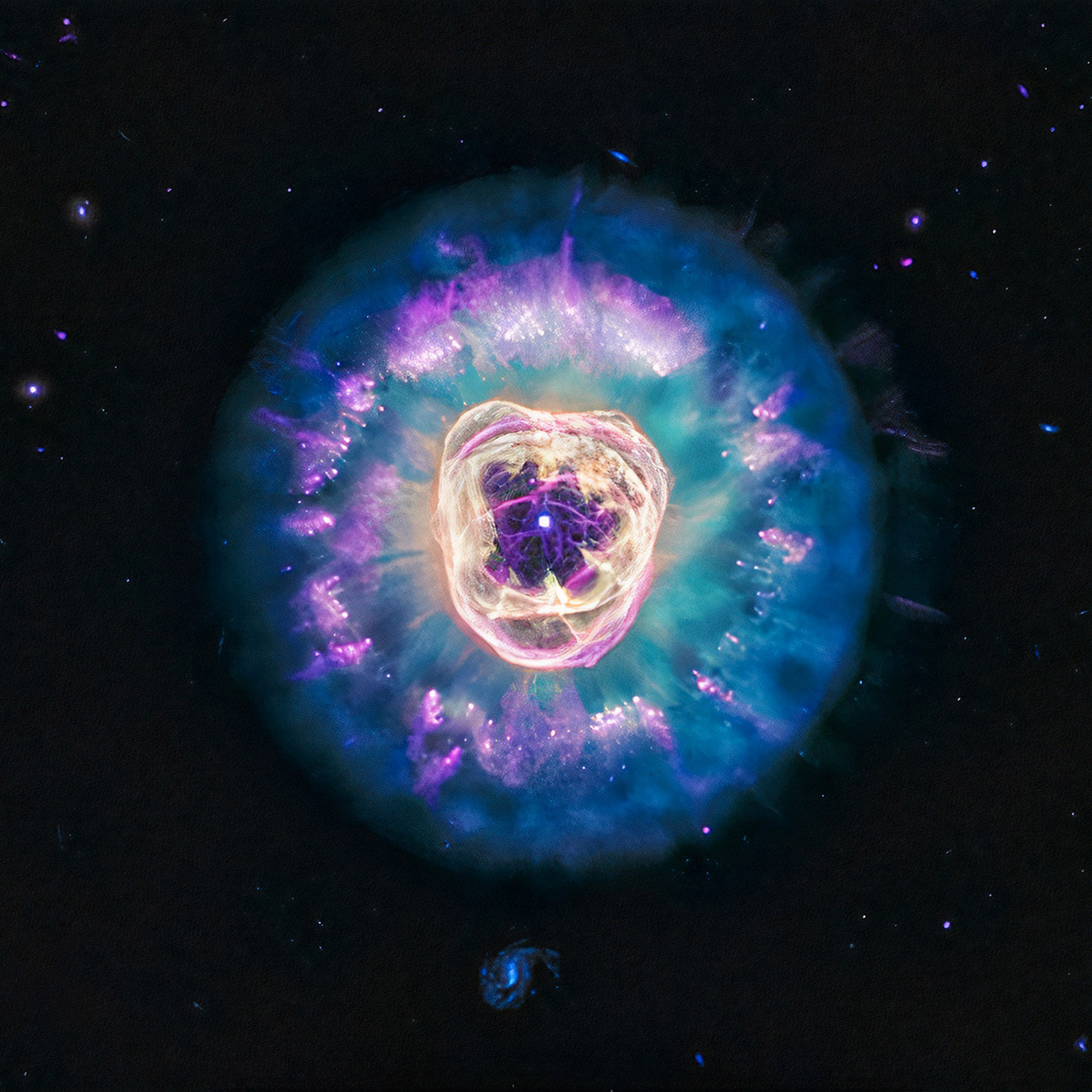

Planetary nebulae like this one have a significant impact on the universe as a whole. Stars in this stage of existence produce a lot of the dust that will later become the building blocks for new planets and stars, and NGC 2392 is right out in the open, demonstrating this. The white dwarf is still frying its environs, driving it all and sculpting the gas and dust as we speak, and in another 10,000 years or so, it will all simply fizzle out into space, a rather quick ending in cosmic perspective.