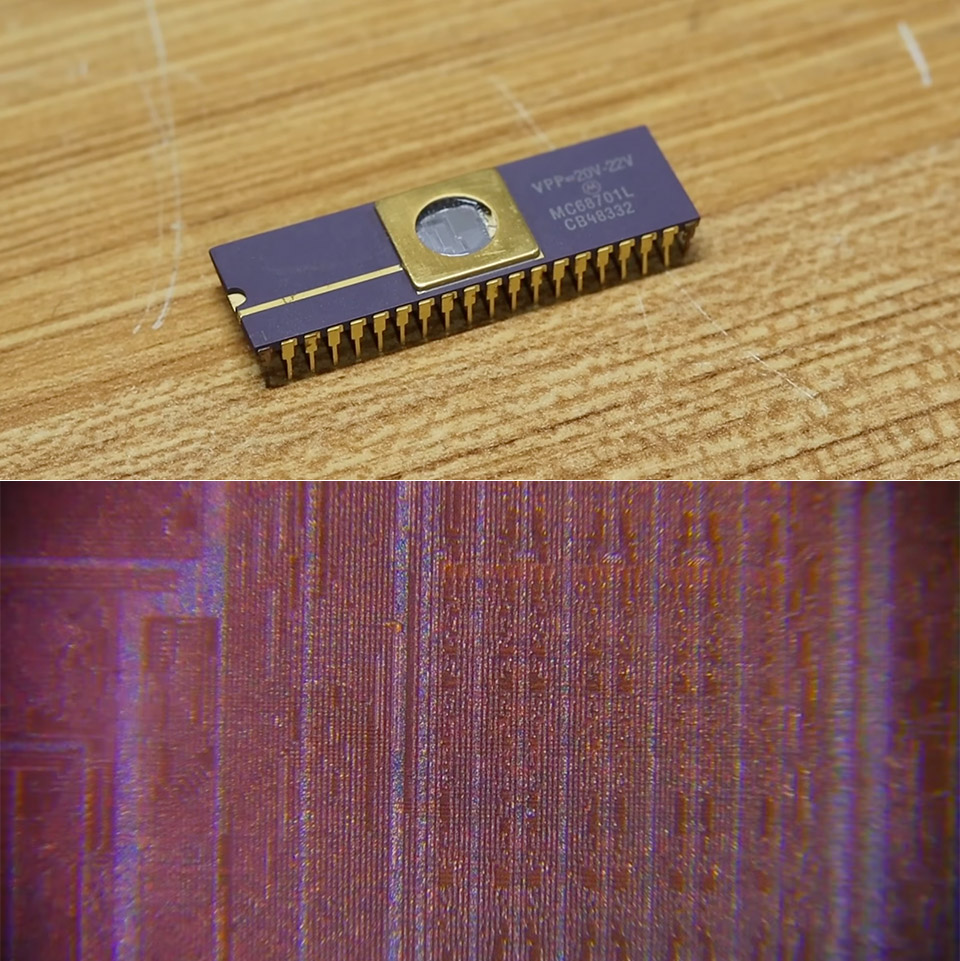
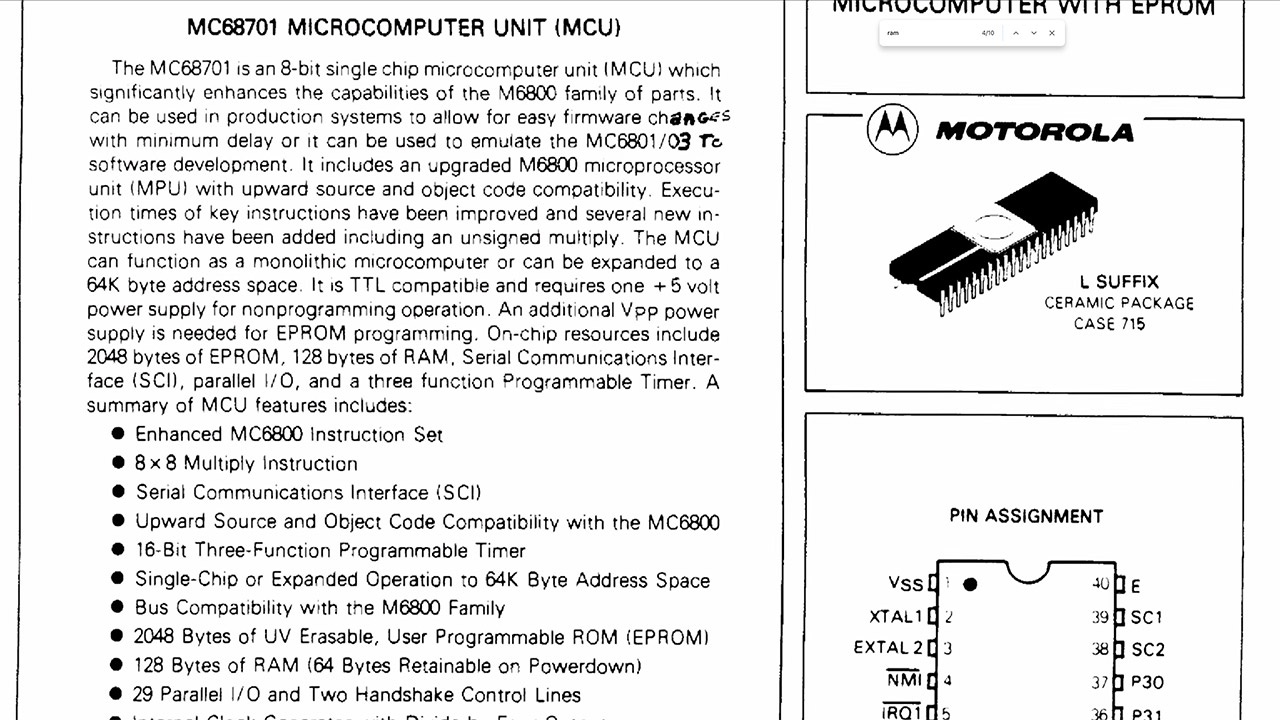
A single chip bought on a whim during a late-night scroll turned into an excuse to rescue an old laboratory microscope and finally see what its silicon actually contains. The part in question is a Motorola MC68701, a microcontroller built in the early 1980s. It packs an enhanced 6800-family processor, 2 kilobytes of ultraviolet-erasable program memory, 128 bytes of RAM, a serial interface, a programmable timer, and 29 input/output lines all onto one piece of silicon. In its day that counted as a complete small computer in a single package, and it could even reach out to external memory to grow beyond its on-chip limits.
The chip’s ceramic container contains a small quartz window that directly covers the silicon. That window exists so that UV radiation can wipe the program memory as needed. It also allows anyone with the proper optics to see the die without having to open the packaging or use harsh chemicals. That feature was what made the entire endeavor possible.

- Unlocked: Compatible with all major U.S. carriers, including Verizon, AT&T, T-Mobile and other major carriers.
- Premium built-in stylus. Effortlessly jot notes, edit photos, sketch artwork, and navigate on the only phone in its class with a built-in stylus***.
- Striking design with advanced protection. Make a statement with an ultrathin design, modern colors, and a vegan leather finish plus outstanding water...
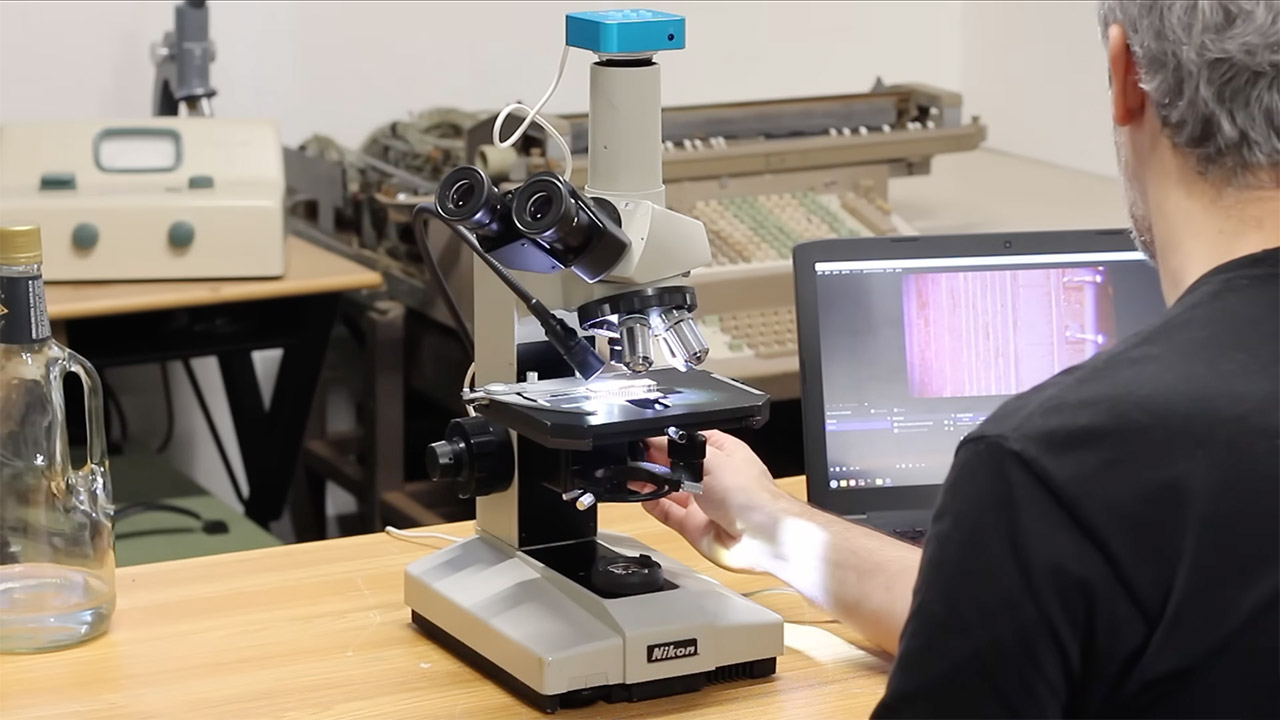
The person who ended up with the chip realized that a simple microscope would suffice to begin exploring. An affordable Nikon Labophot trinocular model appeared on eBay, complete with the original lighting system but in poor condition. Bringing it back to working order required numerous procedures. The power supply required maintenance since a transformer had become loose within its housing. Once fastened and tested, the optics were meticulously cleaned with high-purity alcohol and soft swabs to eliminate decades of dust and haze. A flexible LED light source was added to the top for reflected illumination, and a standard microscope camera required a special adapter manufactured on a small CNC mill to fit firmly over one of the eyepiece tubes.
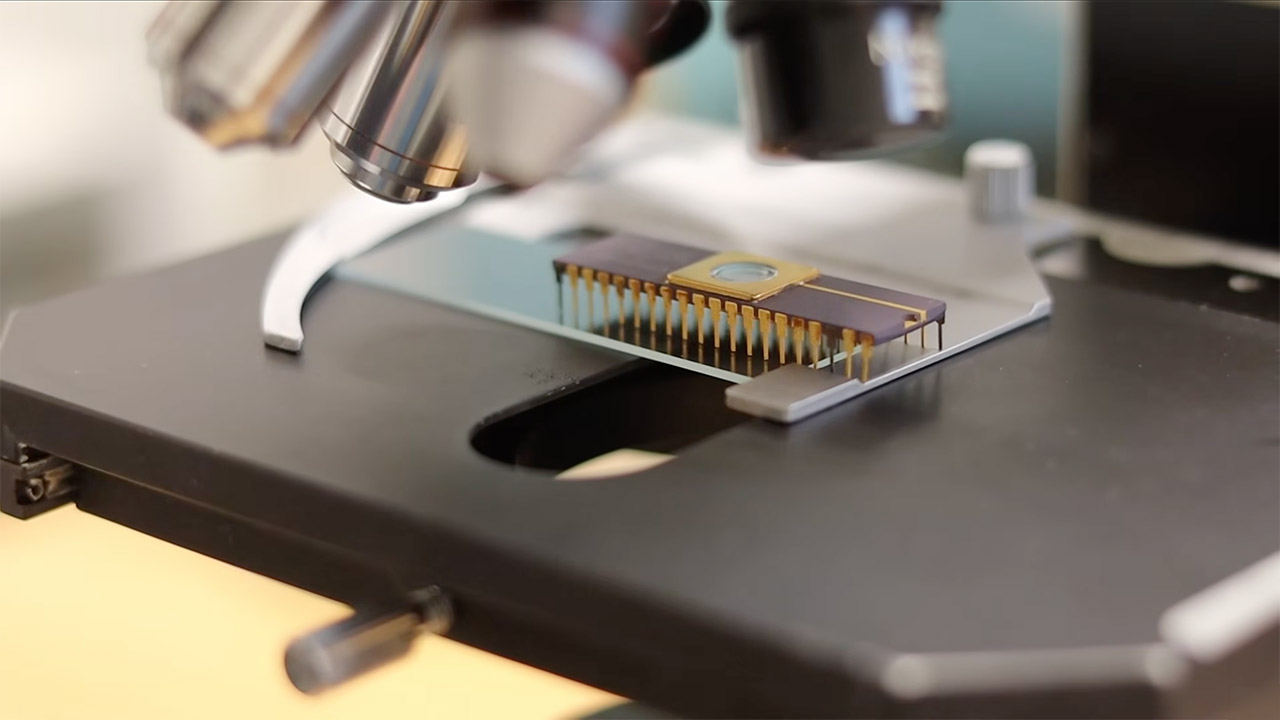
He placed the MC68701 under the microscope. Even at low magnification, the bond wires that connect the silicon to the package pins were visible; they were simply thin gold strands arching from tiny pads on the die’s edge to the chip’s legs. Moving on to the 4x objective (approximately 40x total when you include the eyepieces), you can see the surface details. The largest visible structure is the program memory array, which is a vast, regular grid that covers a large region, with each little compartment looking nearly identical to its neighbor. Not bad for read-only memory, which is designed to be dense and simple.
There are line-driver transistors nearer the die’s edges, near the bond pads, because these are the circuits that generate the signals required to connect the device to the outside world. The transistor forms differ from the dense logic in the core, and faint squiggles of metal trace extend all the way up to the pads where the gold wires are connected. When you see those drivers in action, it becomes evident how the chip sends and receives information. Multiple layers of metal traces run over the surface, some horizontal, some vertical, and some on a higher plane, allowing signals to cross over without shorting. Even without delying the chip, you can see the stacking effect, demonstrating how meticulous they were in fitting everything into such a little space.
Other functional blocks can be found elsewhere on the die. There are three components: one for instruction decoding, one for arithmetic and logic tasks, and a small piece for the on-chip RAM. None of these blocks required labeling because their sizes and locations indicated exactly what they were intended to perform. Once the microscope is focused, the entire active surface fits comfortably into the field of view, but all of the features are so small that you need steady illumination and a bit of care with the focus knob to discern the minute details.