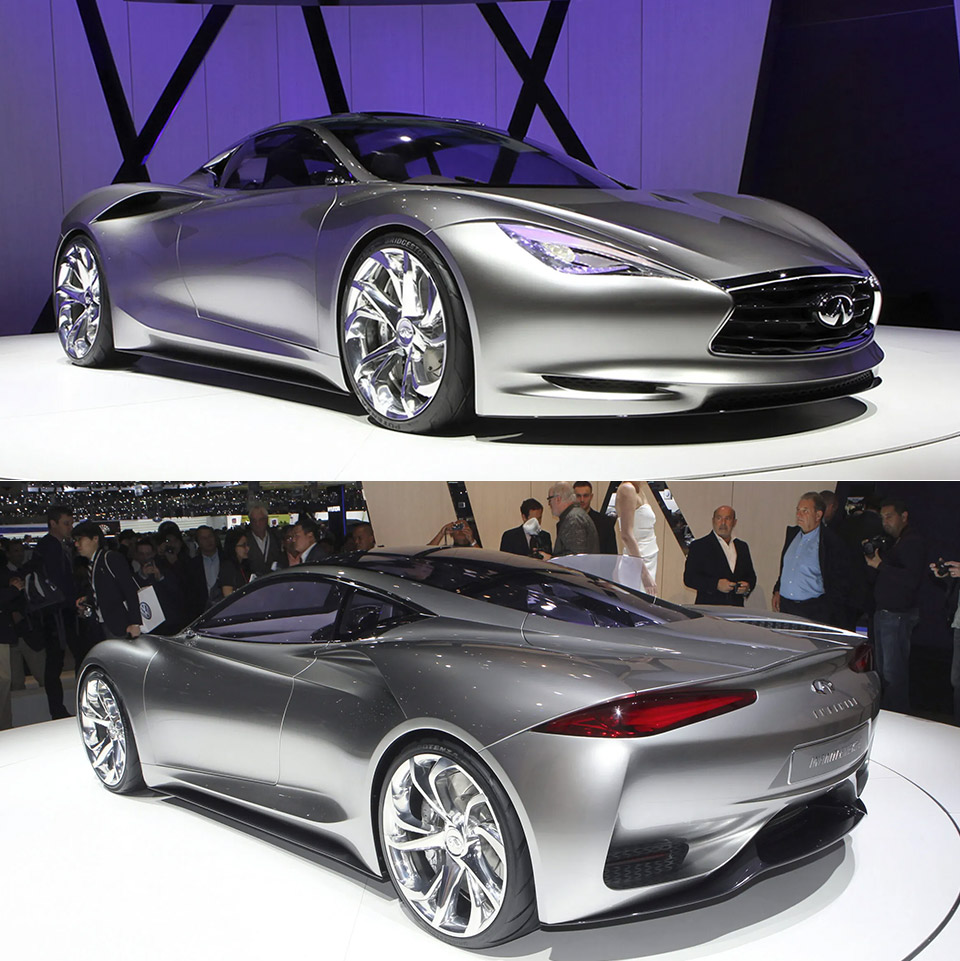
Infiniti spent the late 2000s watching Lexus launch the LFA and wondering how a brand built on elegant sedans and SUVs could ever answer. The response arrived in March 2012 at the Geneva Motor Show, a low-slung two-seater that looked nothing like anything the company had sold before. Called the Emerg-E, it was the first Infiniti designed and engineered almost entirely in Europe, and it carried a hybrid powertrain so unusual for its time that it still feels modern fourteen years later.
Nissan Design Europe completed the bodywork in London, while the technical center handled the engineering at Cranfield. Randy Rodriguez, an American designer, won the exterior design competition after beating out bids from Japanese and UK teams. The UK’s Technology Strategy Board, a government-backed institution, offered significant funding and encouraged Infiniti to try collaborating with suppliers that it had never used before. As a result, the finished product was a car that rested on an extruded aluminum chassis, which is nearly identical to the one used in the Lotus Evora and includes all of the same mounting points. Lotus was also willing to provide a little 1.2 liter three-cylinder engine, but it wouldn’t be performing the driving.

- SPORTS CAR BUILDING TOY – Fuel kids’ passion for high-performance vehicles with the LEGO Technic Ferrari 488 PISTA Car (42235) model building kit...
- TOY CAR WITH REALISTIC DETAILS – Kids can learn new engineering skills as they put together and explore the V8 engine with moving pistons...
- FORZA HORIZON 6 UNLOCKABLE – Get a special LEGO Technic livery in the Forza Horizon 6 video game – please note that a copy of the game is required...
The engine was only there to provide extra power when the battery ran low. The main event was a 15-kilowatt-hour lithium-ion battery pack, which was used as the system’s primary propulsion. All of the grunt work was done by two electric motors, one for each of the back wheels, each capable of producing 150 kilowatts, or around 201 horsepower. They combined to produce 402 horsepower and 1,000 Newton meters of torque. Power was delivered to the wheels using a single-speed X-TRAC transmission. On paper, the vehicle appeared to be quite impressive, with a pure-electric range of more than 30 miles and a combined range of over 300 miles when the range-extender was included. It was reported to emit low amounts of carbon dioxide, only 55 grams per kilometer.
The concept lived up to the performance claims. Infiniti claimed it could accelerate from 0 to 60 mph in four seconds and reach 130 mph in just under 30 seconds. The battery pack was placed behind the seats to keep the weight low and the center of gravity close. Charging it from a standard socket took roughly 10 hours, but if you could find a 240V supply, it would only take 6 hours. For 2012, the pack was a fair size, not too little or too large, but just right. It was enough to provide the Emerg-E a reasonable amount of electric range while avoiding the range anxiety that plagues most battery cars these days.
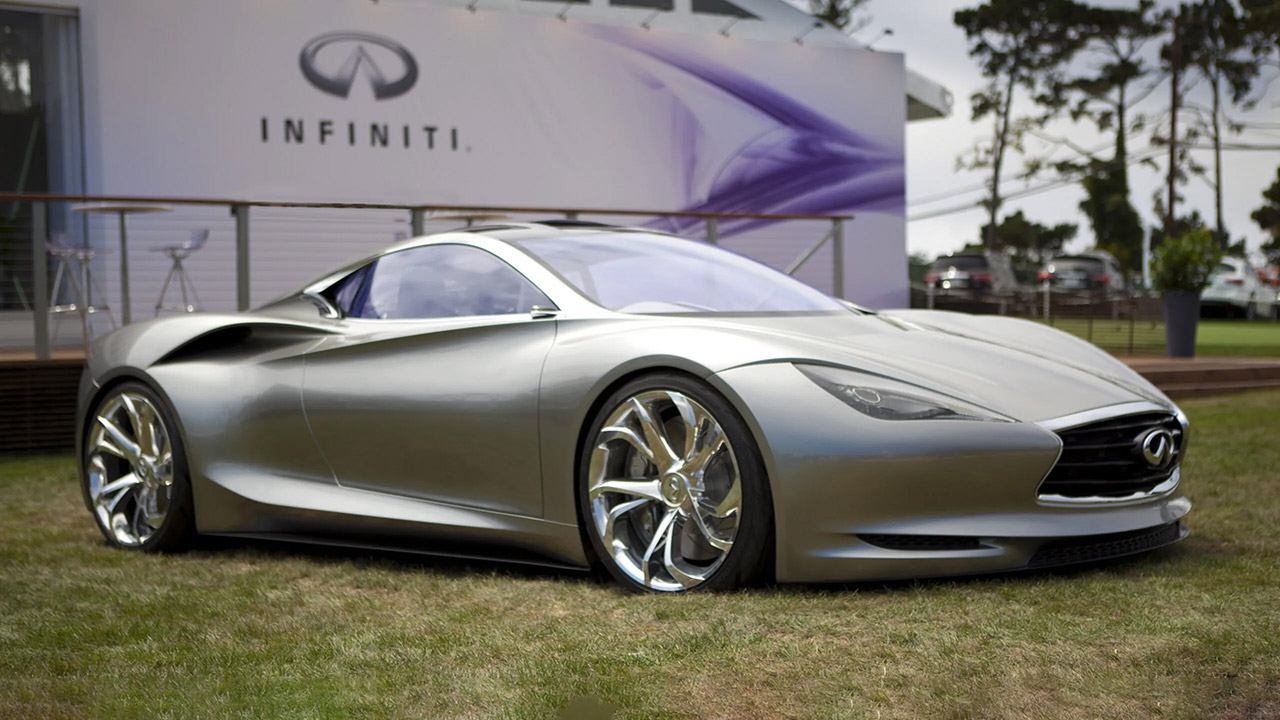
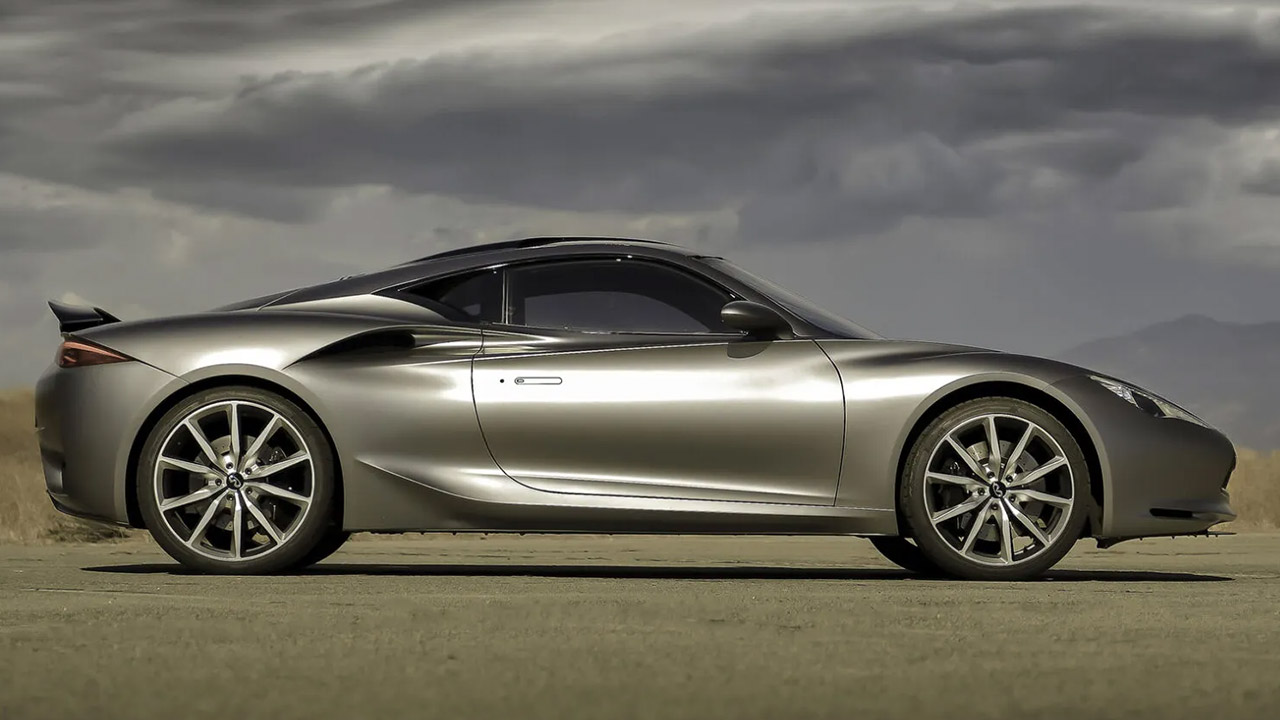
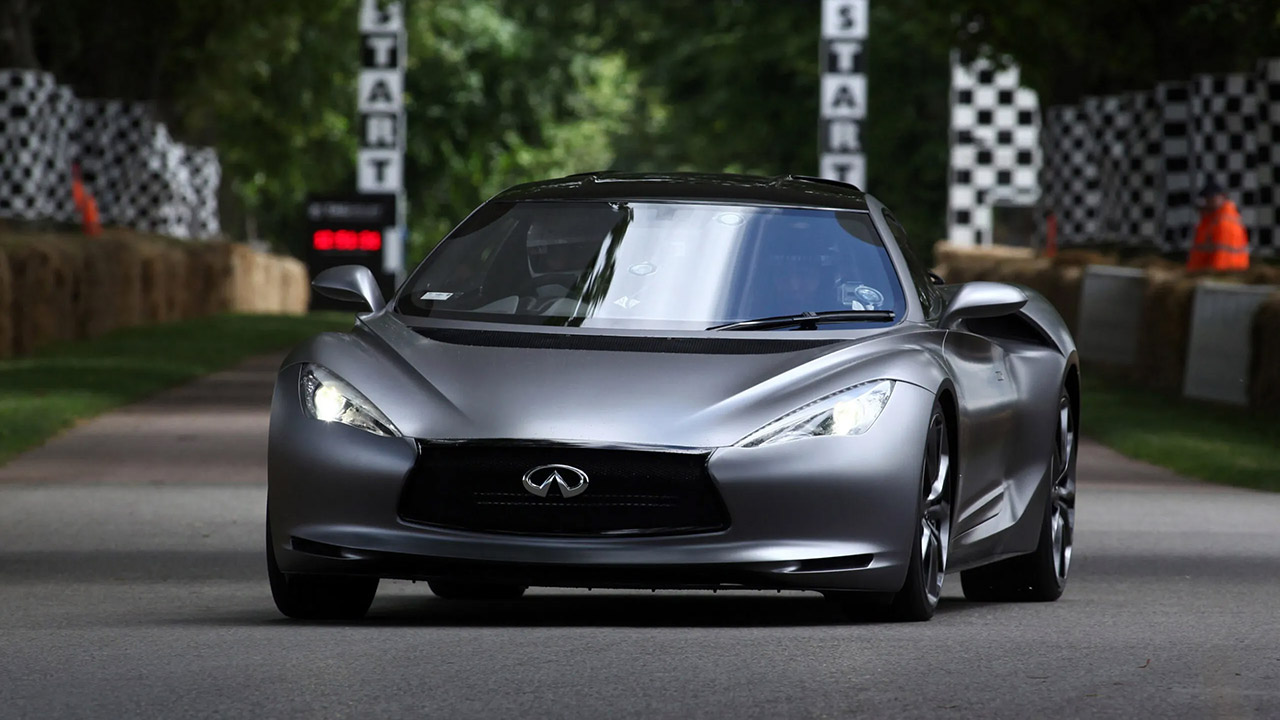
The exterior design was particularly striking, since it used the same flowing language that Infiniti had demonstrated on the Essence concept a few years before, but this time it was put to a practical mid-engine configuration. Senior bloke Shiro Nakamura described the body as being wrapped in a lovely silk, which is seen in the long lines flowing from the sharp nose, low fenders, and tapering tail. The cabin is located squarely at the front of the vehicle, giving it the classic sports-car appearance that European manufacturers have perfected for decades. The Emerg-E isn’t a large car, either; at 175.7 inches long, it’s more Cayman than supercar. Some of those curves did eventually appear on production automobiles, such as the Q60, but they never had the same wow-factor.
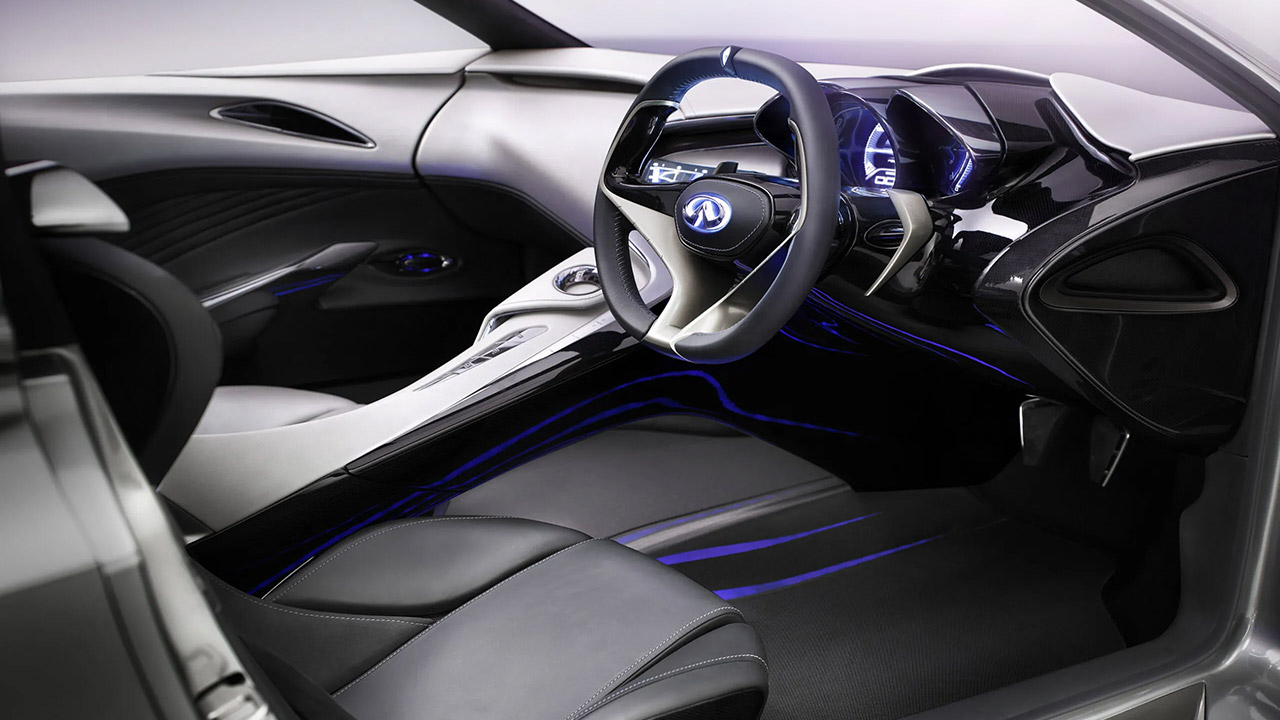
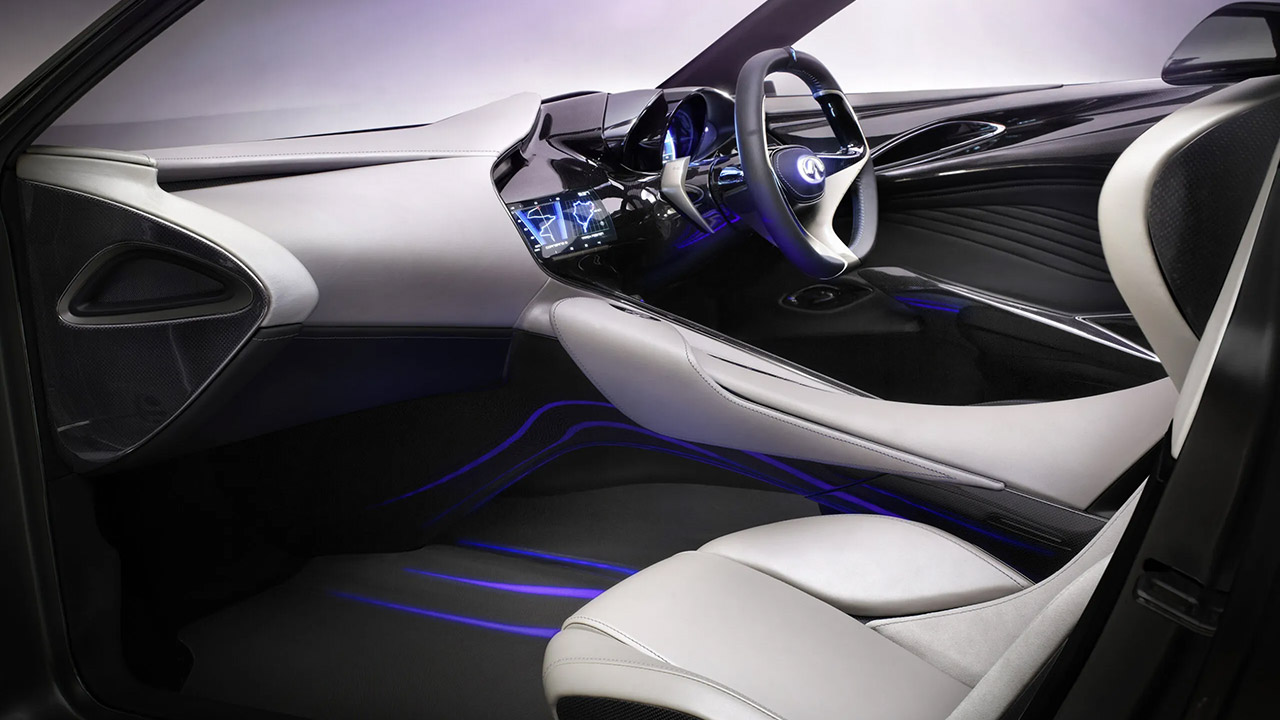
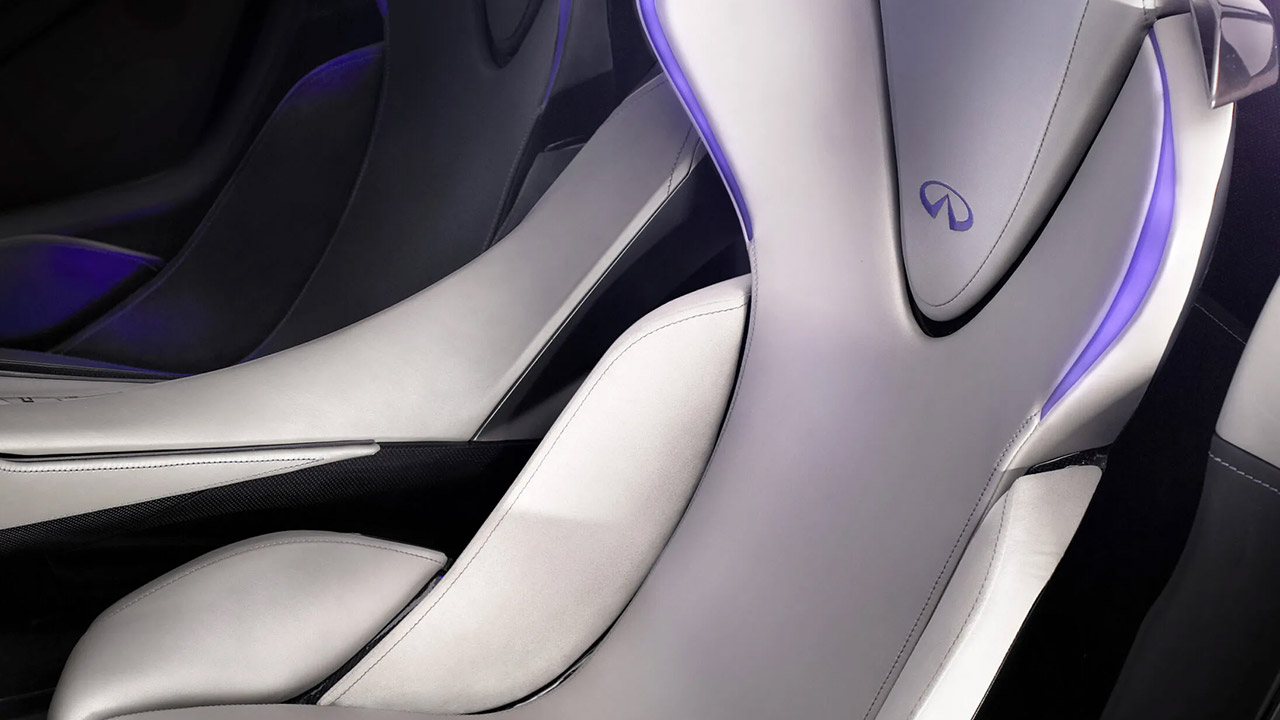
Inside the cabin, it appeared like the designers were trying for an intentionally futuristic aesthetic. A central spine floats up in the middle of the chairs, sort of like a backbone, and your digital gages light up in a dazzling blue glow that turns purplish under heavy acceleration. Then there’s the three-spoke steering wheel, which at first glance resembles a racing game controller rather than an Infiniti steering wheel. When you turn the key, these streaks of light flare through the cabin for about three seconds, and when they fade, you get the idea that you’d be pretty dang awesome to possess this thing, even if it’s clearly just a concept car. However, and possibly on purpose, it does not appear to be the result of a wild imagination run amok. It appears to be a viable production vehicle, implying that Infiniti was seriously considering bringing it to market.
A running prototype appeared at the Goodwood Festival of Speed a few months later, and Red Bull Formula 1 driver Mark Webber was excited to see how it handled the hill. Not long after, the design won the Concepts category of the German Design Council’s Automotive Brand Contest, and all reviewers who saw the car in person agreed. This was a concept vehicle that appeared and felt like it was all business. For a brief period of time, it appeared that Infiniti could finally have something to offer that would spark people’s interest: a halo model to help them stand out.
[Source]