
Researchers from the Swiss Federal Laboratories for Materials Science and Technology (EMPA) have developed an innovative 3D-printed fungal battery that can digest itself from the inside after use. Put simply, this living battery could potentially supply power to sensors for agriculture or research in remote regions.
Technically speaking, this isn’t a battery per se, but rather a microbial fuel cell. In other words, it’s a microorganism that convert nutrients into energy, and these fuel cells make use of this metabolism to capture part of the energy as electricity. The team combined two types of fungi to create a functioning fuel cell: on the anode side there is a yeast fungus whose metabolism releases electrons, while the cathode is colonized by a white rot fungus, which produces a special enzyme, allowing the electrons to be captured as well as conducted out of the cell.
No products found.
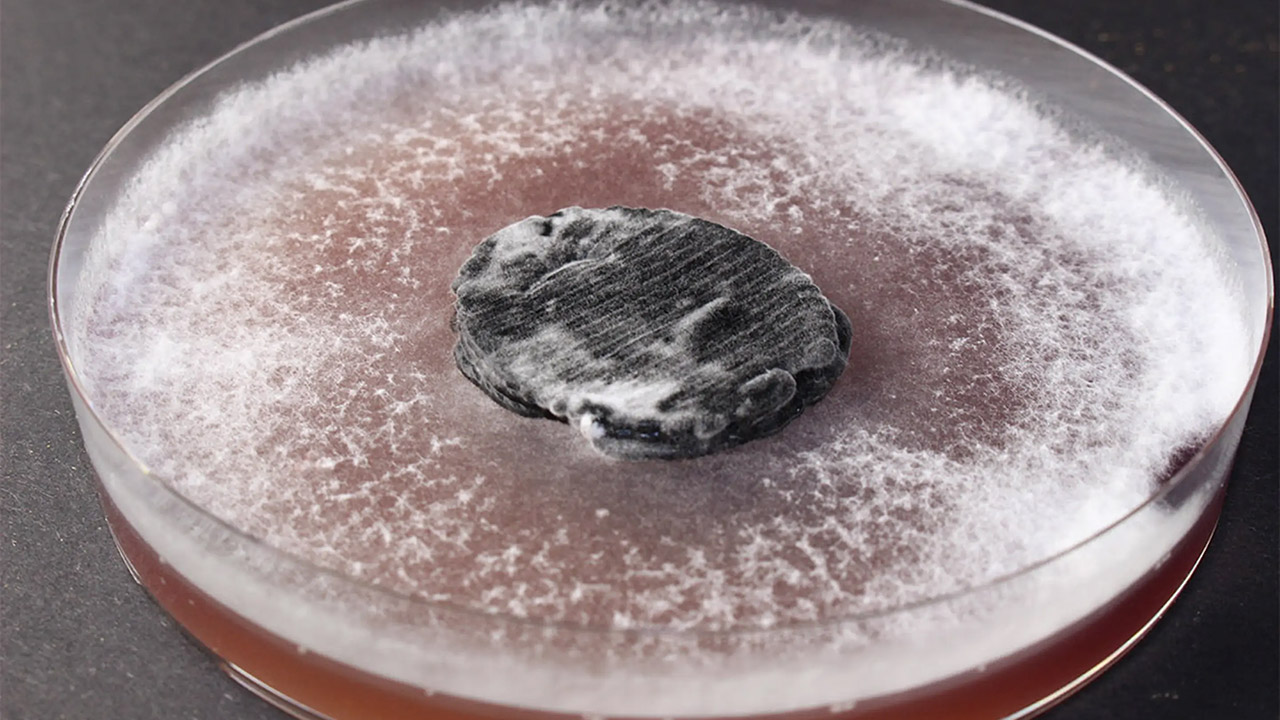
It is challenging enough to find a material in which the fungi grow well. But the ink also has to be easy to extrude without killing the cells – and of course we want it to be electrically conductive and biodegradable,” said Gustav Nyström, Head of the Cellulose and Wood Materials lab.
[Source]