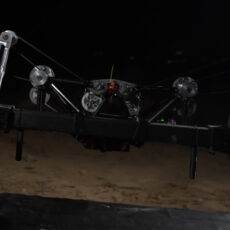

The European Space Agency (ESA) proposed making lunar roads by using a 12-kilowatt carbon dioxide laser to melt moondust. Called the PAVER project, the test made use of a 4.5 cm diameter laser beam to produce triangular, hollow-centred geometric shapes approximately 20 cm across.
These shapes could then be interlocked to create solid surfaces across large areas of lunar soil which could function as roads or landing pads. What they ended up with was a glass-like, yet brittle, material that would mainly be subjected to downward compression forces. Since a single melt layer measures around 1.8 cm deep, structures or roads using this material might need to be layered, depending on the load forces required.

- Detailed Lunar Replica - Features a detailed Eagle lunar lander replica with lunar surface, crater, footprints, and U.S. flag for a realistic space...
- Realistic Modular Model - This modular set includes a descent stage with gold-colored landing pads, panels, opening camera, laser hatches, and movable...
- Ascent Stage Interior - The ascent stage boasts a detailed interior with room for 2 astronaut minifigures, finished with an Apollo 11 Lunar Lander...


During past in-situ resource utilization projects – including brick building using mirror-concentrated solar heat – we’ve been looking at surface melting limited to relatively small melt spots, from few milimetres to a couple of centimeters in diameter. For building roads or landing pads a much wider focal point is required, to be able to scan a very wide area in a practical timescale,” said Advenit Makaya, ESA Materials Engineer.