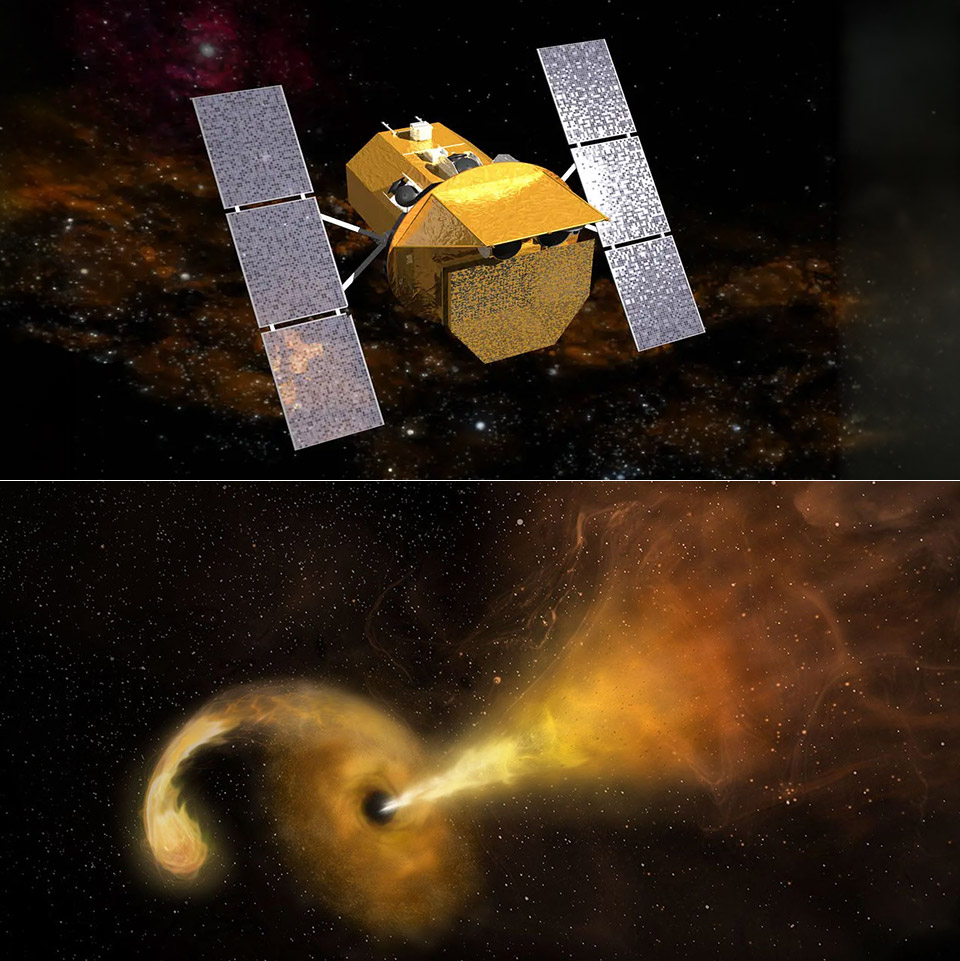
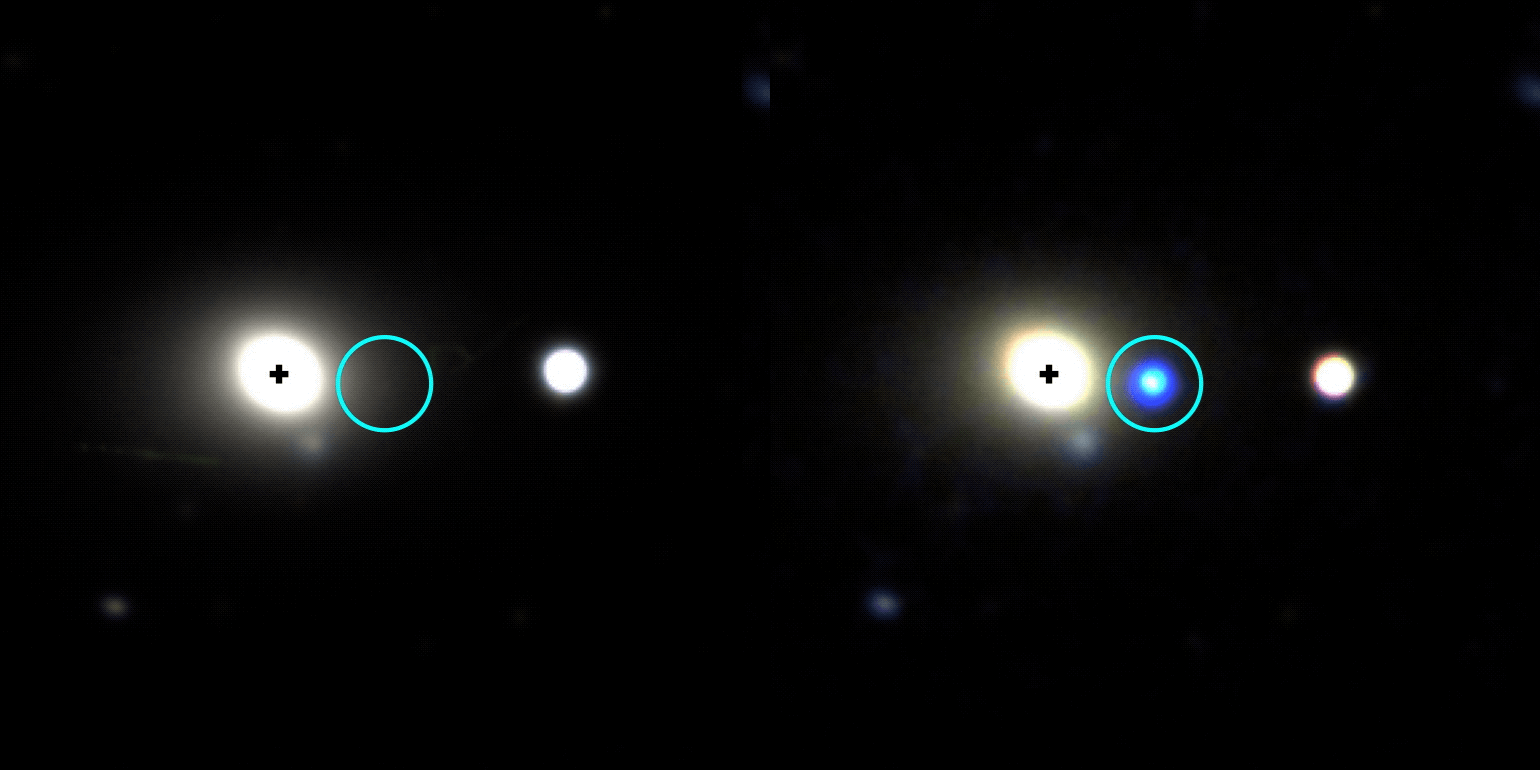
Far out on the outskirts of a galaxy 750 million light-years away, something invisible finally gave itself away. In November 2025, a sudden brilliant flare appeared more than 30,000 light-years from the galaxy’s center, a place where almost no one expected to find a supermassive black hole.
That flare erupted from a star that had strayed too close to a black hole weighing a million times our sun. Gravity strained it to breaking point. The hot debris went spiraling in with a temperature of around 54,000 degrees Fahrenheit, and for a couple of months, the shine from it outshone the whole host galaxy in ultraviolet light, beating over the light of ten billion suns combined.

LEGO Icons NASA Artemis Space Launch System - DIY Rocket Model Building Set for Adults, Ages 18+ - Gifts...
- NASA rocket model kit – Launch into a creative project with the LEGO Icons NASA Artemis Space Launch System model building project for adult space...
- What’s in the box? – This creative building set includes everything you need to craft a multistage rocket with 2 solid-fuel boosters, an Orion...
- Features and Functions – This NASA-themed rocket model features retractable launch tower umbilicals, rocket support and crew bridge, detachable...
Astronomers refer to these types of star-stripping episodes as tidal disruptions. The majority of the ones they’ve detected occurred exactly at the heart of galaxies, where the largest black holes tend to reside, but up until 2024, every confirmed occurrence we have on record was centered around those main centers. This one, well, it’s as if it simply broke the rules. This time, the black hole is located far enough away that the surrounding area of sky appears to be nearly starless. It’s like a cosmic orphan, lacking the typical galaxy’s central hub to hang out with.
Researchers at Palomar Observatory’s Zwicky Transient Facility were the first to notice the flare while monitoring the northern sky. Every night, they look over approximately 500,000 distinct flashes, hoping to catch something unusual. A new AI software that they had developed combed through the data and identified this one as resembling a tidal disruption event, despite its location in the middle of nowhere. Then, follow-up spectra from Chile’s Southern Astrophysical Research telescope corroborated the star-tide-shredding signature, making everything even clearer. NASA’s Neil Gehrels Swift Observatory put it through the wringer, and the temperature and ultraviolet brightness came out as expected.

How a black hole this massive wound up so far away from home is beyond comprehension, but one hypothesis that appears to be the most likely is that a few galaxies decided to collide and join in the distant past. Their black holes got into a war for dominance and eventually threw the smaller one out of the main center. Another possibility is that a small dwarf galaxy is still on the verge of being eaten up by the larger system, and one of its stars has gotten too close to its central black hole. at any case, the black hole we observe today began at the heart of another galaxy and is presently traveling around its current location.
Robert Stein of the University of Maryland and NASA’s Goddard Space Flight Center led the team that published the discovery. “We were looking for these star-shredding events as a way to find otherwise invisible supermassive black holes wandering away from the galactic cores where they usually reside,” he said. “With this discovery, which is one of just a couple that have been confirmed so far, we’ve validated a new technique and can use it to hunt for more.”