
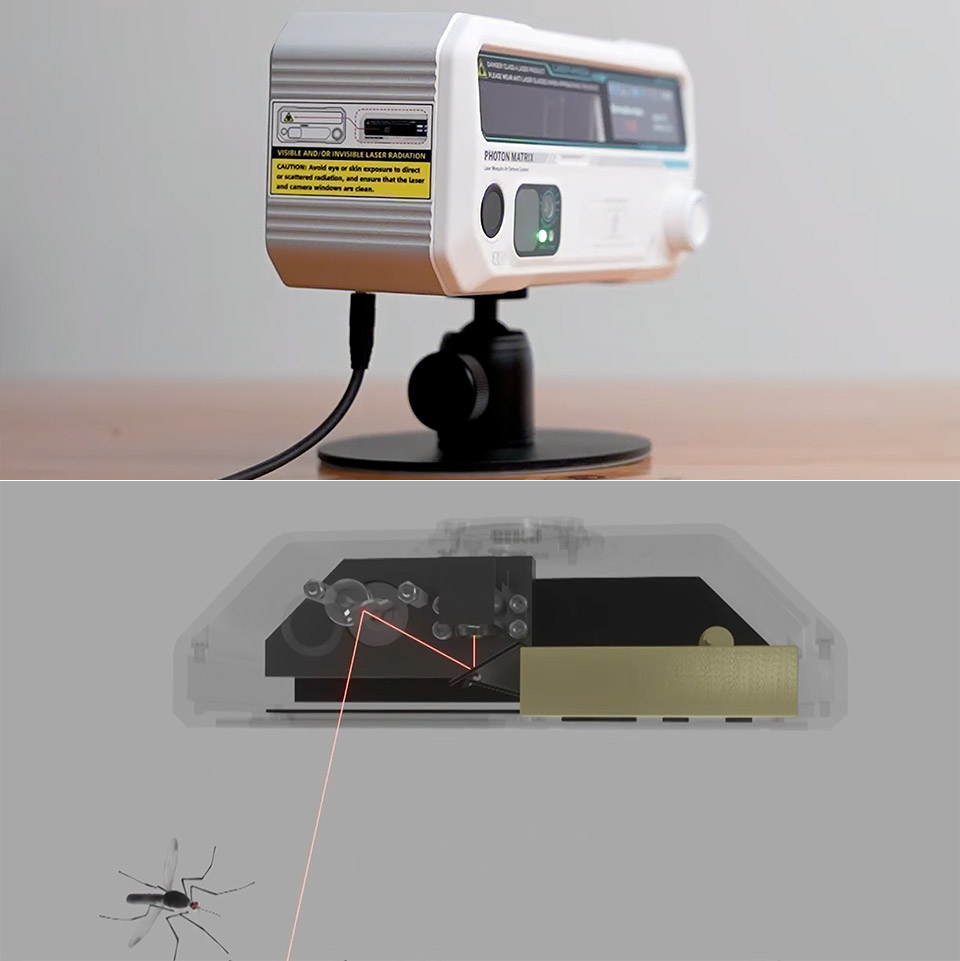
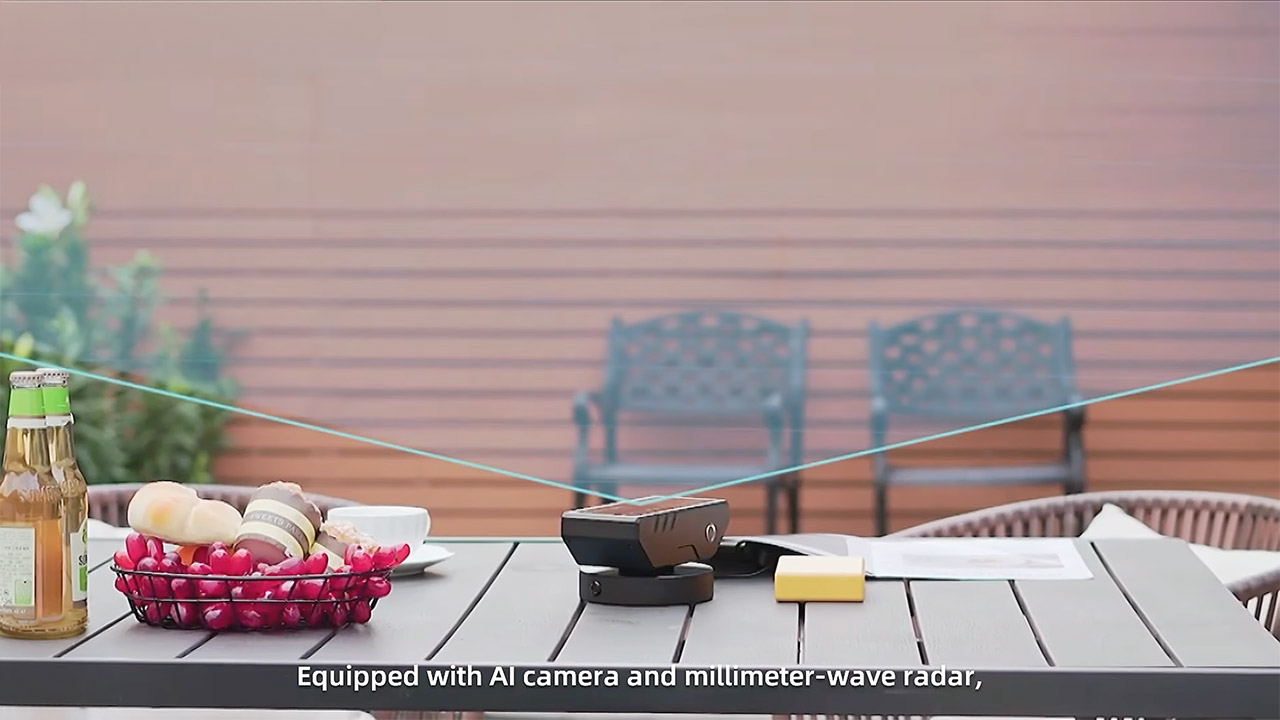
A compact white box roughly the size of a thick book sits on a table or mounts to a wall, scanning the air in front of it with the same kind of distance-measuring sensors found in self-driving cars. When a small flying insect enters its zone, the system checks the size and movement, then aims a short laser pulse that burns the wings off so the insect drops to the ground. Photon Matrix, the device from a startup in Changzhou, China, has drawn thousands of prepaid orders after videos of it working outdoors went viral.
Wang Chuan, the founder, became fed up with the frequent mosquito problem in his home and decided to design something to stop them. He and his colleagues spent more than three years creating the technology, much of which was spent in their office conducting tests on live mosquitos. The startup then put all of that technology into a portable gadget weighing only 1.2kg (2.64 lbs). Simply plug it into a wall outlet or a power bank and you’re ready to go. They even have two versions of the thing: one with a visible blue laser for outdoor use on the patio or at the camping, and another with infrared for a more subtle indoor option.
- Effectively eliminate most flying insects: Mosquito, Aedes, gnats, midges, flies, fruit flies, house flies, horse flies, moths, wasps, etc. Please use...
- EPA Registered: The bulb light attracts flying insects, and the high-voltage electric grid zaps them on contact. Efficient physical mosquito control...
- Easy to use & Light weight : It’s very light so you can hang it everywhere you like. No warm up, Starts working when plugged in.
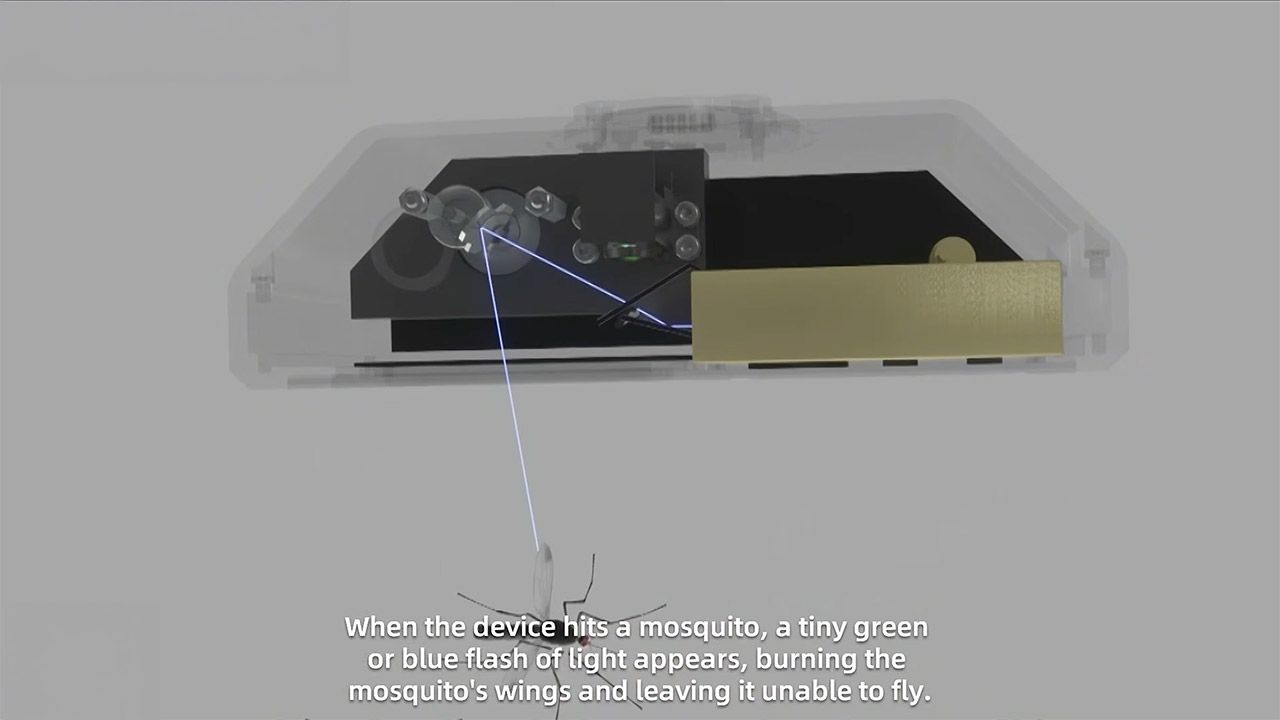
Their sensors don’t just function in one go. They work together on a 90-degree horizontal plane that can stretch out roughly 6 meters, constantly shooting off tens of thousands of pulses per second to map out the distance and detect anything out of place. The millimeter wave radar and camera then enter the picture, thanks to some clever recognition software that can confirm whether the thing moving is a mosquito (i.e., between 2 and 20 mm in size and moving at a speed of no more than 1 meter per second) and get a good look at its movements before the real laser strikes. Ideally, it takes less than 3 milliseconds, and the unit can handle up to 30 mosquitoes per second when conditions are ideal. They believe the accuracy is more than 95% within the specified boundaries, and they’ve even gone to the bother of training it to ignore helpful insects like butterflies.
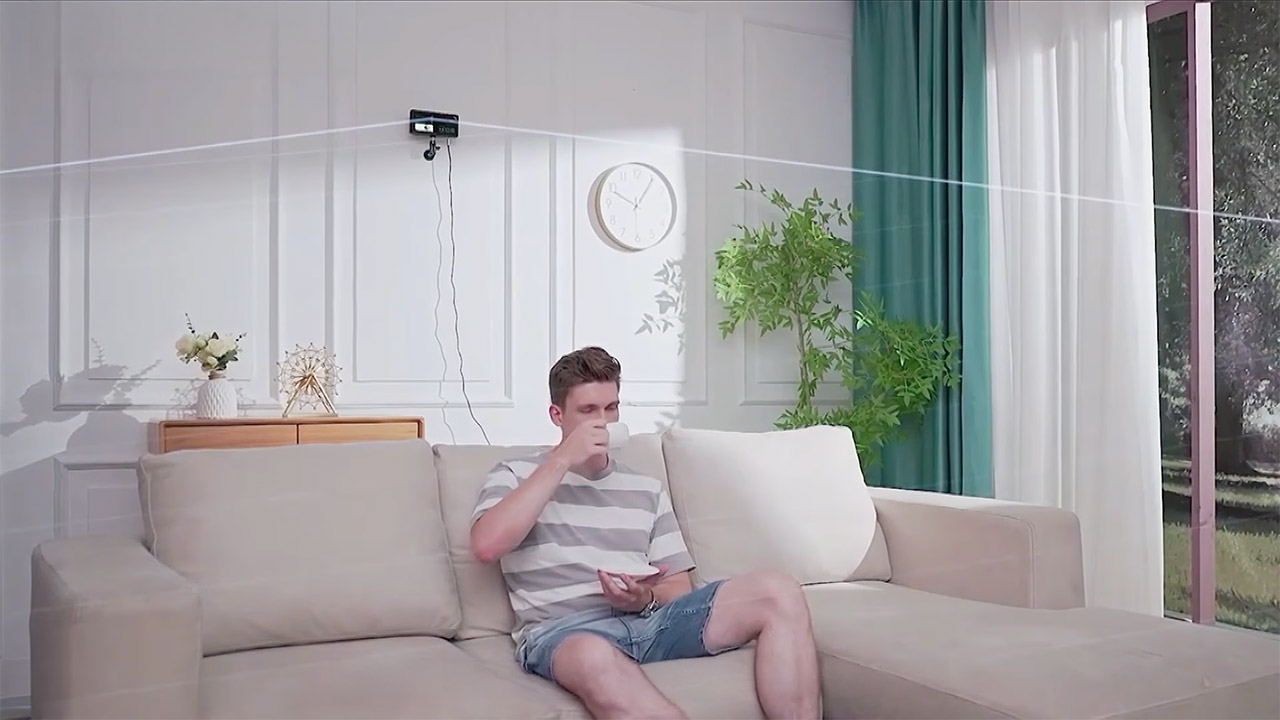
If you go down to the company office, they have a pretty impressive demo set up, where the machine just zaps mosquito after mosquito, each with a tiny pop and a flash of color on the outdoor version. All of the dead ones are pretty much intact, with the exception of a wing or two, but even if you wave them around by hand, they won’t think of flying. Wang Chuan stated that it can take hours or even days for the poor guys to die after being grounded, all while being courteous. There is no smoke, no burning odor, and no chemical residue left behind, as everything is quite clean. To top it all off, there’s an app that allows you to change the settings, track how many mosquitos you’ve killed, and alter the scan angle to your heart’s desire.
Crowdfunding on Indiegogo far exceeded the intended goal of $20,000, raising a whooping $2.5 million, with over 4,000 backers from more than fifty nations contributing about $630 each for the early bird offer on units. Then things really took off on TikTok, with a single riverside video suddenly racking up tens of millions of views and sending orders over the roof. By the summer of 2026, mass production had begun, with the corporation aiming to produce several thousand pieces each month, and the first shipments were already on their way. You can now get the infrared indoor model for around $988 and the blue outdoor variant for around $1,088, although keep in mind that having numerous units can cover a lot more territory when placed in overlapping fields.
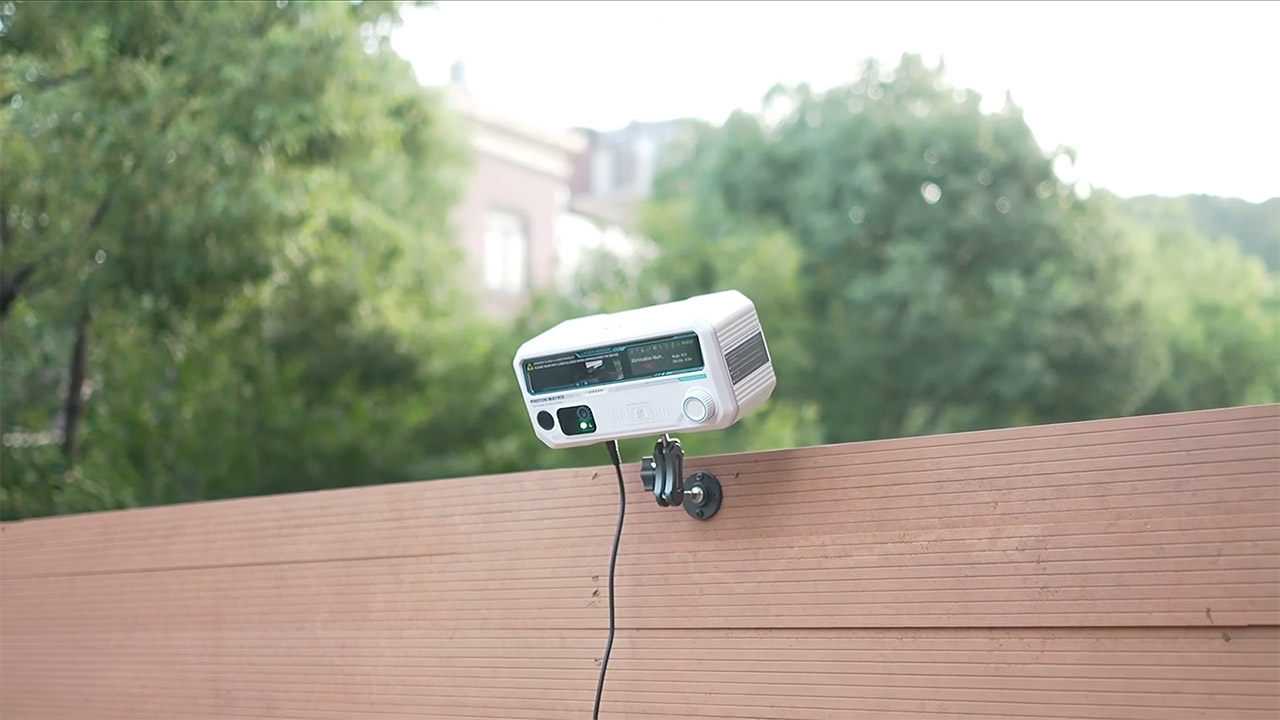
Safety features are a top priority, with automatic laser shutdown triggered if the system detects a person, pet, or sparkling surface that could reflect the beam back. Before using the device, consumers must first complete a brief safety quiz and then register their fingerprint. Now, the laser itself falls into the highest power category, Class 4, which is typically used in industrial settings, and as such, it has the potential to cause catastrophic eye damage in the blink of an eye if the protections fail.
The company has been working hard to obtain the appropriate approvals for sale in China, Europe, and the United States. In the United States, people who wish to sell these devices must file papers with the FDA, but the FDA does not actually evaluate the products. A former laser safety officer even stated that the system’s short pulse length and interlocks help to limit risk, but you still need to be careful about how items are put.