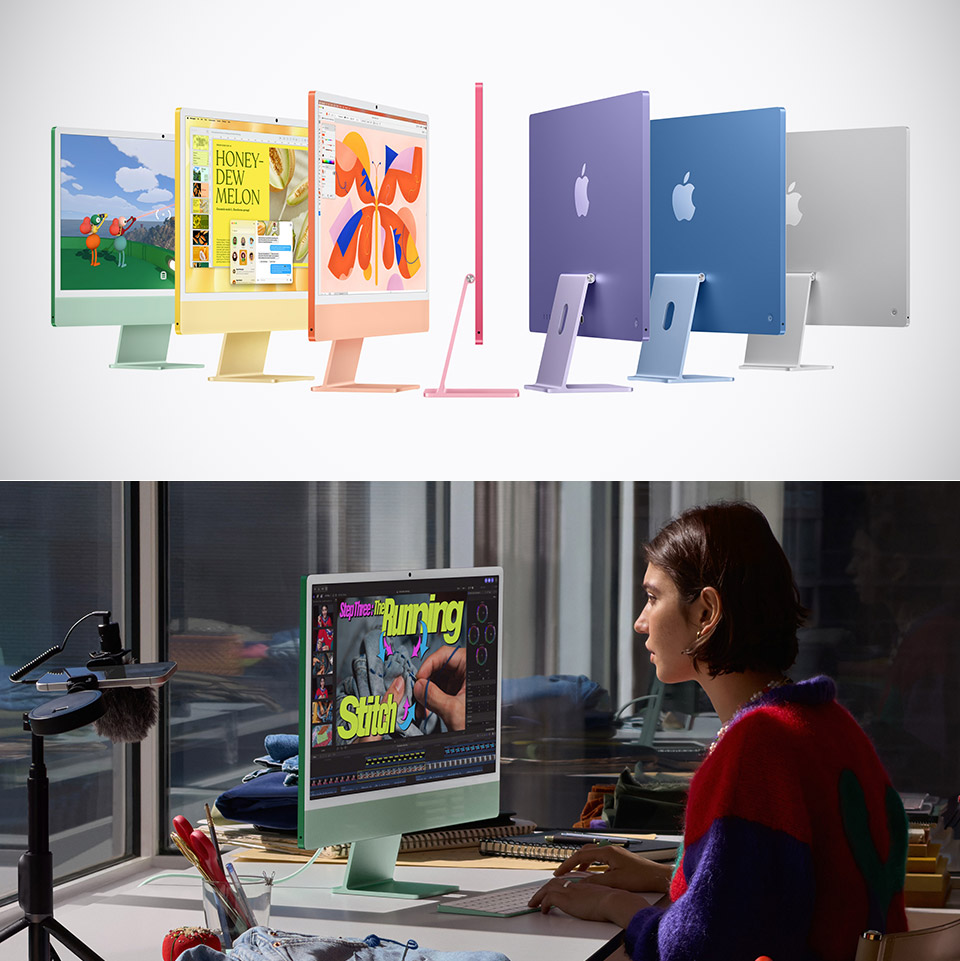
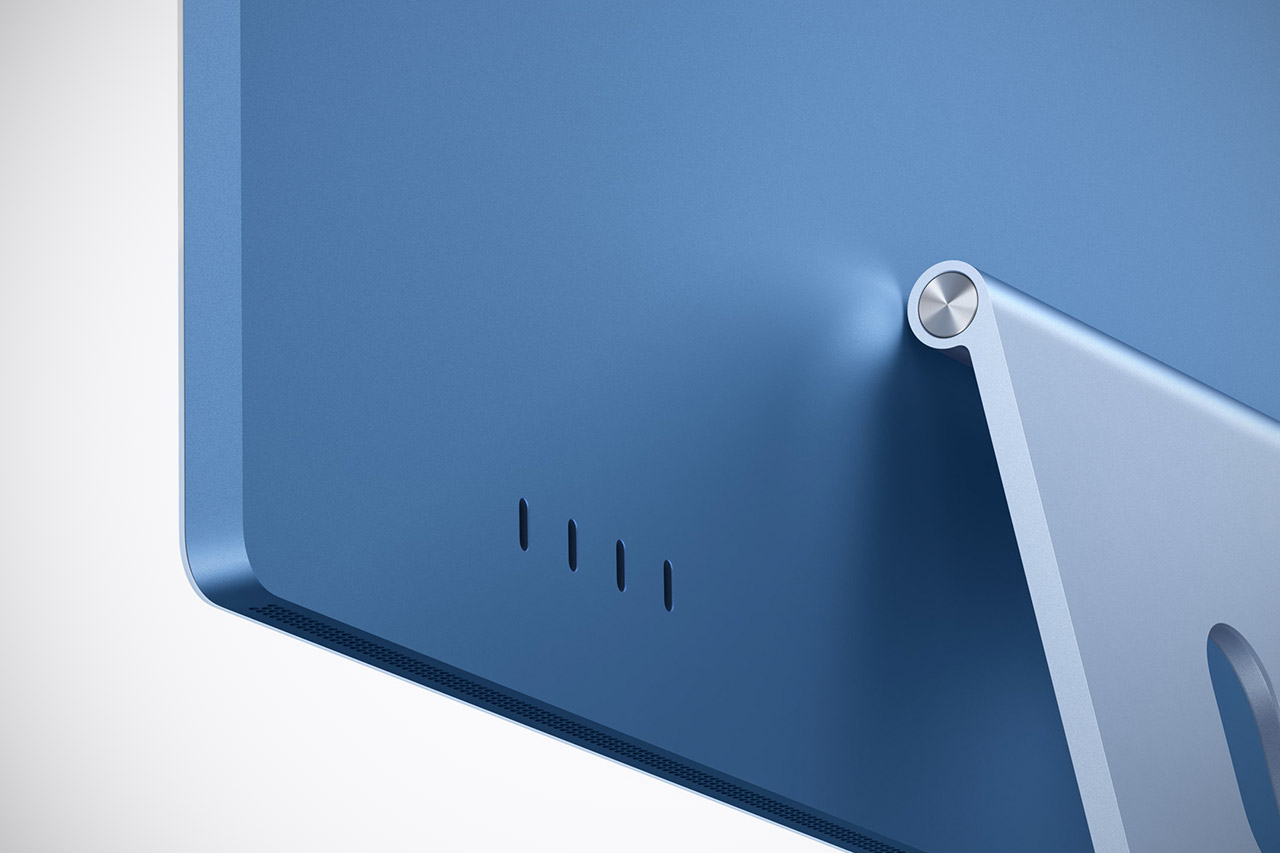
Apple launched an updated 24-inch iMac today that uses the company’s newest M6 chip and keeps nearly every outside detail from the version that arrived two years ago. Buyers still choose from the same seven colors: blue, green, pink, yellow, purple, orange, and silver. Each machine ships with matching keyboard and mouse or trackpad, and the thin all-in-one body sits on the same stand as before.
Inside, the M6 chip replaces the M4. Apple first put this 2-nanometer processor in the Mac mini earlier this year. The base iMac now has a 10-core processor with two super cores, three performance cores, and five efficiency cores, as well as a 10-core graphics section, and if you’re willing to pay an extra $200, you can upgrade to a 12-core processor with four performance cores and six efficiency cores, as well as a 12-core graphics section. Both, by the way, include a twin 16-core Neural Engine, something we haven’t seen from Apple before, as well as Neural Accelerators inside each graphics core to speed up processing. Memory bandwidth has increased to 170GB/s, up from 120GB/s on the prior processor. Storage is now up to twice as fast.
- AN AMAZING MAC AT A SURPRISING PRICE — With an incredibly portable and durable aluminum design, up to 16 hours of battery life,* and the A18 Pro...
- FOUR STUNNING COLORS. ONE DURABLE DESIGN — Choose from four beautiful colors — Silver, Blush, Citrus, or Indigo — each with a color-coordinated...
- FLY THROUGH EVERYDAY ASSIGNMENTS — Whether you’re cramming for finals, using Apple Intelligence* to summarize class notes, creating presentations...
Apple claims that the new CPU is 1.5 to 2 times faster than the M4 on everyday tasks like getting things done, and it has twice the graphics power and up to five times the speed when dealing with on-device AI. Oh, and it’s the fastest single-threaded CPU in its own tests, which they appear to be very pleased about. Throw in hardware ray tracing, which will increase game frame rates by up to double those of the previous iMac, and you can see why they’re so enthusiastic. Unified memory starts at 16GB on both models and may be expanded to 24GB on the base machine or 32GB on the higher one. Storage starts at 256GB and may be expanded to 1TB on the lower model or 2TB on the higher version.
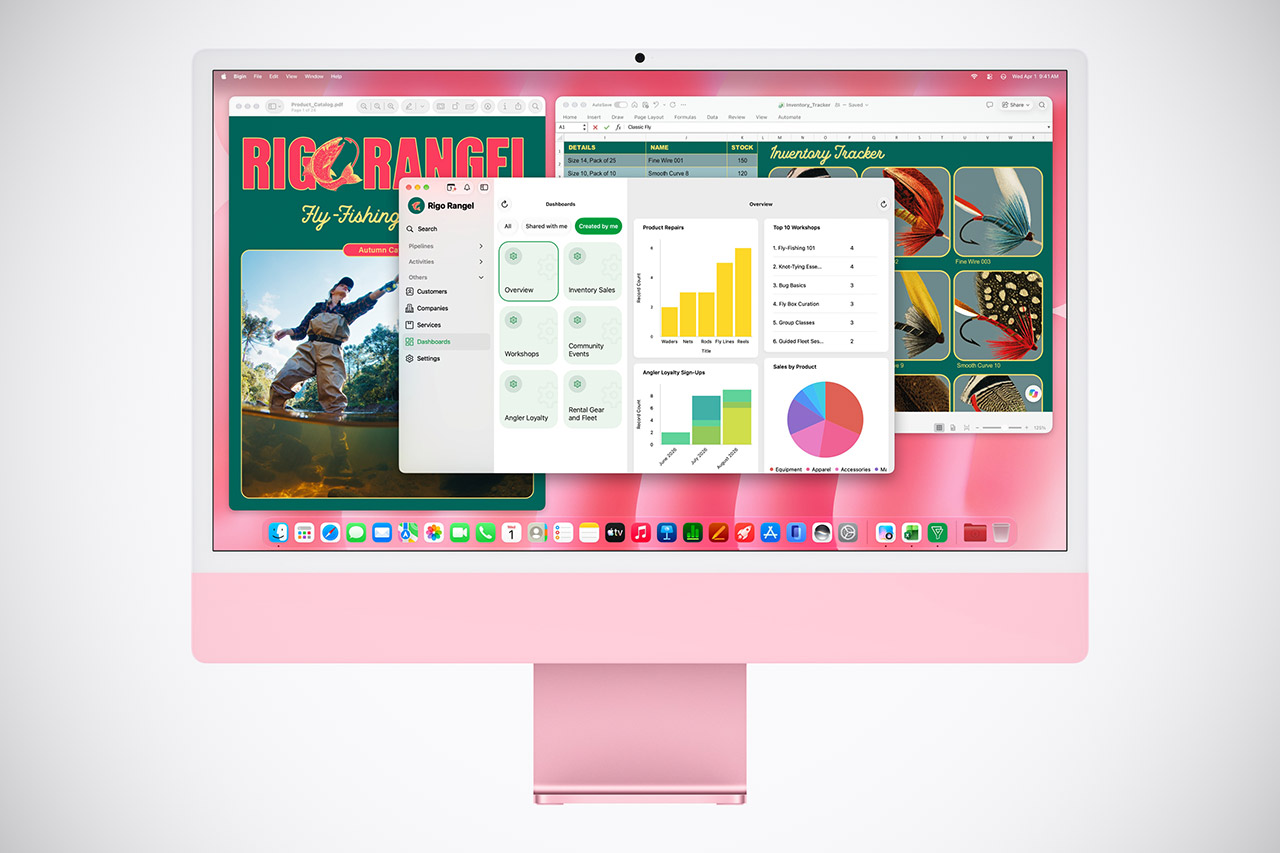
Connectivity has been improved across the board on these new iMacs. Every single one of them now comes with Wi-Fi 7 and Bluetooth 6 through the N1 wireless chip. The higher-end models include a 2.5 Gigabit Ethernet connector as standard, while the base model requires you to add it for a mere $30. The ports remain the same, with two Thunderbolt 4 connectors on the lesser model and four on the higher version. It’s worth mentioning that the higher model can drive two 6K screens simultaneously, whilst the base model can only support one.
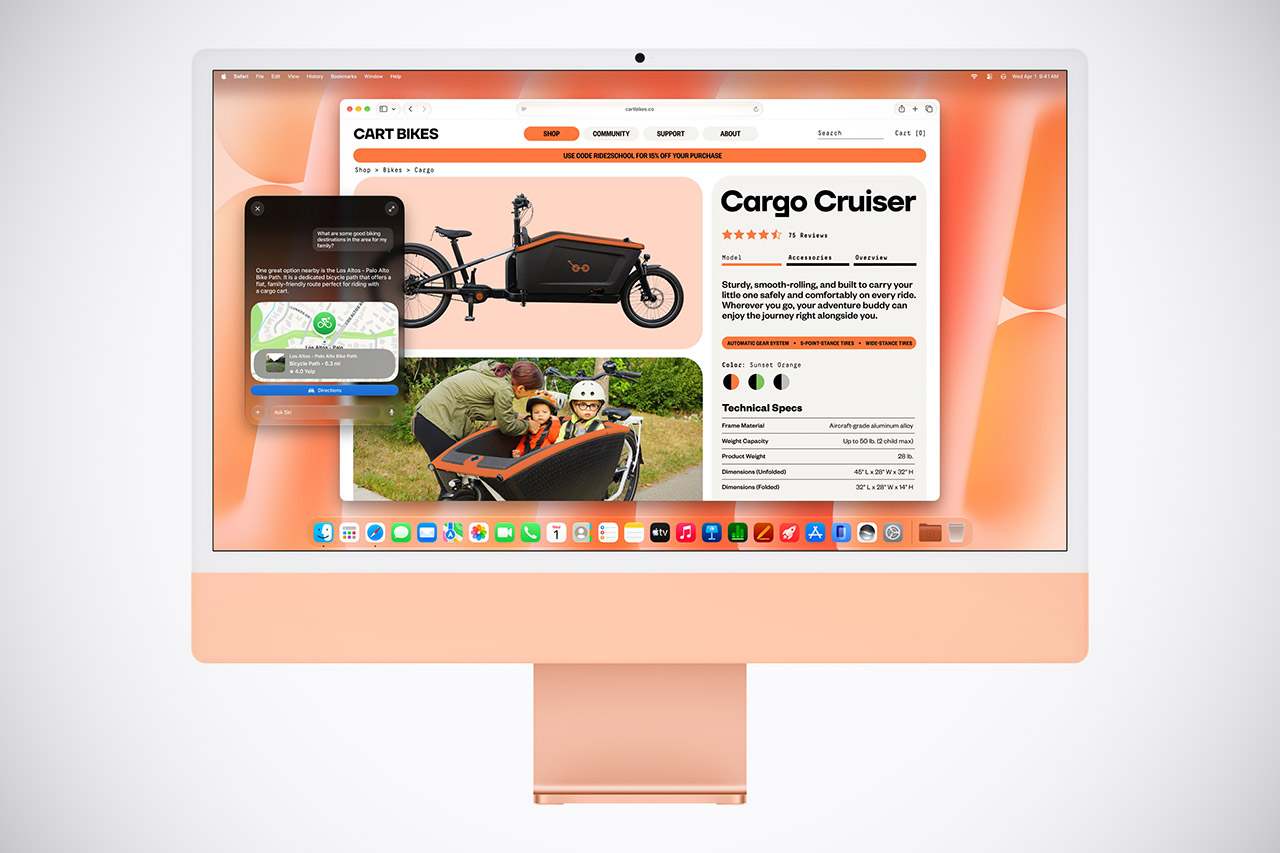
The stunning 24-inch 4.5K Retina display on the front has not changed, as it’s still 4480 by 2520 pixels at 500 nits of brightness, with P3 wide color and support for over a billion colors. It still has the same brightness; this has not changed at all. If you go for the 12-core variant, you may add nano-texture glass to reduce glare. The 12-megapixel Center Stage camera with Desk View is still functional, and the six-speaker system with force-cancelling woofers, as well as the three mics and 3.5mm headphone connection on the side, support Spatial Audio and Dolby Atmos.
Pricing holds steady at the levels Apple set earlier this year after raising the starting price from $1,299. The base configuration costs $1,499 with education pricing at $1,449, and the 12-core model starts at $1,699 or $1,599 for education. You can pre-order these on October 28th, with delivery beginning November 6th. As an added bonus, you’ll get macOS 27 with all of the latest Apple Intelligence features, as well as Siri AI tools that allow you to search across texts, photographs, and email or request items using Spotlight.