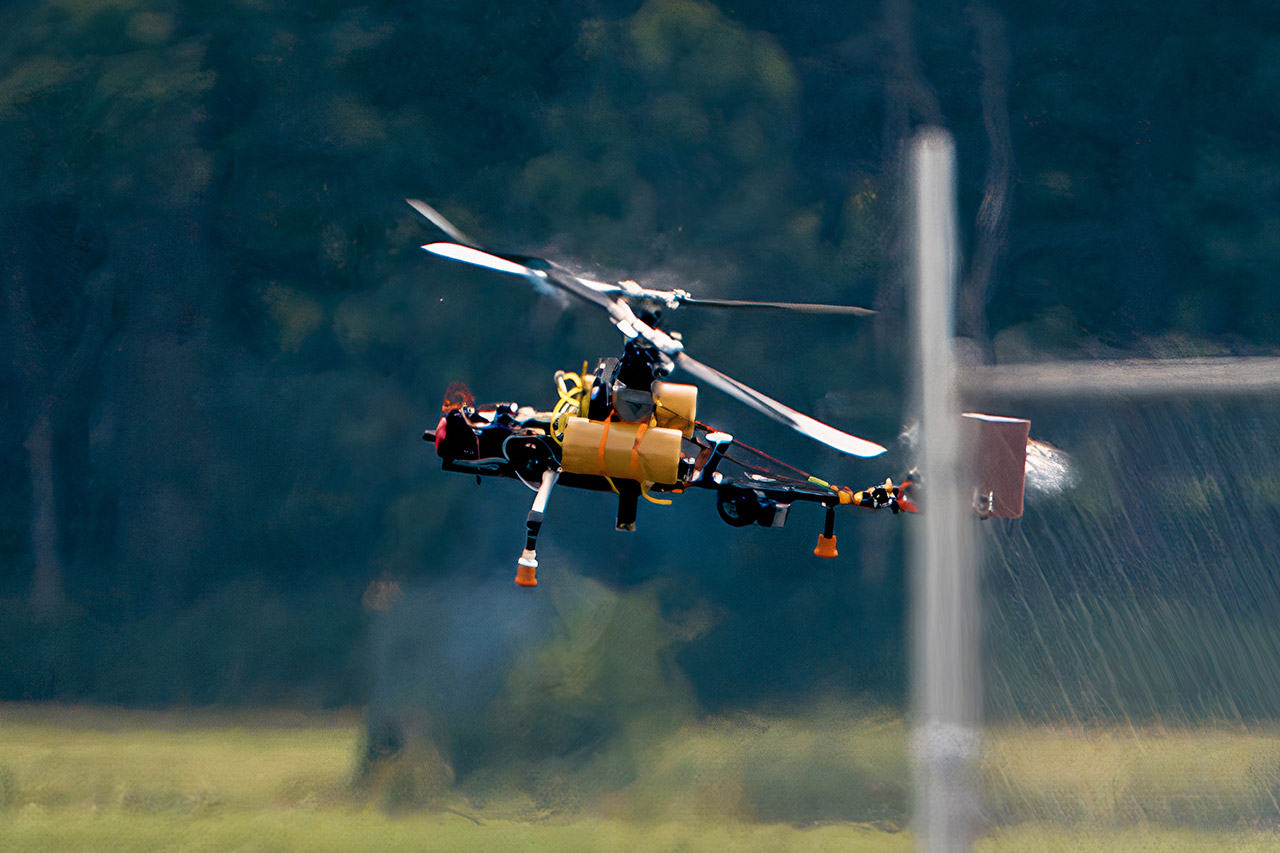
An electric helicopter built by a small team in Columbia, Maryland, flew away with first place in the DARPA Lift Challenge after hauling a load of cast iron that weighed nearly four times the aircraft itself. The machine, called Katana, finished its winning run in just over nineteen minutes at the National Museum of the U.S. Air Force in Dayton, Ohio. Judges measured an empty weight of 29.3 pounds and a payload of 112.4 pounds, producing a ratio of 3.84 to 1. No entry cleared the official four-to-one mark that would have unlocked the full prize amounts, so the top check was cut to $1.25 million. Still, the result set the highest completed score of the week and left every other finished aircraft behind.
DARPA launched the contest last November with a simple requirement: build a drone that stays under 55 pounds, carries more than four times its own weight, and finishes a five-nautical-mile circuit inside half an hour. Teams had to fly the loaded payload outbound, release the iron plates, and return empty. To their surprise, hundreds of teams applied, and dozens made it to the final flight line, but only a small number completed the course with an official score. The majority of the entrants featured multirotor machines with four, six, or eight propellers, but Katana dramatically changed the game with a sleek single huge main rotor installed on a narrow airframe and a tiny rotor perched on the end of the tail boom. To keep the weight down, they employed carbon-fiber blades and solid-state batteries, which not only saved weight but also gave the motors enough power to raise the plates off the ground and maintain them aloft the entire way around.

- FOUR BATTERIES INCLUDED: Take your DJI Mini 5 Pro on location with four Intelligent Flight Batteries total. Swap in a charged battery between flights...
- 50MP CAMERA WITH 1-INCH SENSOR: Capture detailed aerial photographs with a 1-inch CMOS sensor and f/1.8 aperture. The Mini 5 Pro brings versatile...
- 4K VIDEO AND VERTICAL SHOOTING: Record 4K/60fps HDR footage or 4K/120fps slow-motion video. True vertical shooting and 225° gimbal rotation expand...
MTech Operations of Massachusetts took second place with a battery-powered hexrotor that achieved a commendable 3.64 to 1 ratio. California’s Xtreme Aerial Concepts did well with their turbine-powered aircraft, finishing 3.45 to 1, however both teams only received half of the prize money guaranteed. A different set of subjective awards, the type that aren’t based on who came in first, but on who’s truly pushing the bounds of what’s possible, were given to the really, really out-there teams that didn’t make the top 10. Students at the University of Maryland were awarded half a million dollars for developing a drone that lifts off like a tri-rotor but then alters its blade and motor configuration once airborne to maximize efficiency. Portal Aircraft received the same amount for a powertrain that uses turbine exhaust to spin the rotors, eliminating the need for traditional shafts. Meanwhile, DefendTex received a special prize for demonstrating what may be the most promising technology of all: a motor arrangement hanging from a string that achieved an unofficial 9.63 to 1 ratio, despite the fact that its actual drone never completed the course.
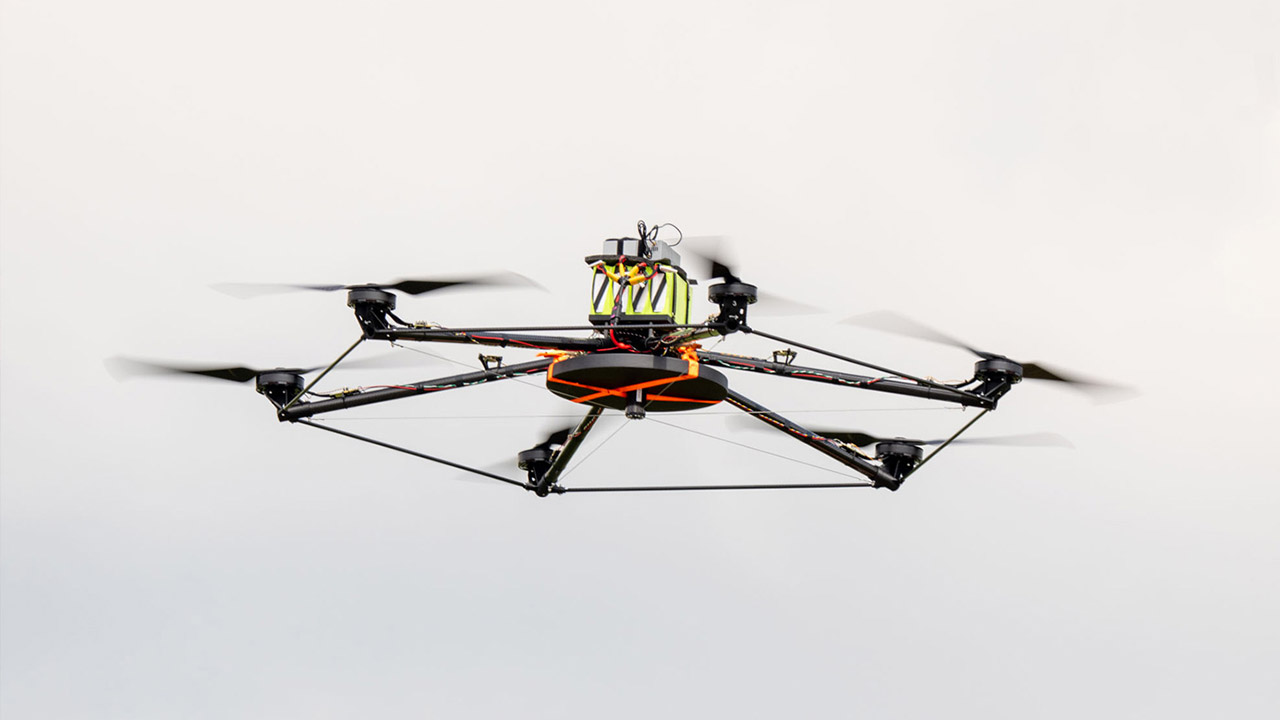
Photo credit: DARPA | Paul Flacks
The AVIDrone team created Katana’s flight control system, airframe, and propulsion hardware in-house, and the winning pass was completed in far less time than expected and required no mid-course alterations beyond the scheduled drop. Following that, program manager Phillip Smith stated that the 4 to 1 ratio was chosen because, and this is critical, they believed it was within reach, and lo and behold, the actual flying demonstrated that, even if no team achieved the actual 4 to 1 ratio, there was a clear road to getting there. DARPA director Stephen Winchell went on to remark that every team that participated demonstrated their entire methodology in action, even if it wasn’t precisely what they expected to see.
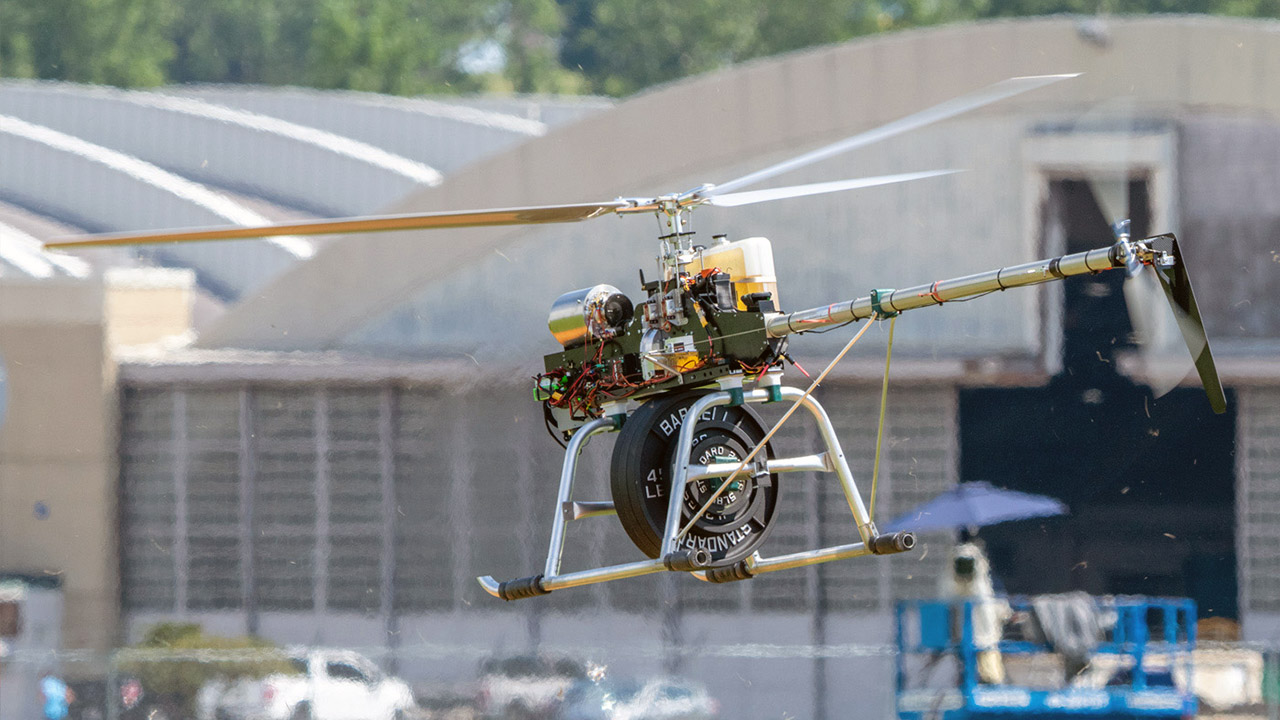
Photo credit: DARPA | Paul Flacks
Now that the dust has settled, AVIDrone has announced plans to convert Katana into a version that is truly capable of hauling freight, whether for defense logistics or simply commercial purposes. The really interesting thing is that the same fundamental layout that has defined manned helicopters for decades has, with a little scale and electrification, out-lifted a whole field of multirotors designed particularly for this challenge. Now it’s just a matter of seeing how high they can get the ratio to grow once they have more time to develop and perfect things than the limited timeline of a single competition allows.
[Source]