
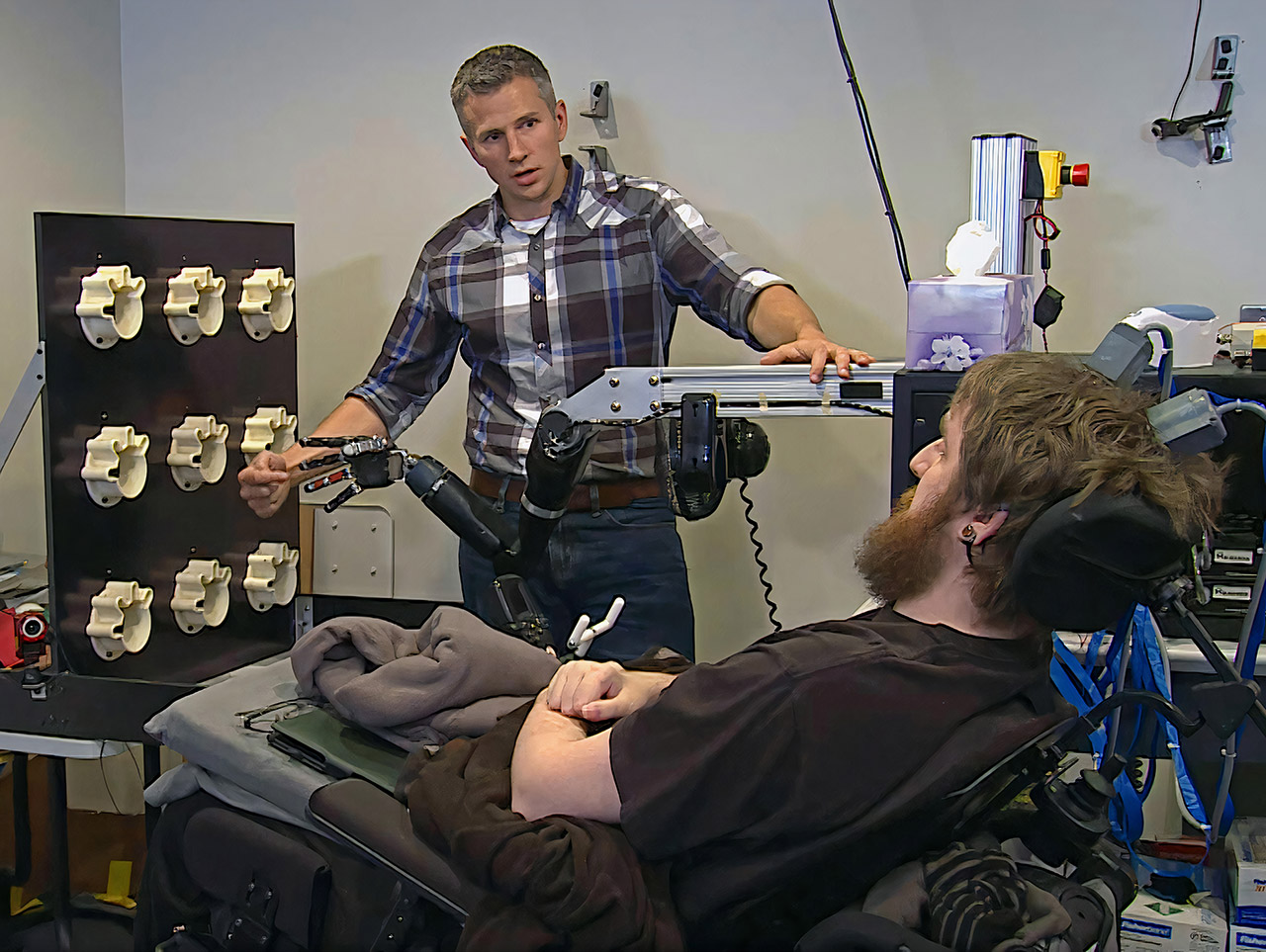

Researchers from the University of Pittsburgh and the University of Pittsburgh Medical Center have developed a brain implant that consists of electrodes smaller than a grain of sand. This was implanted into the sensory cortex of Nathan Copeland so the electrodes could receive signals from a robotic arm. When a researcher applied pressure to the fingers of the prosthesis, the man felt it in the fingers of his paralyzed right hand, effectively bypassing his damaged spinal cord.
A total of four micro-electrode arrays were implanted in Copeland’s brain, with two grids read movement intentions from his motor cortex to command the robotic arm, and the others to stimulate his sensory system. After confirming that Copeland could experience these sensations, researchers knew exactly which brain areas to stimulate to create feeling in different parts of his hands. Next, the only thing left was to get Copeland used to controlling the robotic arm.

- Spark your teen's passion for technology with the 10-in-1 mBot Robot Building Toy. Perfect for aspiring engineers and coders aged 12+, this kit is...
- From first-time coders to future programmers, these building toys offer a complete learning journey. Kids can start with the fun, drag-and-drop blocks...
- Take your robotics projects to the next level. Fully compatible with both Arduino and Raspberry Pi, this kit's powerful MegaPi control board is your...
I can feel just about every finger. Sometimes it feels electrical, and sometimes it’s pressure, but for the most part, I can tell most of the fingers with definite precision. It feels like my fingers are getting touched or pushed,” said Copeland.

