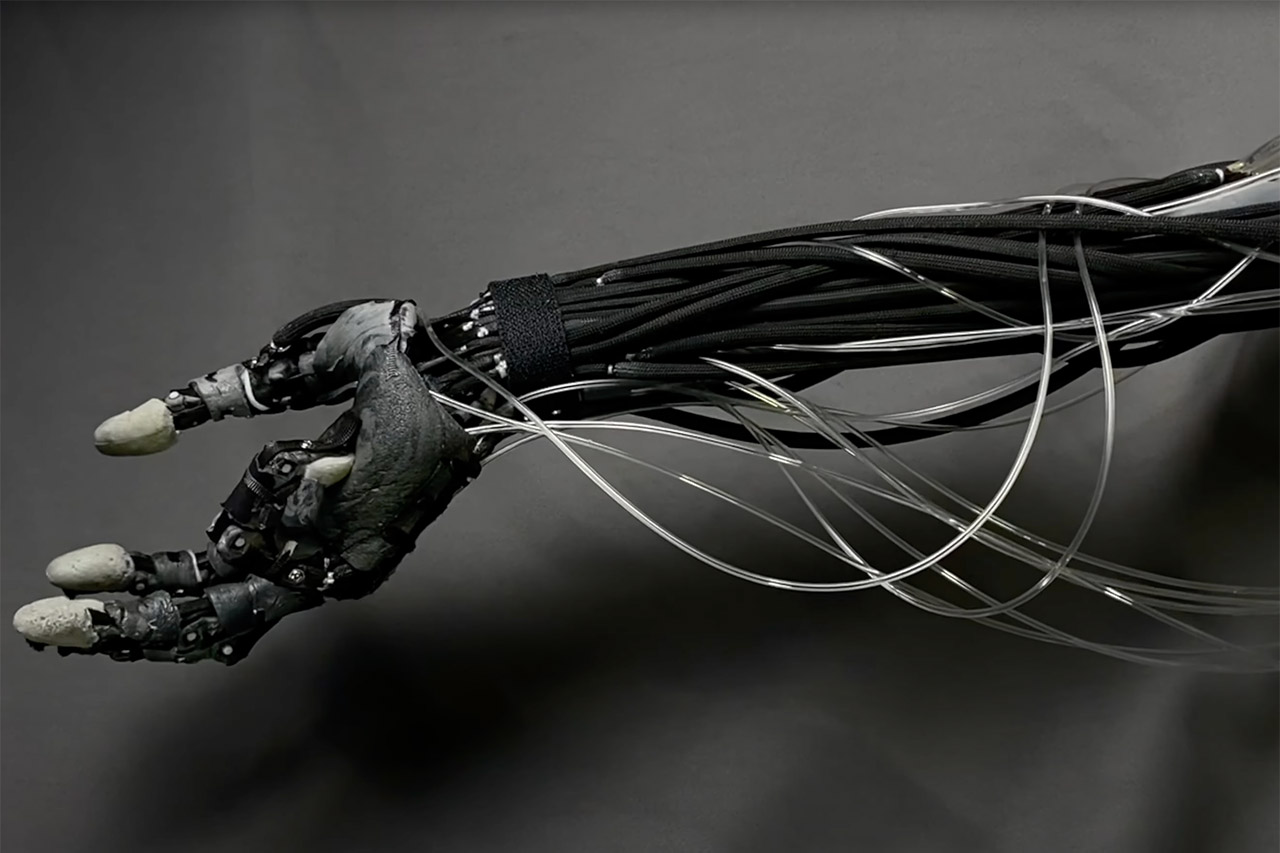
This 3D-printed soft robotic hand can play Mario, while Clone Robotics’ synthetic hand v18 with human-like muscle fibers moves just like its real-life counterpart. It receives 24-times the signal from internet video data of human hands without using any high-resolution tactile skin, thus accelerating learning of new manipulation skills.
This version of the anthropomorphic robotic hand with artificial muscles and custom valves are 10-times stronger as well as cheaper to manufacture than its competitors. It can be retrained in minutes by leveraging pre-trained representations from internet videos of humans. Simply put, it’s a 1:1 copy of the human hand, a critical component of making a successful humanoid robot, and Clone Robotics plans to sell them for $2,800 USD or less in the near future.

- 🎁 Perfect Gift for Kids & Teens: Looking for an ideal gift for kids aged 8+? This robot building kit is the perfect gift for birthdays, holidays...
- 🔧 STEM Educational Toys: Our programmable Robotic sets offer interactive learning experiences. As kids construct and program robots, they grasp...
- 📱 Flexible Dual Control Options: Control the STEM robot using the remote or intuitive app, featuring modes such as path, gyro, one-handed driving...
Teleoperating the Clone Hand: using a needle holder 🫵🏿 Check out the full video on YouTube later today! pic.twitter.com/1iZrDRoIwu
— Clone (@clonerobotics) March 2, 2023
We will reach the consumer market after we are prepared to mass manufacture androids with a fast and adaptive brain. As of today, we have received demand from the market for millions of androids. The android’s entire body will be made primarily from polymers, which are easy and cheap to mold and allow for a fast and inexpensive manufacturing process,” said Clone Robotics.