
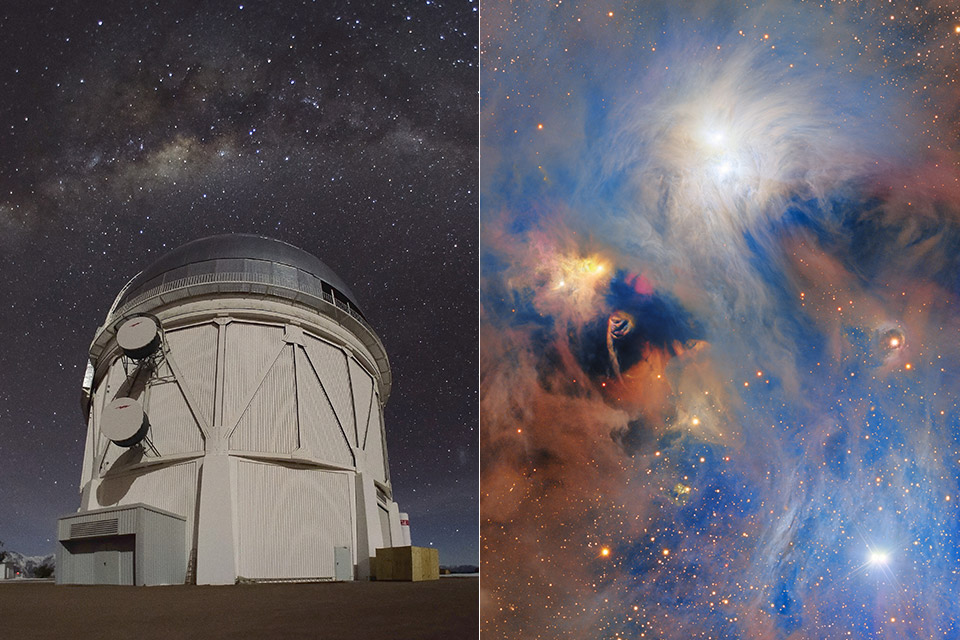
Astronomers released a fresh view of the southern sky this week that carries an unexpected artistic quality. Captured by the Dark Energy Camera mounted on the Víctor M. Blanco Telescope in Chile, the image highlights the Corona Australis Molecular Cloud and surrounding features in rich color and fine detail.
Glowing gas clouds and dark dust lanes create an intriguing tangle of patterns in the frame. Blues and oranges combine with scattered stars to form an energetic ballet of swirls and contrasts that hauntingly resembles the colors and motion of Vincent van Gogh’s iconic painting. At first sight, it’s clear how similar the picture is to his work, thanks to the way light plays off the curves of these structures and how brilliant points stand out against the darker portions.

- Superior Optics: 400mm(f/5.7) focal length and 70mm aperture, fully coated optics glass lens with high transmission coatings creates stunning images...
- Magnification: Come with two replaceable eyepieces and one 3x Barlow lens.3x Barlow lens trebles the magnifying power of each eyepiece. 5x24 finder...
- Wireless Remote: This refractor telescope includes one smart phone adapter and one Wireless camera remote to explore the nature of the world easily...
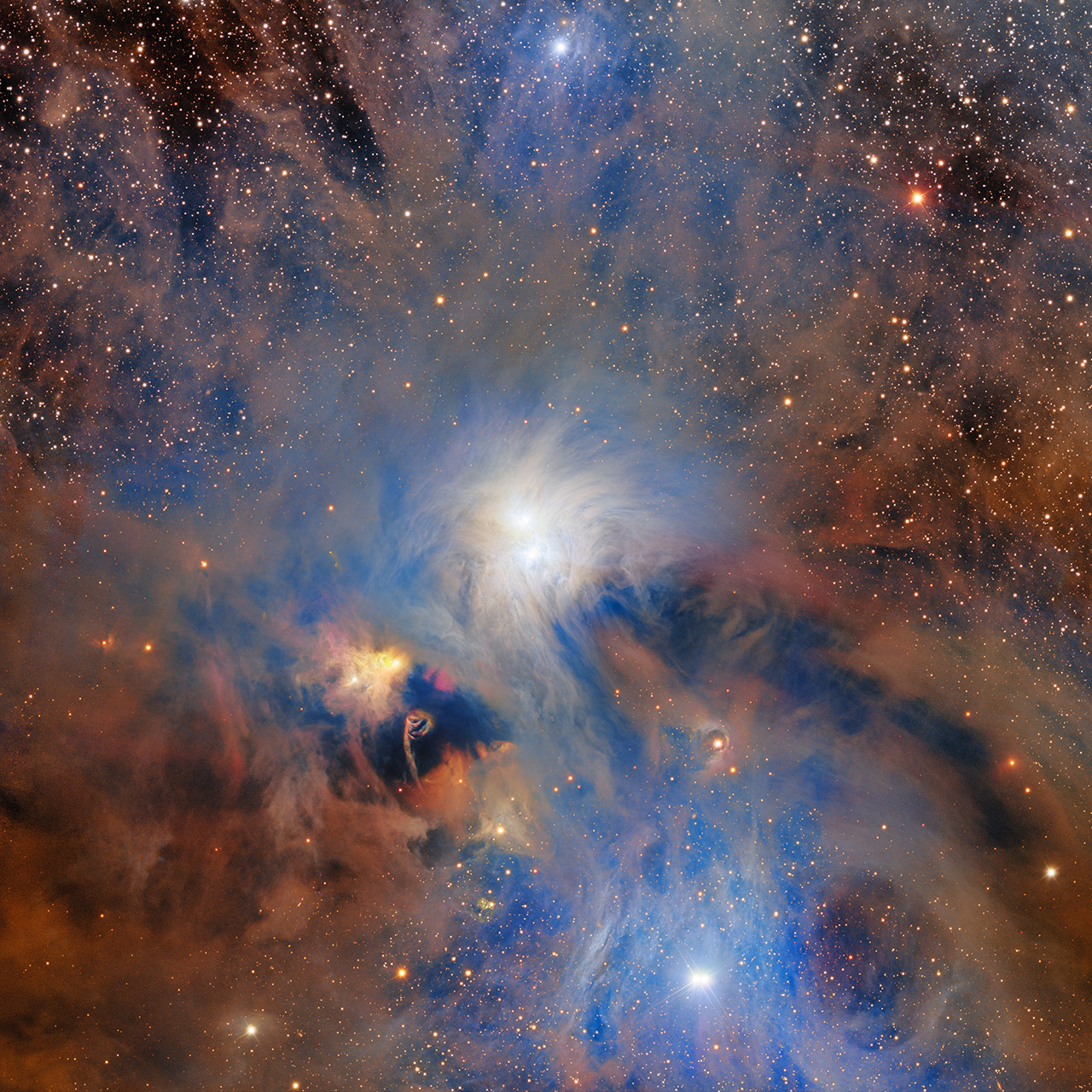
On the left side, a bright compact nebula, NGC 6729, stands out from the crowd, and its brightness comes from a young binary star system called R Coronae Australis, which is nestled right inside the blazing gas cloud. The two stars, by the way, orbit each other every 43-47 years. The primary star is nearly finished gathering mass, but it has yet to begin sustained hydrogen fusion, similar to our own Sun. Its partner, on the other hand, is a much cooler red dwarf, and the bright light from the main star is bouncing off the neighboring dust and gas, forming a couple of reflection nebulae as well as ionizing the material to create emission nebulae, resulting in the visible dual glow.
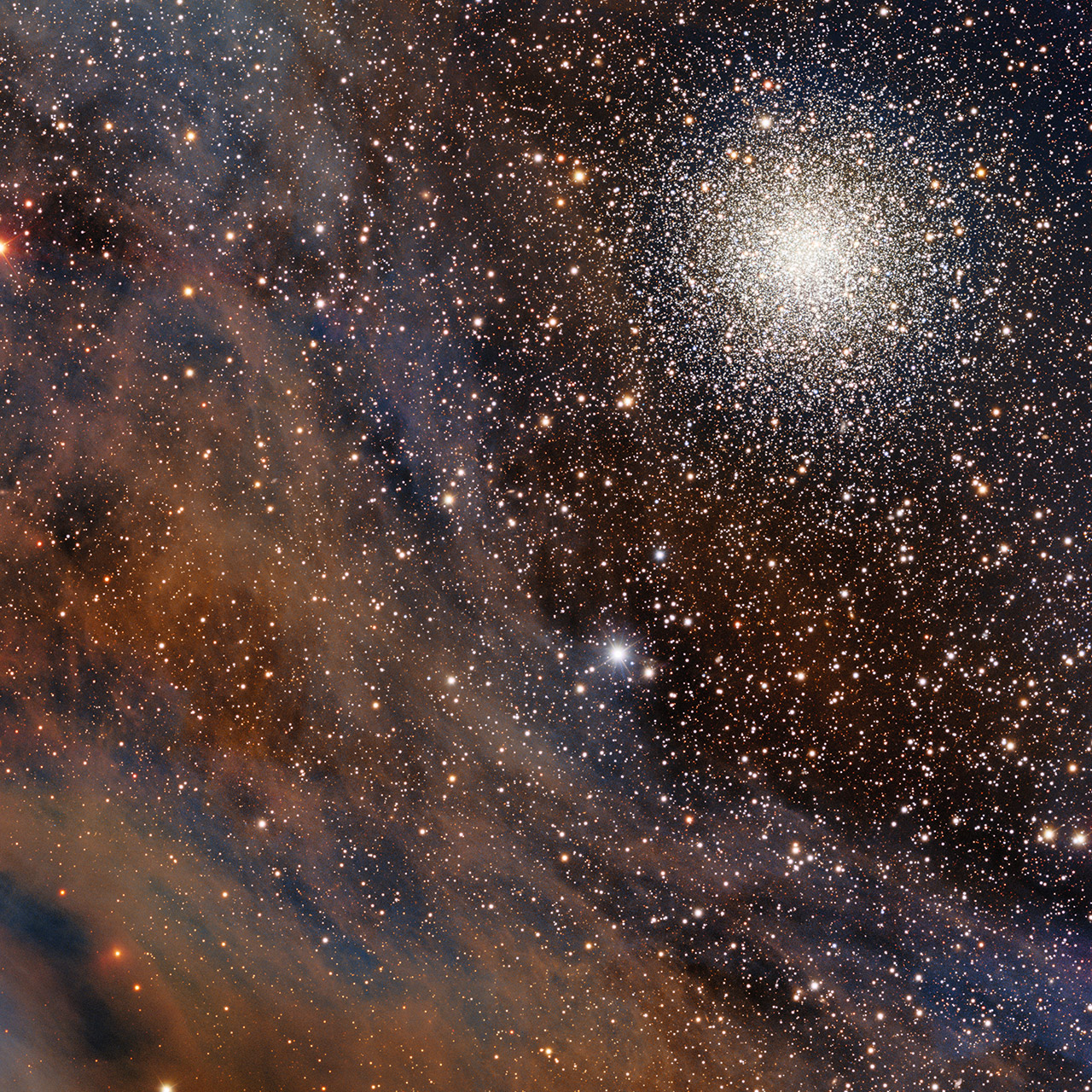
Moving away from that location, a few more bluish clouds appear. These include the reflection nebulae NGC 6726 and NGC 6727. Guess what? They are illuminated by additional young stars that are still forming deep within the bigger molecular cloud complex. The formations are all linked to another nebula called IC 4812, demonstrating how star formation is essentially a massive interconnected web of gas and dust. The Chandelier Cluster, also known as NGC 6723, is a dense ball of stars in the upper right corner of the frame. It is densely packed with tens of thousands, if not millions, of stars arranged in a spherical shape. Furthermore, many of its stars are among the galaxy’s elder population.
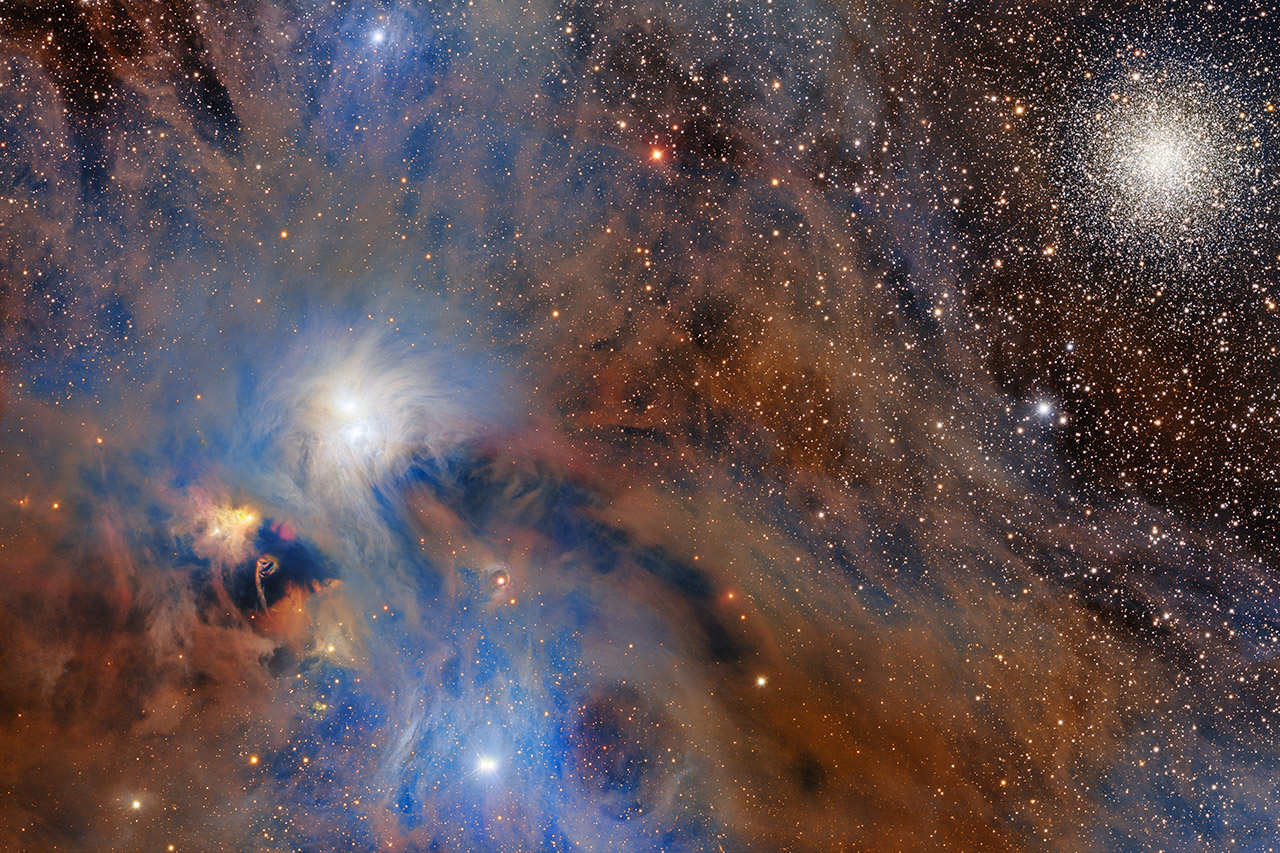
The cluster and the molecular cloud appear to be near to each other in this image, yet they are actually a world away in terms of distance. The Corona Australis Molecular Cloud is only 430 light-years from Earth, making it one of the closest active star-forming areas. NGC 6723, on the other hand, is a whopping 29,000 light-years away, which is far more distant than some of the other stars and objects seen in our view of the galaxy. Overall, the equipment behind this wide and detailed photo is the 570-megapixel Dark Energy Camera, a beast of an instrument with 74 detectors and a lens about one meter in diameter. The Cerro Tololo Inter-American Observatory, located in the Chilean Andes, houses a four-meter Víctor M. Blanco Telescope.