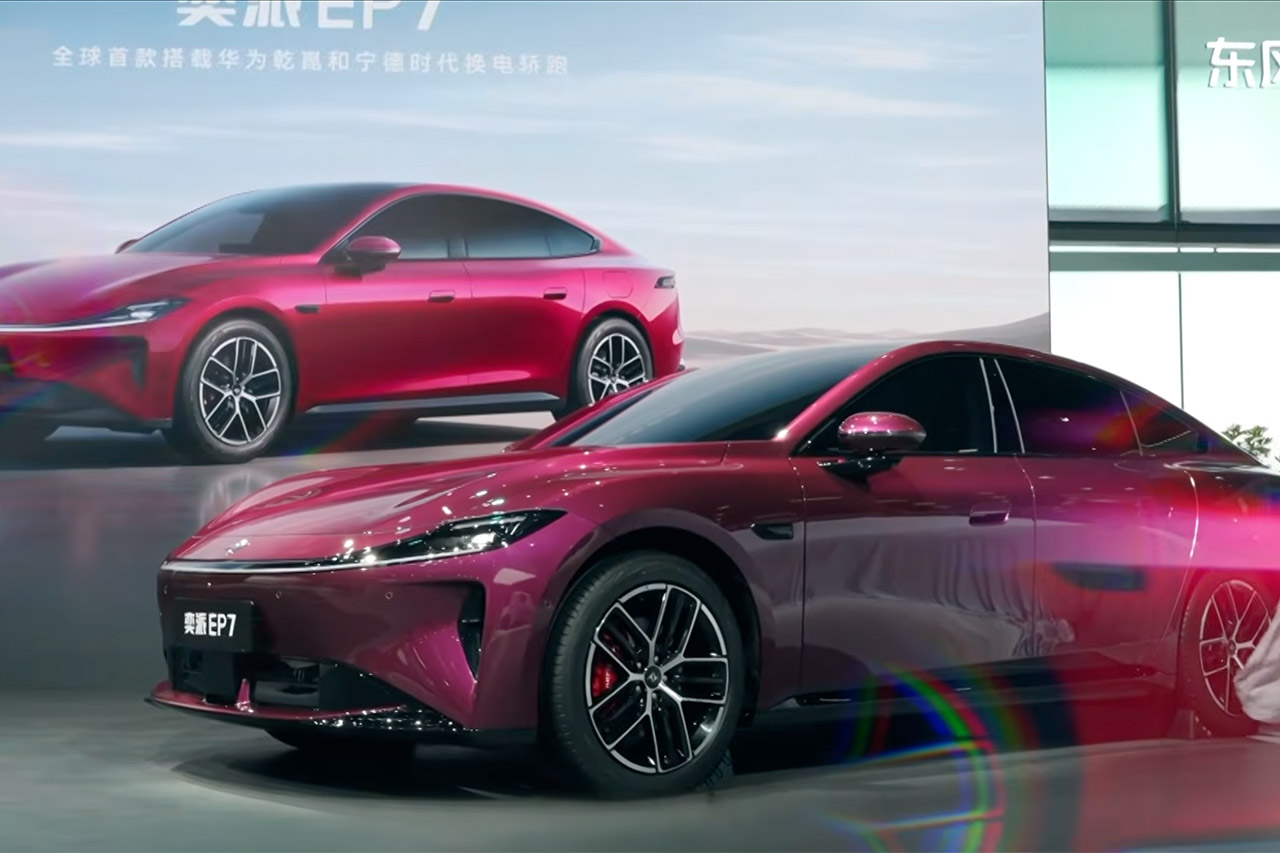
Visitors walking the halls of the 2026 Guangzhou Auto Show meet a midsize electric sedan that treats a full recharge like a quick stop for coffee. Dongfeng’s Yipai brand rolled out the EP7 on the opening day with a version that drives itself into a special bay and receives a fresh battery in 99 seconds.
A fastback body measures 4.91 meters in length and has a 2.92 meter wheelbase, providing ample legroom for rear passengers while keeping the roofline low at 1.48 meters above the ground. The front has been cleaned up, with the front grille sealed in and Star Ring LED lighting extending across the front, all capped off with an active air intake that allows the car to cut through the air with ease, claiming a drag coefficient of 0.203. The semi-flush door handles sit flush with the car until someone approaches, complying with China’s current safety rules while also providing the automobile a sleek appearance. A dozen or more aerodynamic changes have all contributed to the ultra-low drag number.

- BUILDING SET WITH 2 TOY CARS – Celebrate 2 iconic British vehicles with the LEGO Speed Champions Jaguar Project 7 & Land Rover Defender...
- 2 DRIVER MINIFIGURES – Features 2 minifigures to inspire pretend-play racing adventures, including a stylishly dressed driver for the Land Rover...
- AUTHENTIC DETAILS – Each model car toy features iconic design details inspired by its real-life counterpart, including headlights, front grilles...
Buyers have two options for motor configurations. One of these is a dual-motor setup that uses Zhixin Technology motors to deliver 175 kilowatts in the front and 230 kilowatts in the back, for a total of 405 kilowatts. That variant has a 71.19 kilowatt-hour battery and is rated for 650km or 710km of range on the CLTC cycle, or 527km or 575km on the European WLTP test cycle. The alternative variant, however, consists of a single 215 kilowatt motor and a CATL lithium-iron-phosphate battery pack developed expressly for swapping.
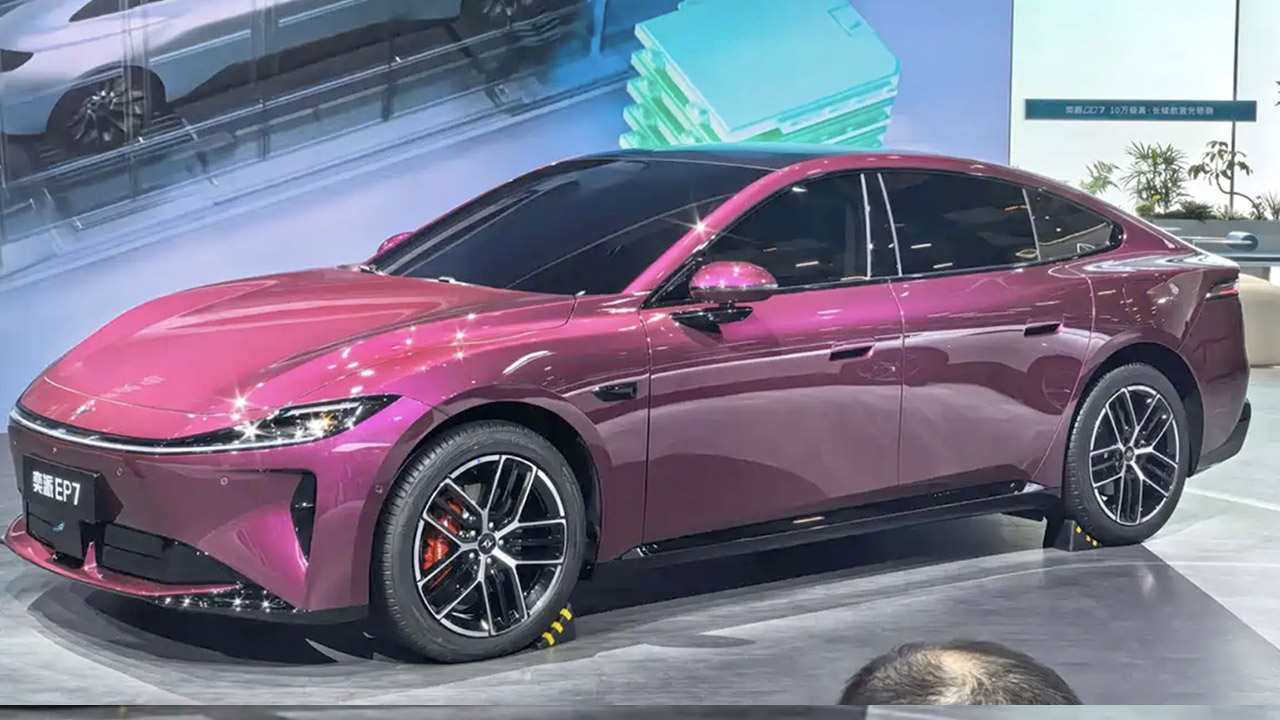
Photo credit: CarNewsChina | AutoHome
The 215kw EP7’s self-serve battery swap capability eliminates the need to queue at a charger. Using Huawei’s Qiankun technology, sensors and algorithms detect a nearby charging port before guiding the car into it and parking it with just enough precision to allow the robots underneath to do their work. These mechanical arms will then unbolt the old battery, lower it for charging, and replace it with a brand new one. It’s a 99-second process in which the charging station runs 66 checks on the new pack to ensure everything is in working order. CATL expects to have more than 6,000 stations operational across China by the end of 2027, spanning 297 cities, ensuring that cars are never far from a charging bay.
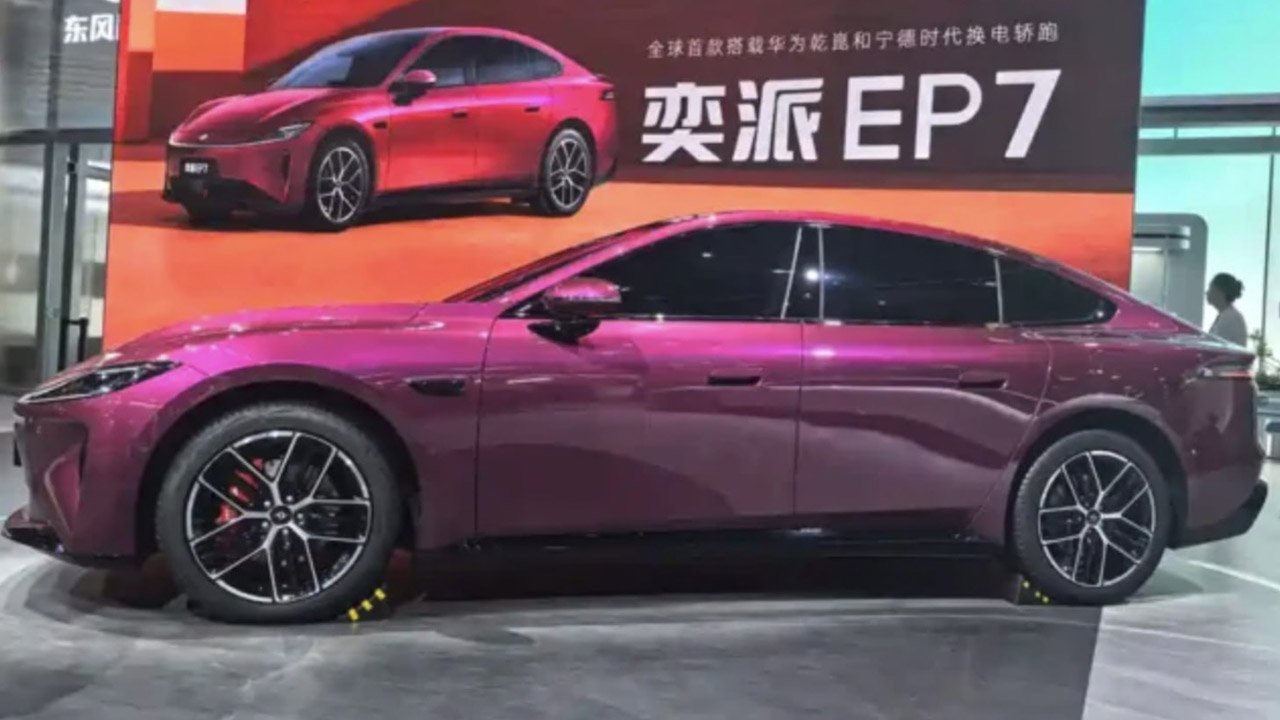
Photo credit: CarNewsChina | AutoHome
Dongfeng has already begun testing a solid-state battery, and as long as that works, an EP7 with that chemistry should give a claimed 1,010km of CLTC range, or approximately 628 miles. Engineers at Dongfeng have already begun testing a 350 watt-hour per kilogram battery pack in particularly chilly winter settings, and the technology is being refined as we speak, with the intention of it going into production shortly.
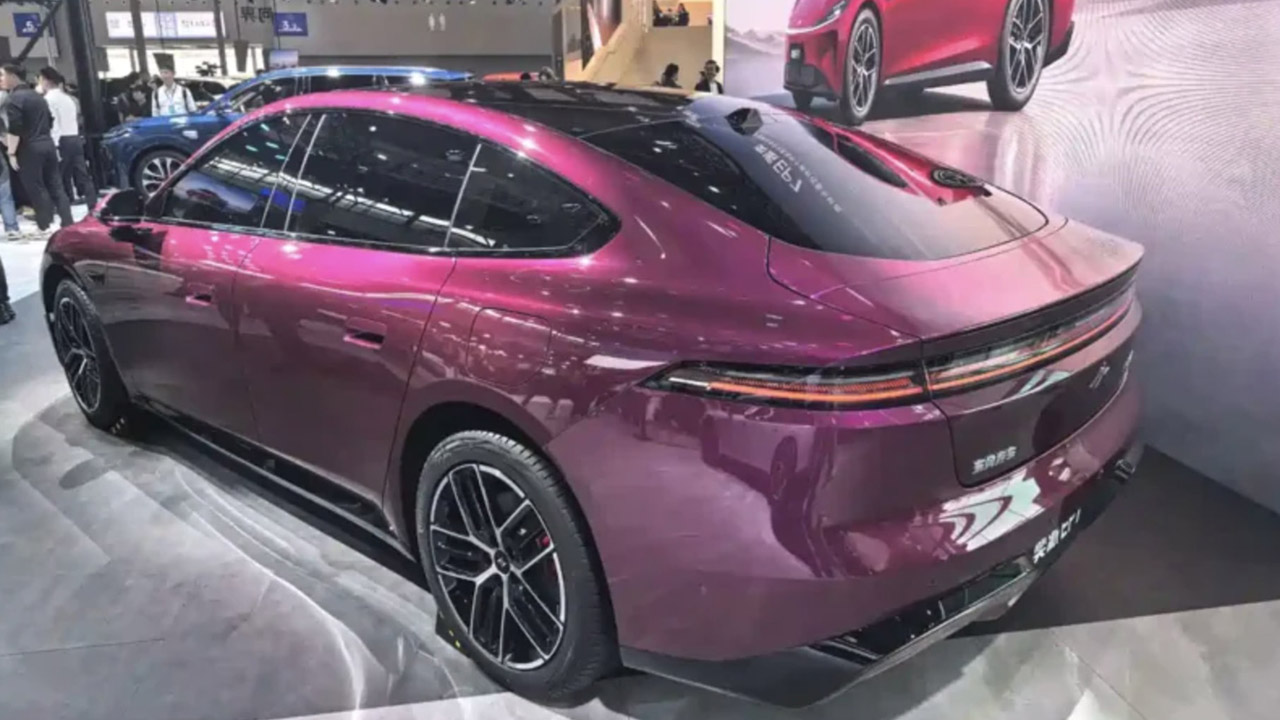
Photo credit: CarNewsChina | AutoHome
Inside the car, there’s a large center screen with Huawei’s HarmonyOS interface, which is simple to use, even with natural voice. The same Qiankun package is in charge of all the difficult stuff, such as highway navigation, collision avoidance, and the handy self-service battery switch technology. The price hasn’t been announced yet, but automobiles of similar size and specification in China typically cost between 150,000 and 200,000 yuan.
[Source]