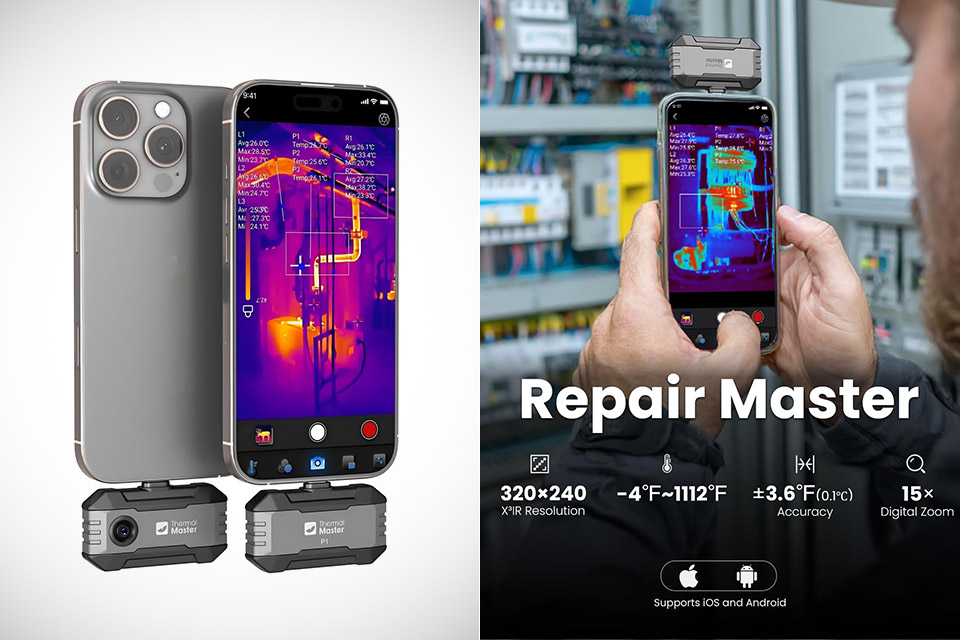
Plugging a compact module the size of a small key fob into a phone’s USB-C port reveals temperature differences across walls, wires, and engines that once required equipment priced in the thousands. The Thermal Master P1, priced at $103.20 for Prime members (was $129), measures roughly 59 by 27 by 17 millimeters and weighs just under 18 grams, so it slips into a pocket or tool bag without adding bulk. Its extended USB-C plug reaches past most phone cases, and a 50-centimeter cable in the box lets the camera reach into ceilings, behind panels, or under a vehicle while the screen stays visible in hand.
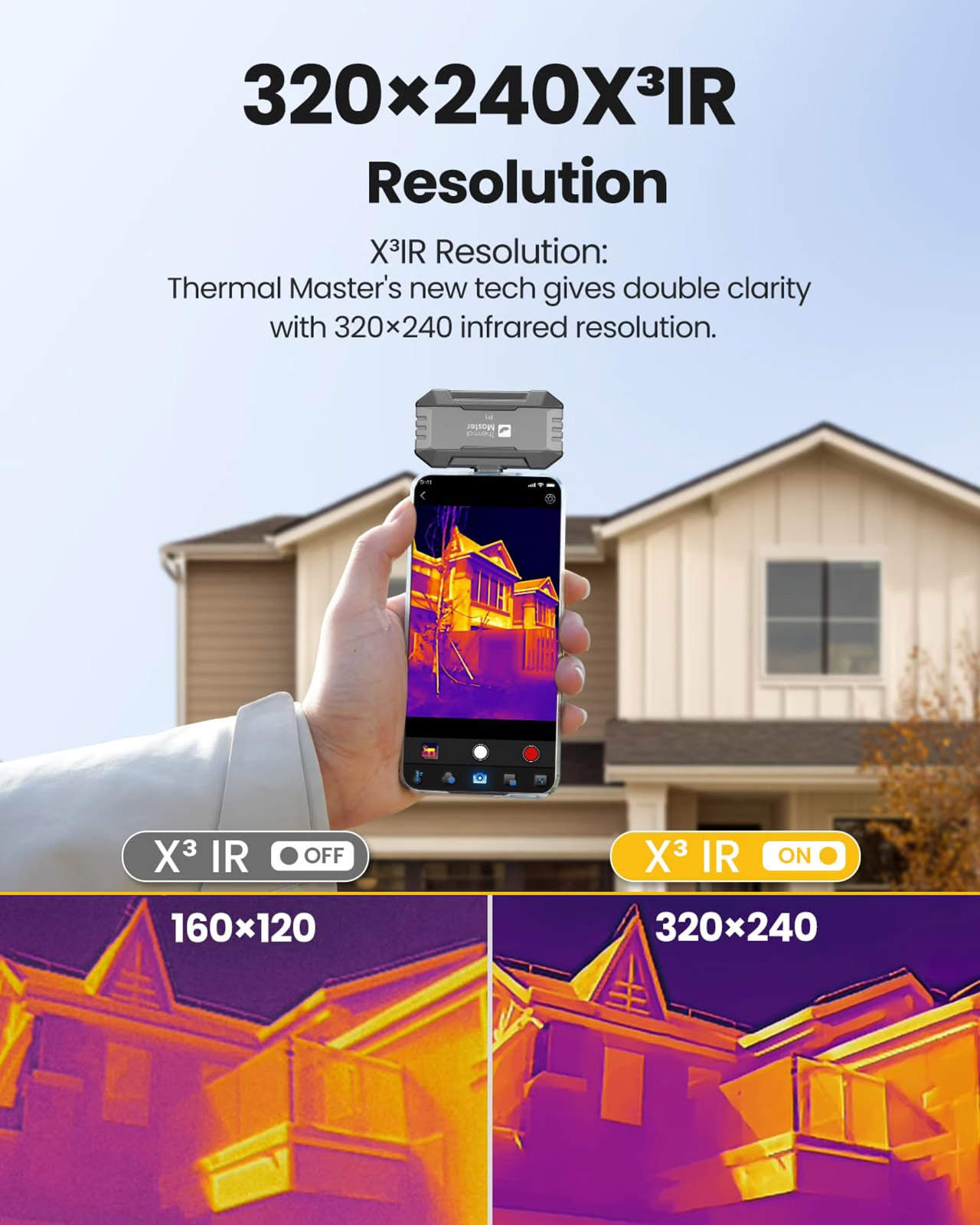
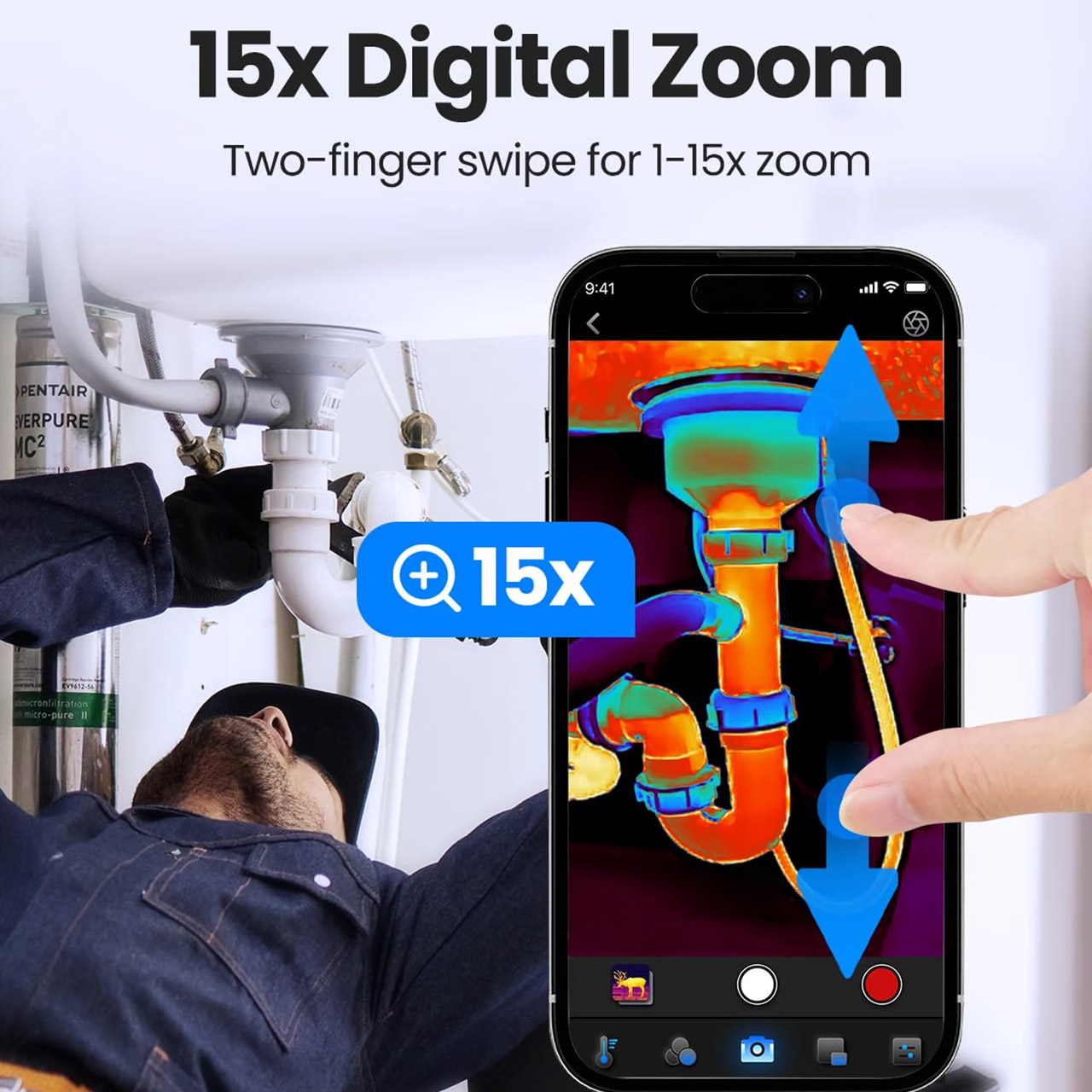
A vanadium-oxide sensor captures native images with a 160 by 120 pixel resolution. However, the built-in software and unique processing take that low-quality data and’stretches’ it out to a displayed resolution of 320 by 240 pixels, making the edges look ultra sharp and displaying where the temperature is dropping or climbing. At 25 frames per second, the vision updates seamlessly as you pan the camera across a surface. The angle of vision is a nice 52 degrees horizontally and 39 degrees vertically, which allows you to capture an entire room corner or electrical panel in one photo without having to reposition the camera again. Digital zoom allows you to zoom in 15 times to get a better look at what’s going on with a certain component.

- iOS and Android Compatibility: The P1 thermal imager supports all USB-C smartphones and computers, including iOS, Android, and Windows. For iPhones...
- 320×240 X³ IR Resolution: Equipped with advanced X³ IR technology, P1 thermal camera upgrades its IR resolution from 160×120 to...
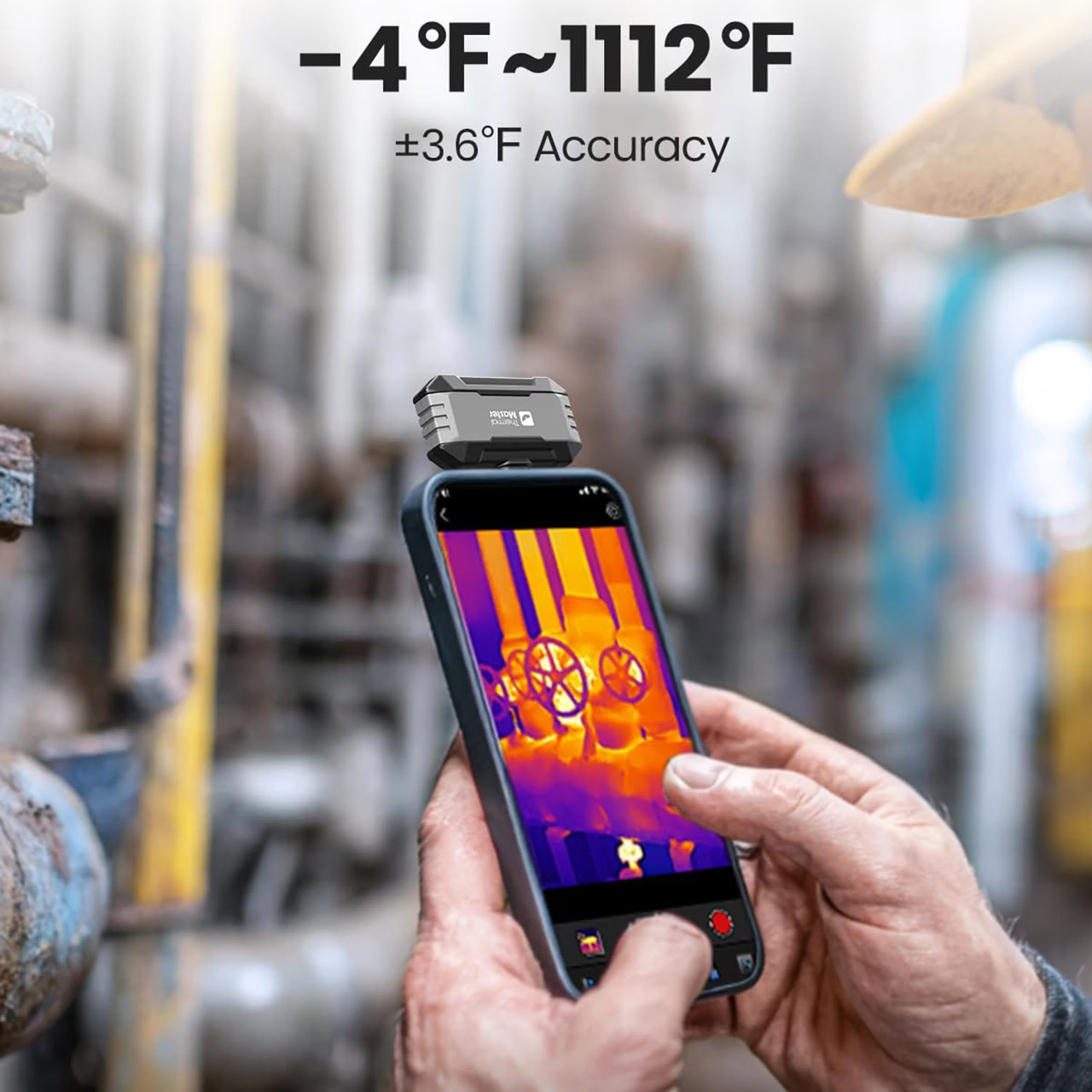
- Wide Temperature Range: The P1 supports a temperature range from -4℉ to 1112℉ (-20℃ to 600℃) with an accuracy of ±3.6℉. Equipped with the...
The sensor can endure temperatures ranging from -20 degrees Celsius to 600 degrees Celsius, or -4 to 1112 degrees Fahrenheit if you’re American. Accuracy is within 2 degrees Celsius or 2% of whatever measurement you obtain, whichever is larger, and the sensor can detect temperature variations as small as 0.04 degrees. You may then use the companion app to fine-tune the reading on objects that emit heat differently, such as painted metal versus raw insulation, by adjusting for emissivity, distance, and ambient temperature. High and low temperature alerts will begin to flash when a specific spot reaches a threshold you specify, and isotherm mode will highlight all areas inside a defined temperature band, highlighting any concerns quickly.
The app allows you to choose from a dozen distinct color schemes, ranging from the classics like white-hot and black-hot to iron-red and a rainbow effect, allowing you to modify the look based on the task at hand. Spot tracking then allows you to focus on the warmest or coldest places in the scene and follow them as the camera moves across it. You may also use the app to place measurement points, lines, rectangles, and circles to take temperature data over a larger area rather than just one point. You can then store the thermal photos and short videos on your phone for future reference or to share with a homeowner or mechanic.
The sensor itself is extremely low-power, consuming only 0.32 watts from the host device, thus there is no need to charge a separate battery. The battery life varies by phone; our testers obtained more than 3 hours on mid-range Android models and longer on more efficient flagships. The program is free and compatible with the latest USB-C iPhones, Android phones running version 7 or higher with OTG support, and Windows desktops. Anything older than that may require a separate adapter. The setup process couldn’t be simpler: download the app, insert the module, and wait for the live thermal view to appear on the screen.
The fixed focus on infinity allows you to scan large regions fast without having to adjust the focus as you go, which is really useful. However, if you need to get close to a little circuit component, the detail may be less sharp than on a camera with an adjustable lens. Of course, the plastic housing is lighter and less expensive to produce than a metal one, but it is also more prone to damage than one of those tough metal-bodied pro models.
You might note that the natural resolution is lower than that of some of the higher-end models available, causing tiny details to seem softer even after processing. Still, tests we conducted comparing the P1 to several professional cameras revealed that the readings were accurate, within a degree or two, on everything from cold packs to scorching surfaces, indicating that it is enough for most household and light commercial tasks.