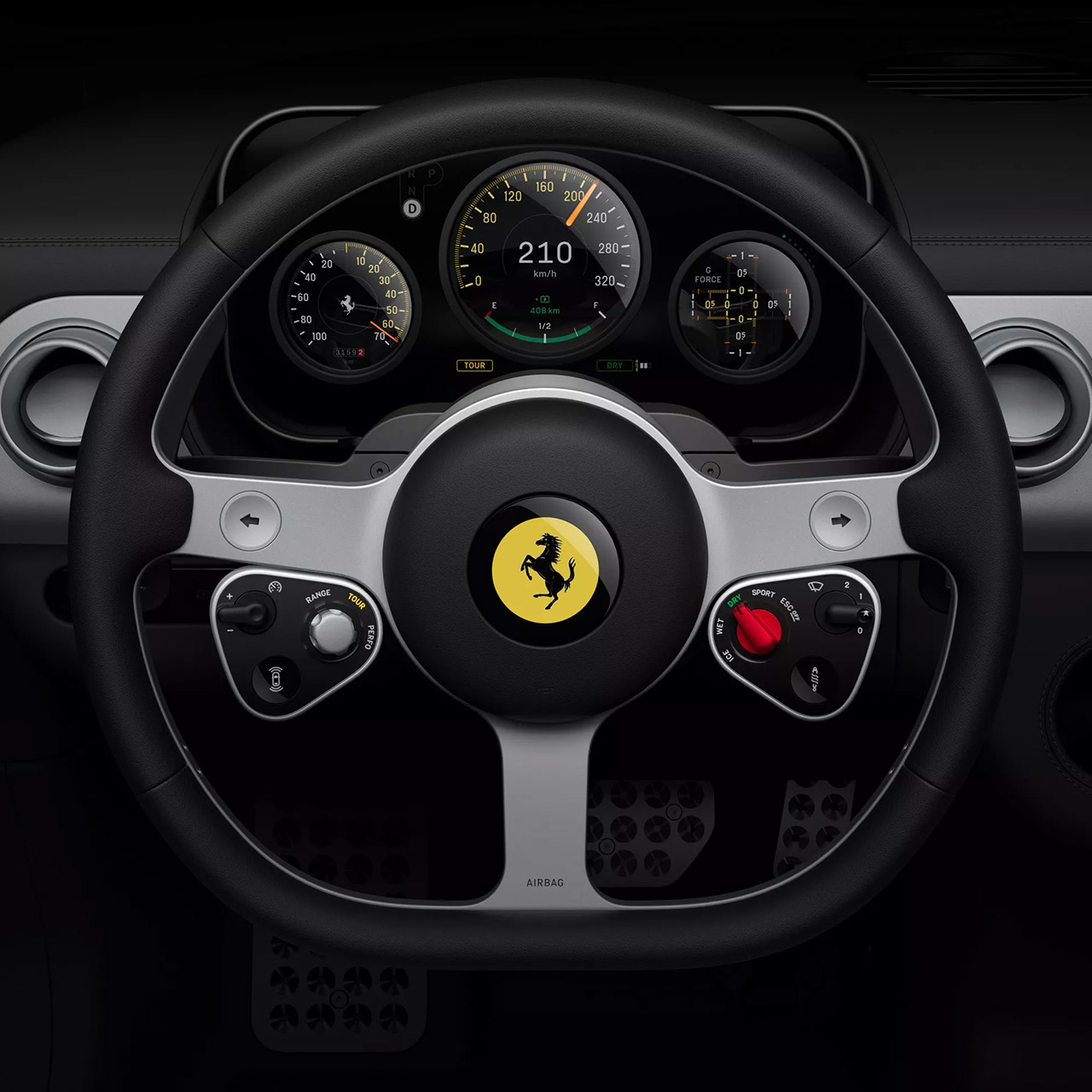
The Ferrari Luce interior is a silent revolution in a world of flashy screens that appear to be taking over everything. Jony Ive and his LoveFrom team spent nearly 5 years working behind the scenes with Ferrari’s designers to develop a cabin that refuses to allow all of that digital clutter get in the way. They’ve focused heavily on physical controls, and it shows, with machined aluminum switches, toggles, and knobs that provide actual feedback when touched. The Ferrari team tested these features repeatedly, for a total of 20+ rounds, to ensure that every click and turn felt pleasant.
That stunning three-spoke steering wheel pays homage to classics like Nardi designs from the 1960s and Formula One’s legendary layouts. The frame is made of exposed aluminum and consists of 19 CNC-machined elements made entirely of recycled alloy. That’s a whopping 400 grams off the regular Ferrari wheel. The control cluster is divided into two analog modules on either side, which handle drive modes, cruise, suspension, and wipers. The paddle shifters behind the wheel deliver torque and provide the same sense of engagement as moving gears. The wheel is directly attached to the instrument binnacle, which adjusts to keep everything clear.

- CAR TOY FOR KIDS – Young car fans build a legendary ride with the LEGO Speed Champions Ferrari SF90 XX Stradale Sports Car (77254) building toy for...
- FERRARI'S MOST POWERFUL CAR – The completed build is packed with authentic details from Ferrari's most powerful street-legal car, including a...
- DRIVER MINIFIGURE & ACCESSORIES – Includes a driver minifigure wearing a Ferrari outfit and helmet with a wig and wrench accessory that can be...
Behind the wheel is a multilayer display developed by Ferrari in collaboration with Samsung. It’s a brilliant setup, with two thin OLED displays overlapping to simulate depth, and small perforations revealing a hidden screen behind. Graphically, they’ve done an excellent job of recreating the look of Veglia and Jaeger’s famous analog gauges from the 1950s and 1960s, even including a small aluminum needle that travels across the digital readouts. To provide some visual intrigue, certain convex glass lenses are included to provide greater parallax, making it easier to read things quickly. They’ve also employed a unique typeface that looks like old Ferrari lettering to provide some clarity and character to the overall design.
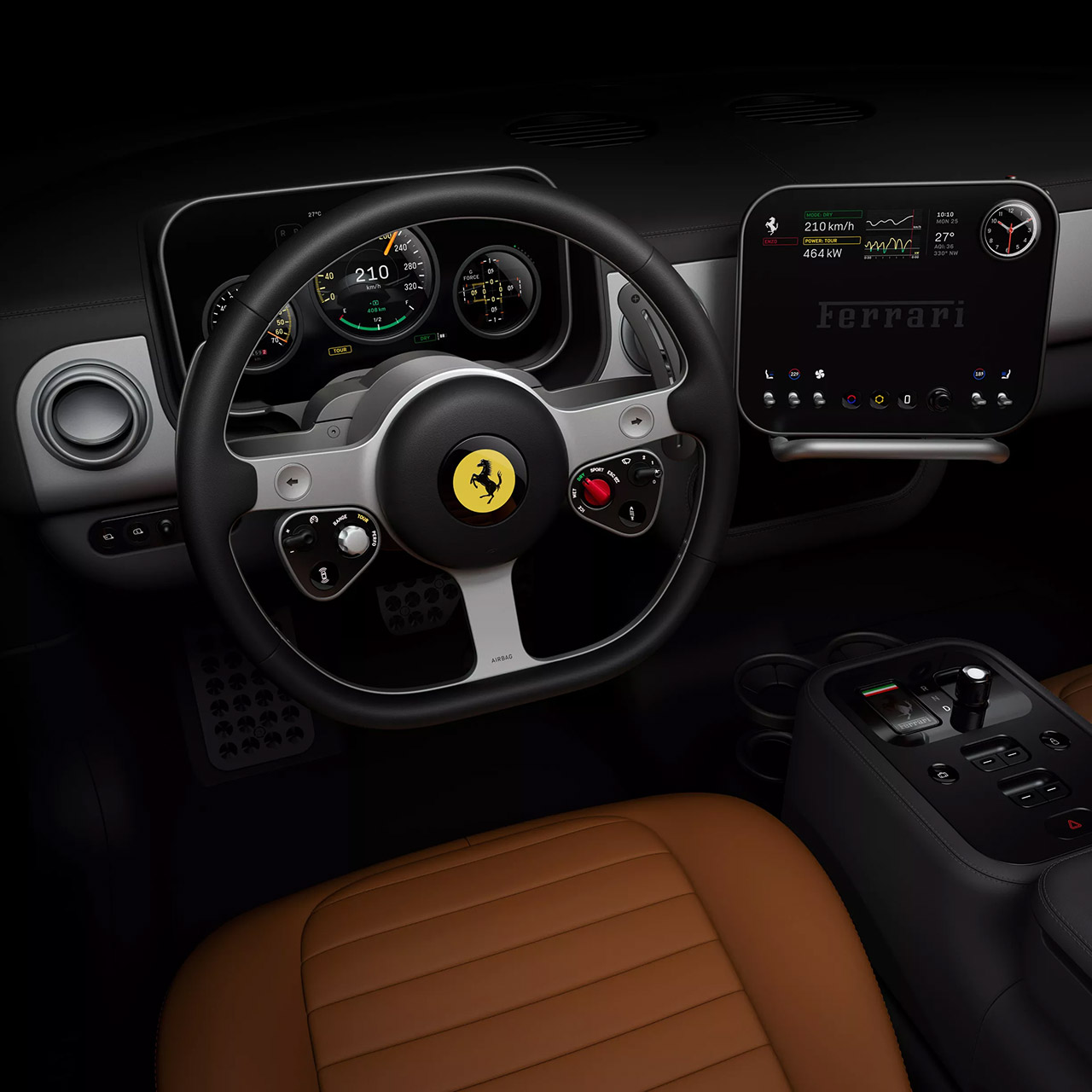
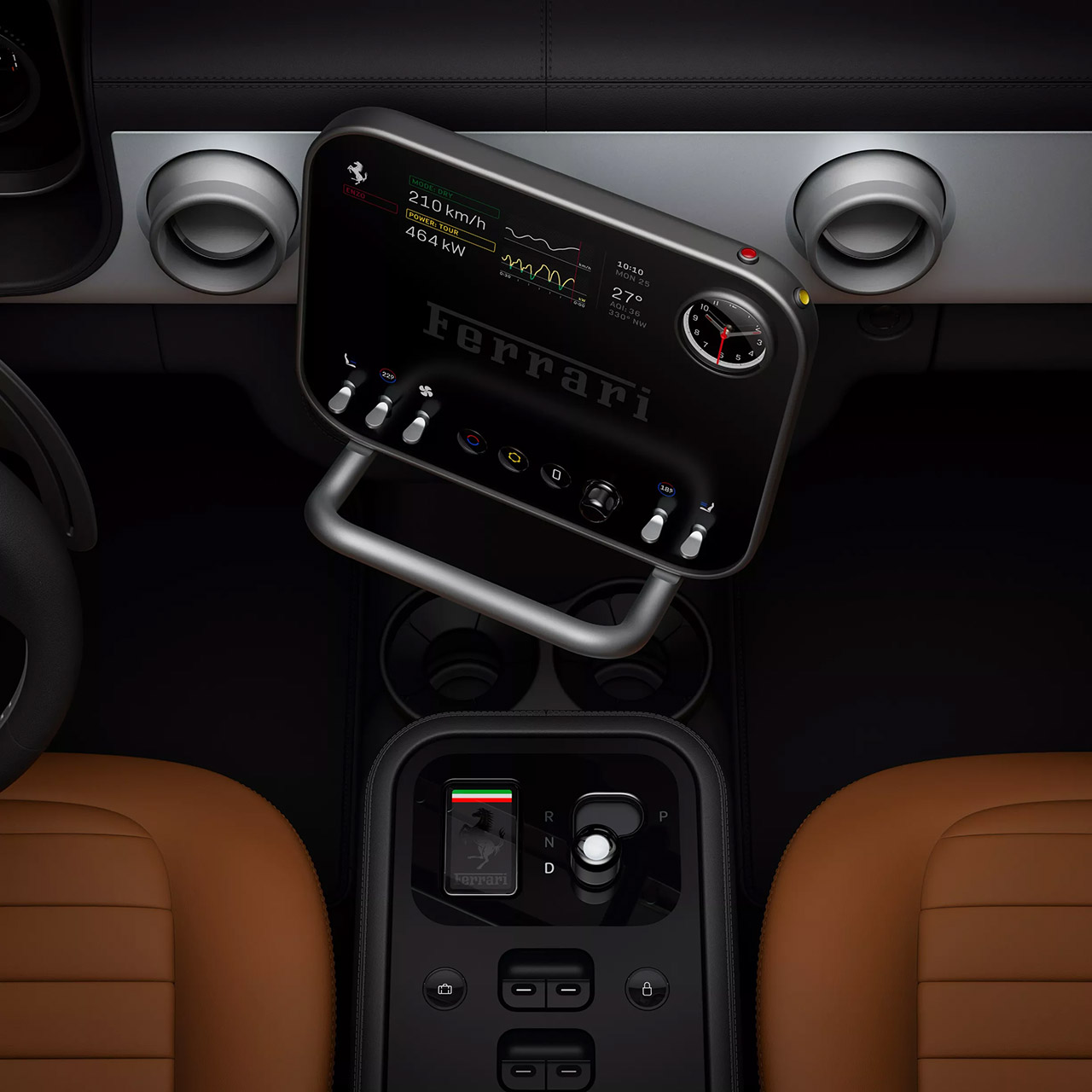
Glass is all the rage in this cabin, with precision-milled examples from Corning that are just tougher than standard issue screens. It may be found in the glass shifter, which glides through engraved gates, as well as the central console, where a rectangular glass key fob rests in a specific dock. This fob uses clever E Ink to create a piece of Ferrari yellow in your pocket, and then it changes color when you insert it, triggering a series of lights around the cabin. Meanwhile, the air vents are turning a gorgeous shade of aluminum and twisting open and shut like the controls on an ancient plane.
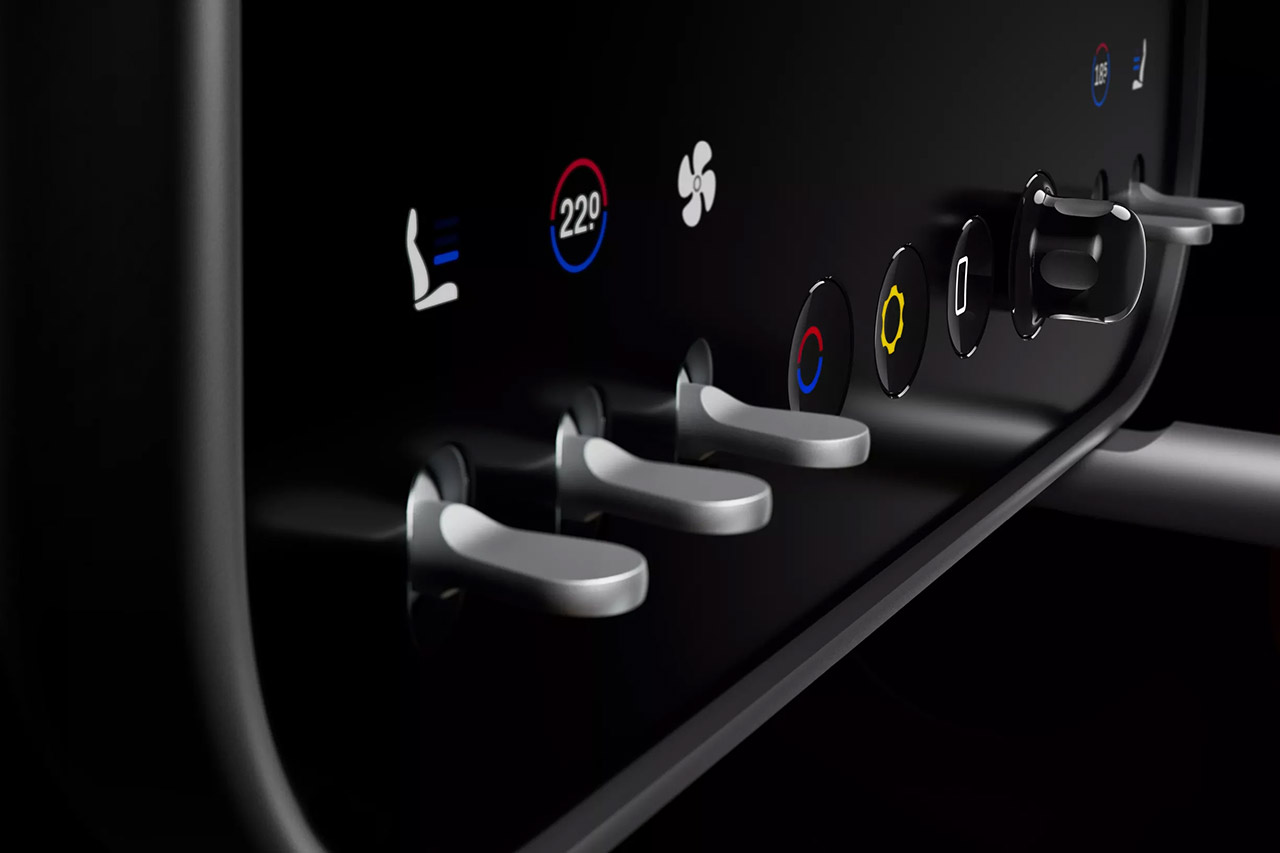
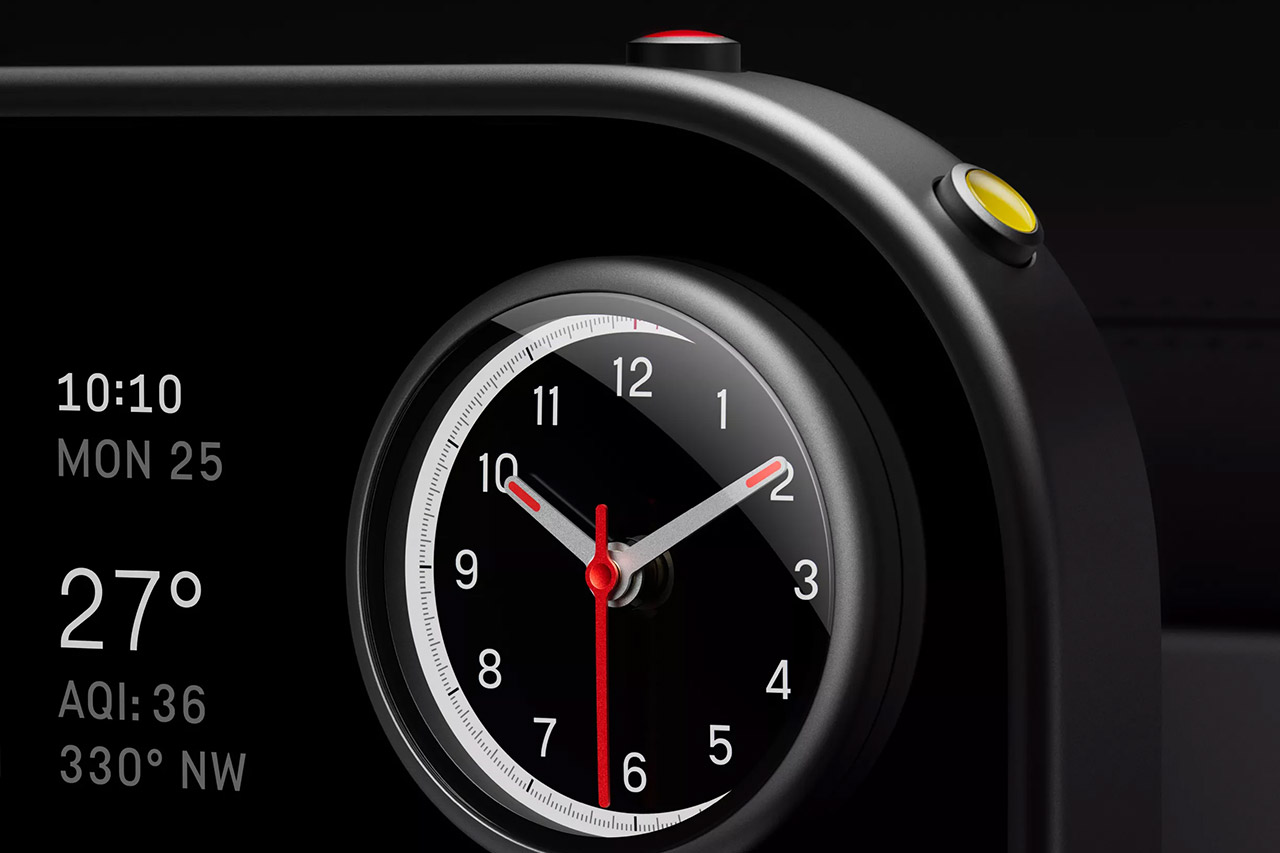
A swivel control panel on a ball and socket joint allows you or your passenger to adjust the angle for the greatest view, and there’s even a small palm rest to keep you comfortable. Physical buttons and knobs control all HVAC and other operations while keeping your hands securely on familiar surfaces. To top it all off, there are above toggles to control the lights as well as launch control in an aircraft-inspired array.