A massive fire tornado erupts over 17 feet tall, writhing with controlled savagery over a puddle of crude oil. A team of Texas A&M researchers happened upon this sight, which has the potential to transform the way oil spills are cleaned up in the ocean.
Engineers built a triangular enclosure, 16 feet tall on three sides, surrounding a large basin of water topped with crude oil. They built a vortex using sophisticated airflow tricks; the spinning motion draws oxygen in from all sides when the oil ignites. What results is an astonishing fire whirl, a fire tornado that erupts into the air, burning hotter and more fully than a flat puddle of burning oil.
Sale

DREO Space Heater, 1500W Portable Electric Heaters for Indoor Use, PTC Ceramic Heater for Office with...
- Faster Heat Than Ever: Powered by DREO Hyperamics Technology, Atom One space heater heats up more efficiently with up to 1500W working power, reaching...
- Shield360° Protection: DREO Room Heater Heat up your day and night without worries. ETL-listed Shield360° system provides tip-over and overheat...
- Save More on Energy Bills: ECO Mode adjusts the heat level automatically to reach your desired temperature while saving more on energy bills...
Elaine Oran, a professor of aerospace engineering at Texas A&M, collaborated with Qingsheng Wang from chemical engineering and Michael Gollner from UC Berkeley to make this latest research accomplishment possible. Their gigantic experiment, conducted on a grand scale at the Brayton Fire Training Field, is the first time anyone has attempted this for oil spill cleanup of this magnitude.
Standard in-situ burning, as employed in the past during major disasters such as the Deepwater Horizon leak, simply includes blazing oil slicks directly on the ocean. It demonstrates far too many issues, as flames spread out in all directions, devour a small amount of oil, and leave a cloud of black smoke and a load of junk floating in the water. The smoke plumes also carry a variety of poisons into the atmosphere, while the unburned muck simply hangs there, harming marine life.
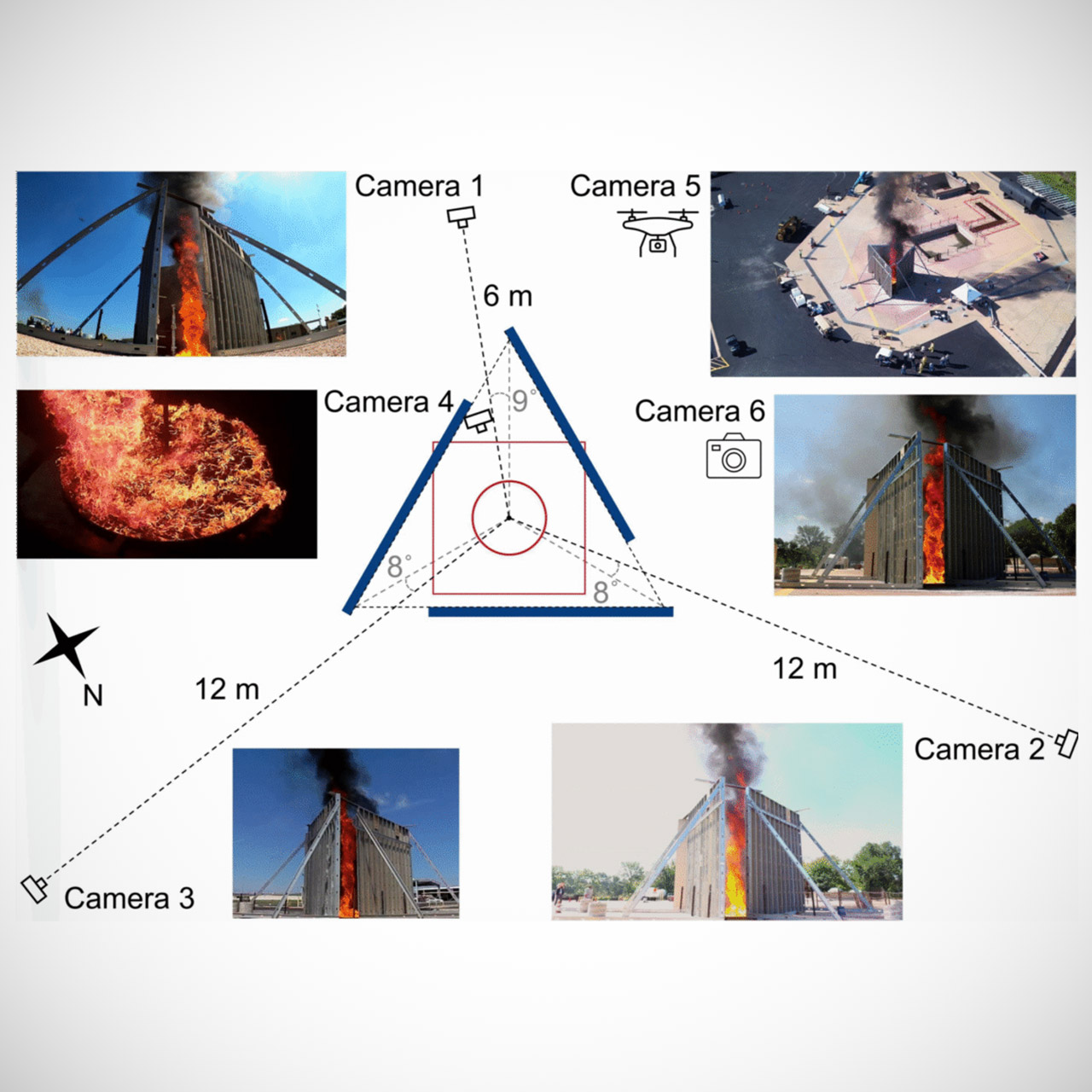
Fire whirls change all of that because the spinning vortex keeps a continuous stream of oxygen running the entire length of the flame. It accelerates the fire, and guess what? In experiments, the approach consumed up to 95% of the oil fuel. It burned about twice as fast as a regular fire pool, or roughly 40% faster overall, and produced 40% less soot. Less soot means better sky to see during cleanup, and fewer harmful particles are emitted.
Speed is crucial in spill response because the faster the burn, the smaller the slicks become before they drift to the coastline or other sensitive areas, reducing long-term damage to seabirds, fish, and other delicate underwater ecosystems. Furthermore, this process converts a lot more oil into gas rather than simply leaving a big mess.
However, for this to work well, the conditions must be just right. Too much wind causes the vortex to collapse. If the oil is either too thick or too thin, it will not operate. These researchers characterize finding that sweet spot as being in a “Goldilocks zone,” which is ideal for continued spinning. You can bet that in the actual ocean, with all the waves and unpredictable weather, things would get a lot more complicated, so any real-world application will have some form of mobile structure that can adjust on the fly to whatever slick it’s working with.
[Source]