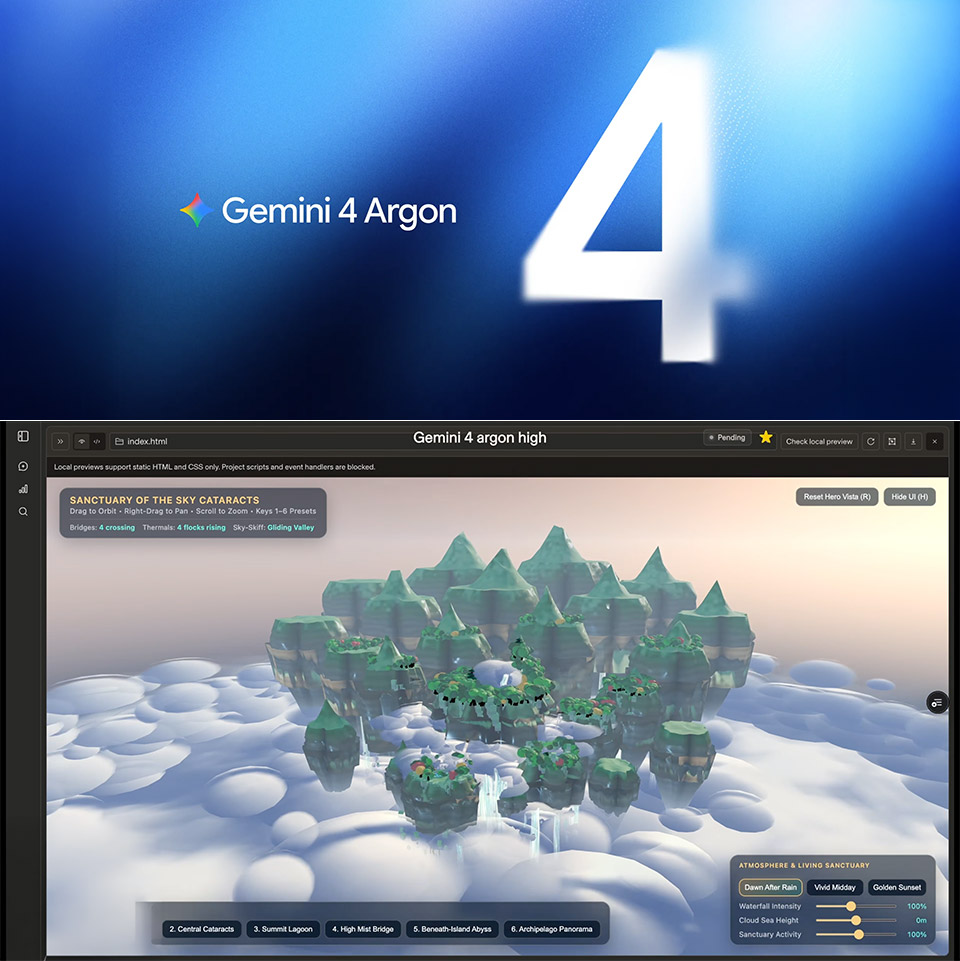
Google put Gemini 4 Argon in front of a small group of cyber defenders on September 30, and the claim attached to it is plain enough to follow. This is the model the company wants on jobs that take a long time to finish, the kind that wander through a huge codebase, a stack of contracts, or a live security review and still need one coherent result at the end. Argon can write up to a million tokens in a single pass. Earlier Gemini models stopped around 64,000. A token is a small piece of text, so a million of them sits closer to a short novel than a chat reply. Google’s case is that the extra room changes the work itself, because the model can stay on one problem instead of being cut off and asked to pick the thread back up later.
Inside Google, people have already pointed it at code that is painful to touch by hand. Agents built on Argon rewrote 32,000 lines of speed-critical code in the libgav1 video decoder, then produced a memory-safe Rust version that runs 2.7 times faster than an earlier Rust port while matching the video output. They also tested it on large chunks of Google’s own software, rewriting C and C++ code in Rust, including over 800,000 lines on the Fuchsia Zircon kernel. Other internal tests revealed that they were saving hundreds of gigabytes of memory. Meanwhile, a quantum circuit work outperformed a published benchmark by 40% in a couple of minutes.

- CREATED FOR YOUR CONTENT: Any way you turn it, the new Galaxy Z Fold8 gives you a fuller viewing experience. Designed with your content in mind, this...
- WORLD’S LIGHTEST FOLD¹: Galaxy Z Fold8 is the newest foldable phone for content on the go. Unfolded, it fits movies and books for an immersive...
- THE BRIGHTEST DISPLAY ON A GALAXY PHONE: Our brightest smartphone display² provides you with a comfortable view, whether you’re inside or outside...
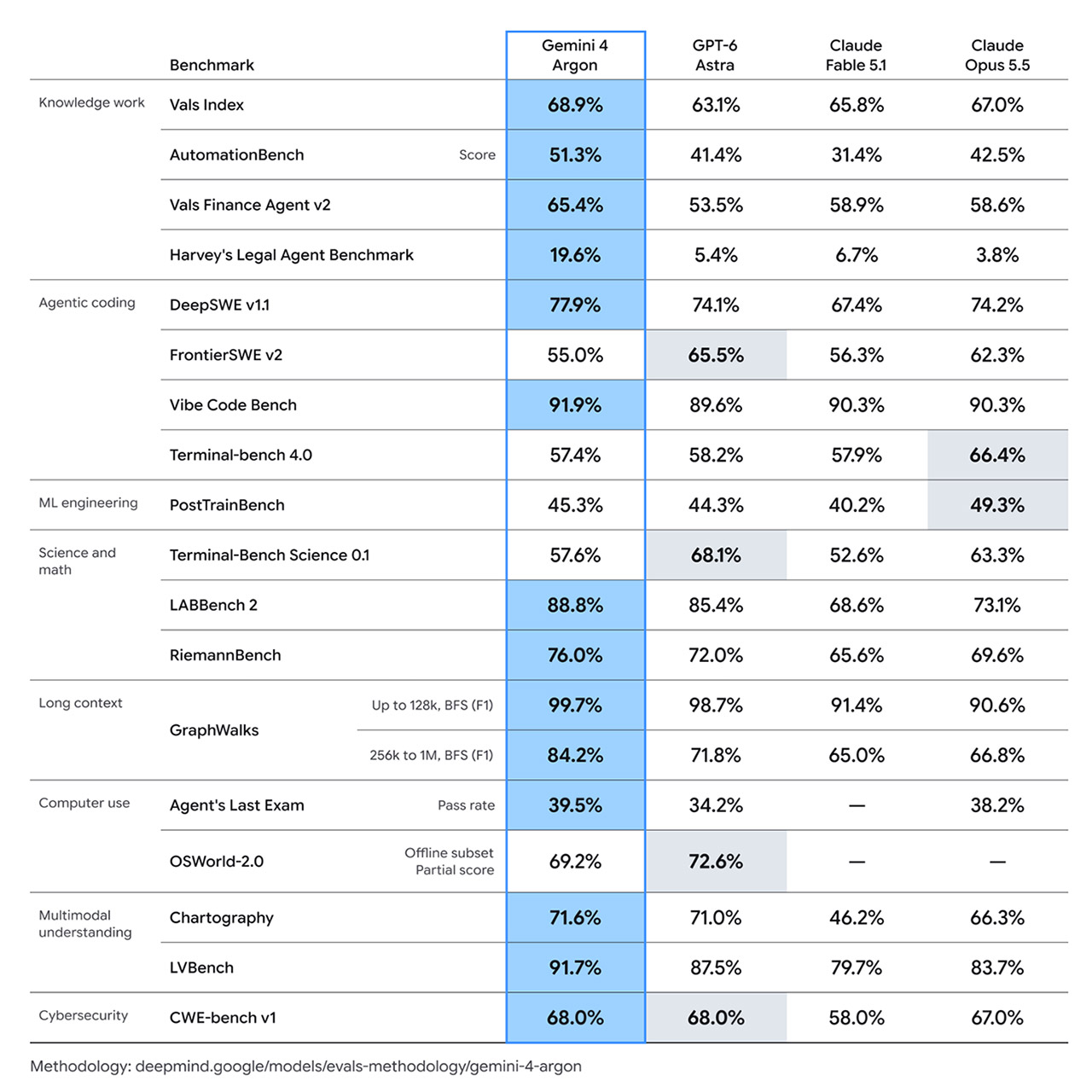
Software engineering is the clearest public case. Argon earned a respectable 77.9% on DeepSWE, a large test that replicates real-world software tasks, barely ahead of the most recent Claude Opus and OpenAI’s GPT-6 Astra. Google has also touted its performance in other areas such as chart reading, extended video, and document work, essentially anywhere where it appears that someone will sit and gaze at a problem until it is solved. On a lengthy video test, it performed admirably, scoring 91.7%. It appears to be rather adept at combining several jobs, such as finance, legal, and tax work, all at once, which is exactly what many businesses require. The concept is that instead of using numerous tools and having multiple individuals work on the same assignment, everything can be done in one location.
Cyber defense is why the first outside users are not regular developers. They explicitly taught Argon to detect software flaws, verify that they exist, and even propose a solution. They don’t want to simply throw it into the wild west of the internet. It will first go to a trusted group of defenders through a program called Fairwind, and then it will be reviewed by the US government as part of a pre-release process. Wiz, a security startup, has also been patching up public infrastructure for free using similar technologies. According to Google, Argon simply refuses to carry out any attack, chemical or biological in nature. They also claimed that it performed better than some of the rivals in a test where hidden instructions were used to trick an agent into doing terrible things.
Once they are satisfied that it is stable, Google will begin selling access to it. They want to charge an introductory pricing of $2 per million input tokens and $10 per million output tokens for the API, with cached input nearly free, before increasing to $4 and $20, respectively. People with Google AI Ultra memberships will be able to try it out at the same time. Everyone else will need to wait. This model was originally slated for June as the Gemini 3.5 Pro, but it was delayed while Google released smaller Flash models and the rest of the industry continued to provide improvements.
[Source]