
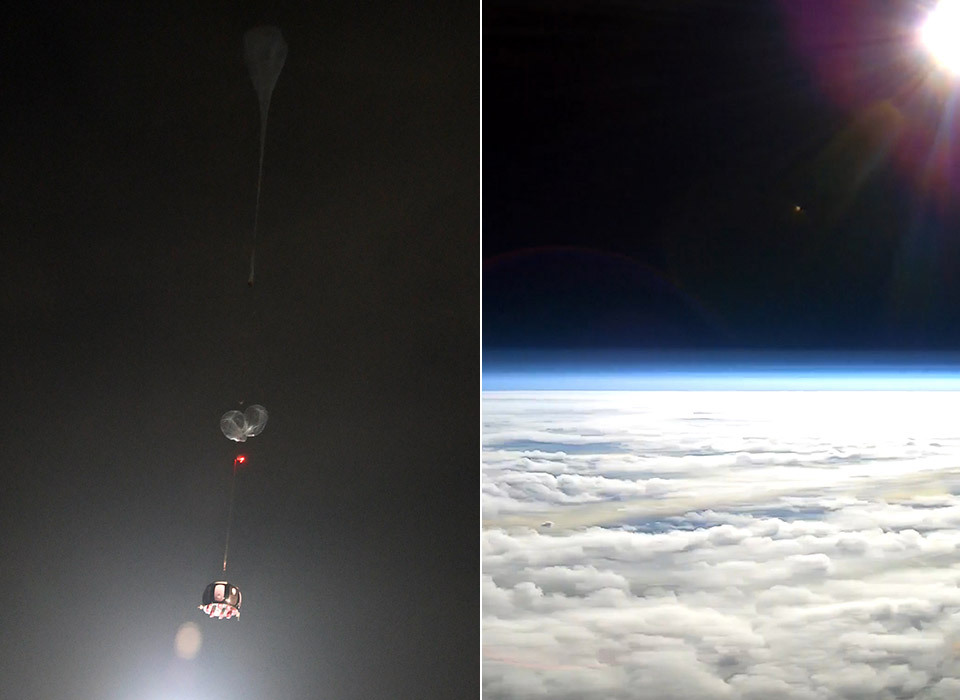

HALO Space just completed its first test flight and will be competing with Spaceship Neptune when it launches the first tourists to the edge of space in a balloon by 2029, with tickets priced from $100,000+. The unmanned capsule prototype took off from the Tata Institute of Fundamental Research (TIFR) Balloon Facility in Hyderabad (India) and flew to an altitude of 37 kilometers.
The 773 kilogram (1704 pound) aerospace balloon is made from very thin polycarbonate and powered by hydrogen. This test was mainly to gather data on the capsule’s flight behavior at launch, ascent, cruise, descent and landing, as well as safety systems, ground / onboard equipment, which are the most critical parts of HALO’s flight program. Everything performed exactly as expected and footage was captured by nine cameras installed in different points on the capsule. One critical safety system is a parachute that can be deployed at any time and altitude during the flight, making sure everyone lands safely once deployed.

- A SCREEN EVERYONE WILL LOVE: Whether your family is streaming or video chatting with friends, the Galaxy Tab A8 tablet brings out the best in every...
- POWER AND STORAGE FOR ALL: Get the power, storage and speed your family needs with an upgraded chipset and plenty of room to keep files — up to...
- CHARGE FAST, POWER FOR HOURS: Go for hours on a single charge and back to 100% with the fast charging USB C port; Battery life may vary depending on...
We could not be more satisfied. Today, we have demonstrated the viability of the HALO operational concept we’ve been developing. This is a major milestone and another concrete step towards leading the Near Space tourism sector,” said Carlos Mira, HALO Space CEO.


