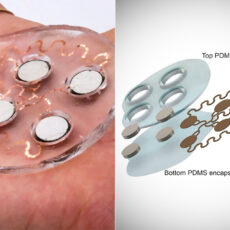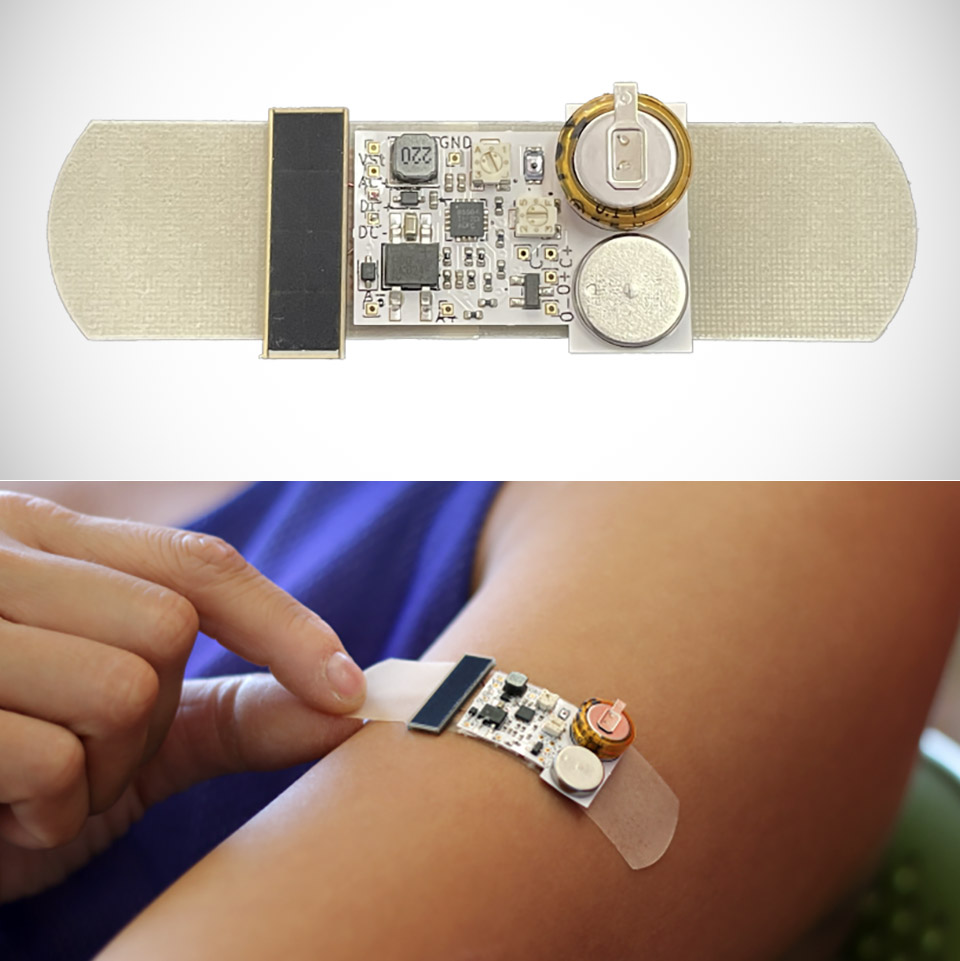
A Band-Aid-sized patch attaches to your arm and runs quietly in the background while you go about your business. This is Hapt-Aid, a simple, self-powered device from Carnegie Mellon University and UCLA that reimagines what a health wearable can be.
Hapt-Aids are simpler than modern wearables since they have no batteries, microcontrollers or digital displays. They use analog circuitry to harvest energy from your movements – whether it’s the swing of your arms while walking, the flex of your biceps during a workout or the sun on your skin during a morning jog. That energy is both a power source and a data storage device, detecting your movements and storing them in a small supercapacitor. When you reach a predetermined goal – like a certain number of steps or minutes in the sun – the patch vibrates to let you know.
![Apple Watch SE 3 [GPS 40mm] Smartwatch with Starlight Aluminum Case with Starlight Sport Band - S/M...](https://m.media-amazon.com/images/I/31YiTby0pOL._SL160_.jpg)
- HEALTH ESSENTIALS — Temperature sensing enables richer insights in the Vitals app* and retrospective ovulation estimates.* You’ll also get a daily...
- GREAT BATTERY LIFE — Enjoy all-day, 18-hour battery life. Then charge up to twice as fast as SE 2* and get up to 8 hours of battery in just...
- ALWAYS-ON DISPLAY — Now you can read the time and see the watch face without raising your wrist to wake the display.
Four prototypes show Hapt-Aids’ versatility, each designed for a specific task. One measures sun exposure by using a solar cell to count how long you’ve been in UV rays, vibrating after 43.9 minutes of average sunlight to let you know you’ve met your daily dose. Another tracks bicep curls, collecting energy from muscle activity and counting reps. A third tracks steps, using the kinetic energy of your stride. The fourth sensor detects body heat and lets you know after you’ve spent enough time in a warm environment.
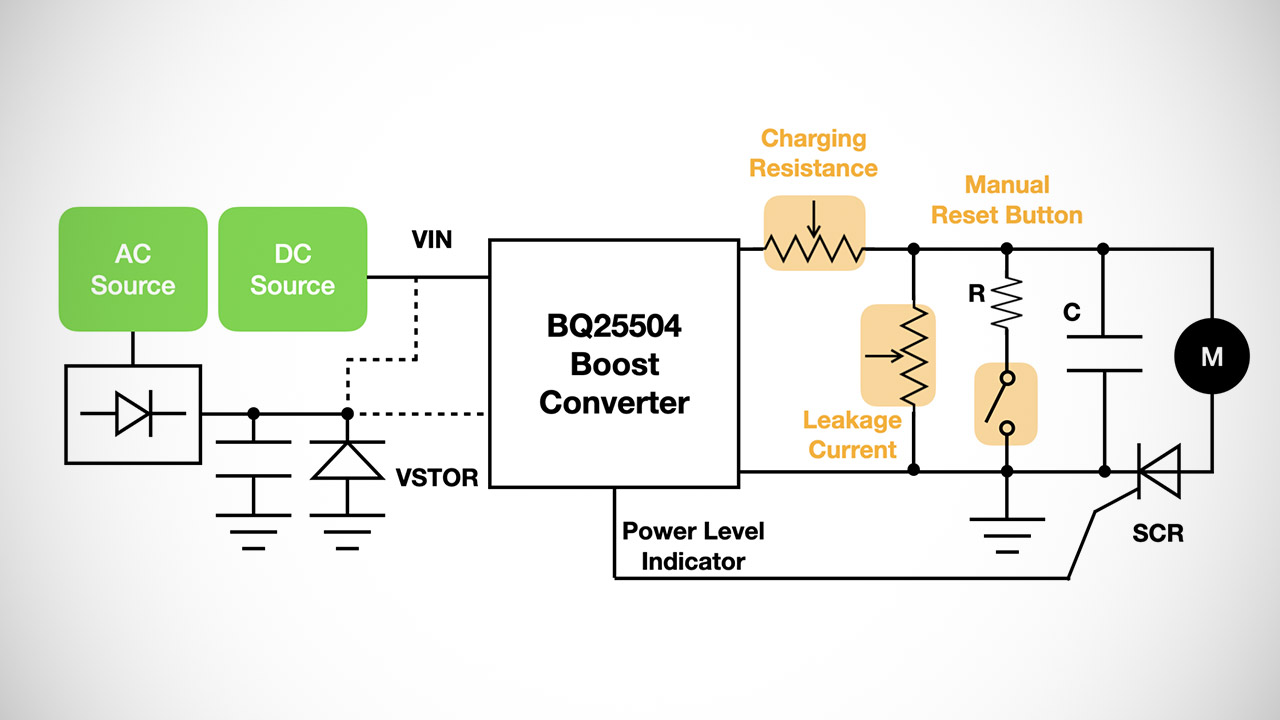
Hapt-Aids stand out from the crowded field of fitness trackers in terms of cost and size. At $11 per unit ($3.60 without the energy harvester) these patches are a fraction of the cost of even the cheapest pedometers and weigh only 2.6 grams without the harvester – a featherweight compared to the bulky smartwatches that dominate the market.
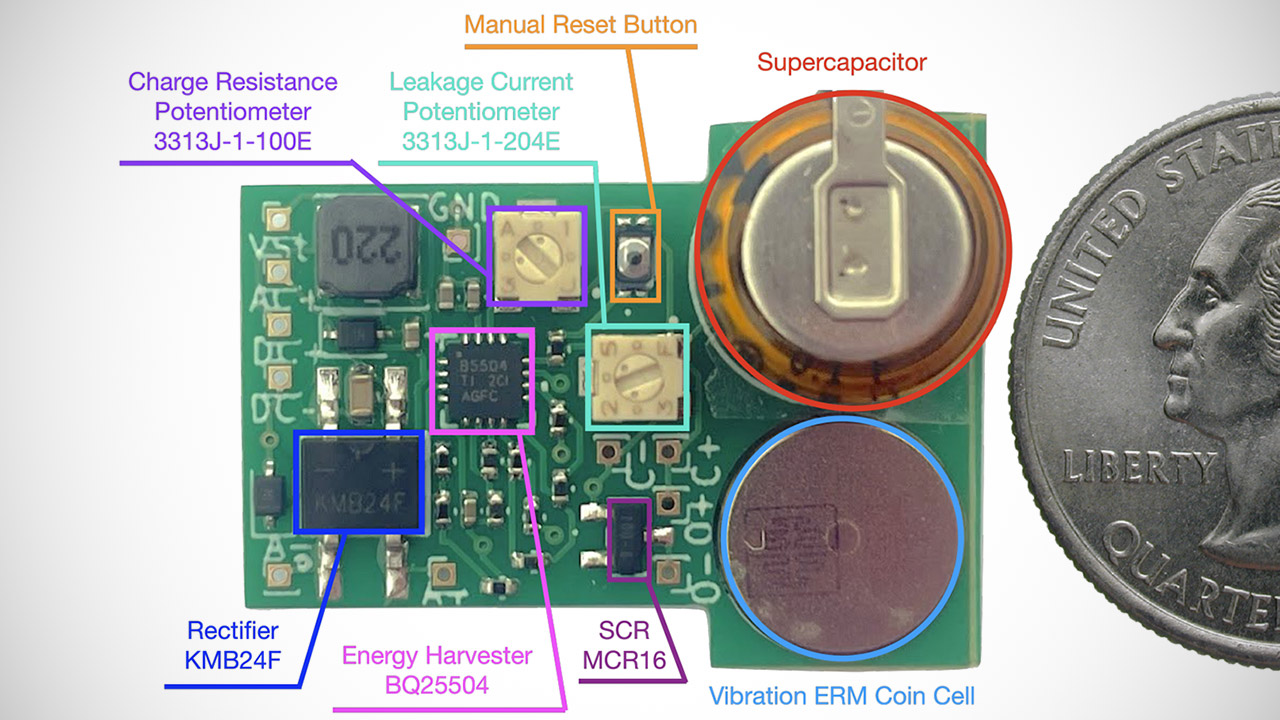
Customization starts with a simple knob that lets you adjust the activity threshold (e.g. how many steps trigger a vibration) without needing a phone or manual. This analog approach is intuitive but loses some precision. Hapt-Aids don’t log data or connect to apps so you can’t see your activity history. To reset the device, press the manual discharge button, which clears the capacitor, and prepares it for the next use.
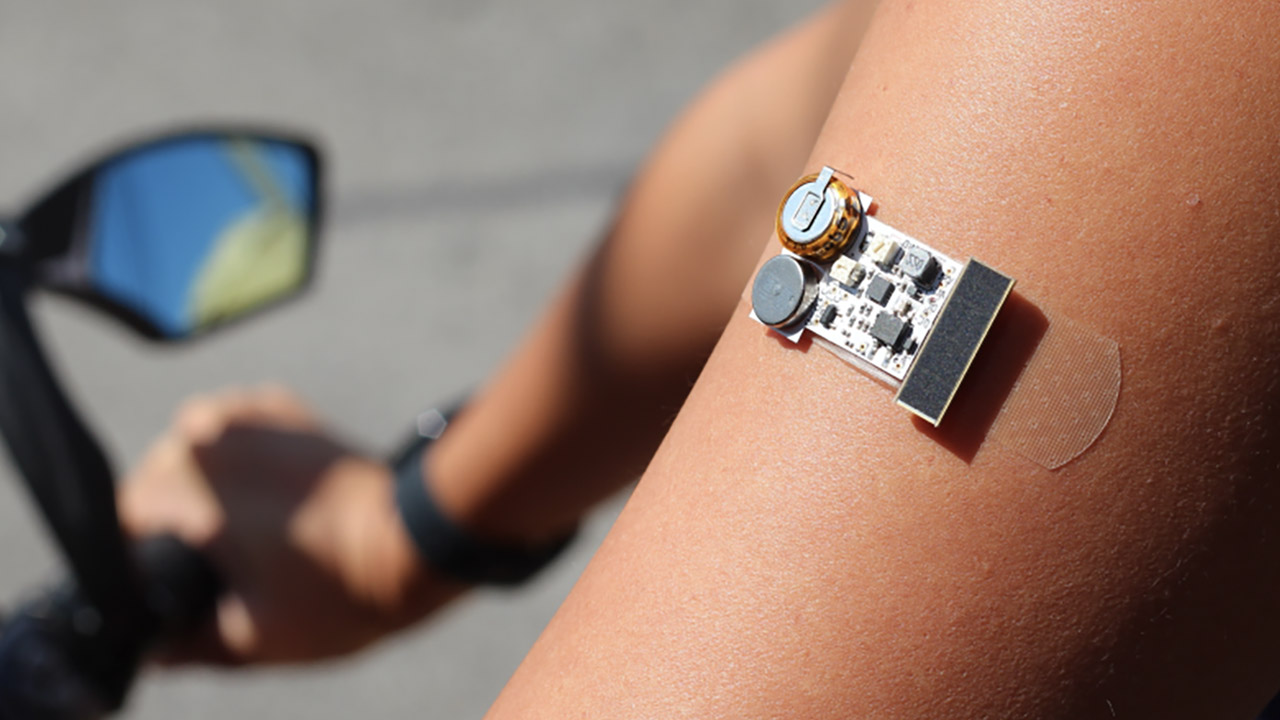
The Hapt-Aid’s magic is in its ability to harvest energy using piezoelectric elements for motion, solar cells for light and thermoelectric generators for heat. No batteries means no maintenance and no waste. The trade off is they only work under certain conditions – sunshine or movement – and there is no off switch. If you remove the patch, it won’t vibrate until you reactivate it, but this also makes pausing it mid-use impossible.
[Source]