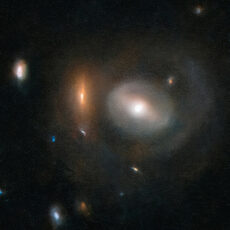
This Hubble image does not show a giant spiderweb in space, just CW Leonis, a dying red giant star located about 400 light-years away in the constellation Leo. It shows the star as a glowing orange-red eye shrouded in dusty, dark carbon clouds.
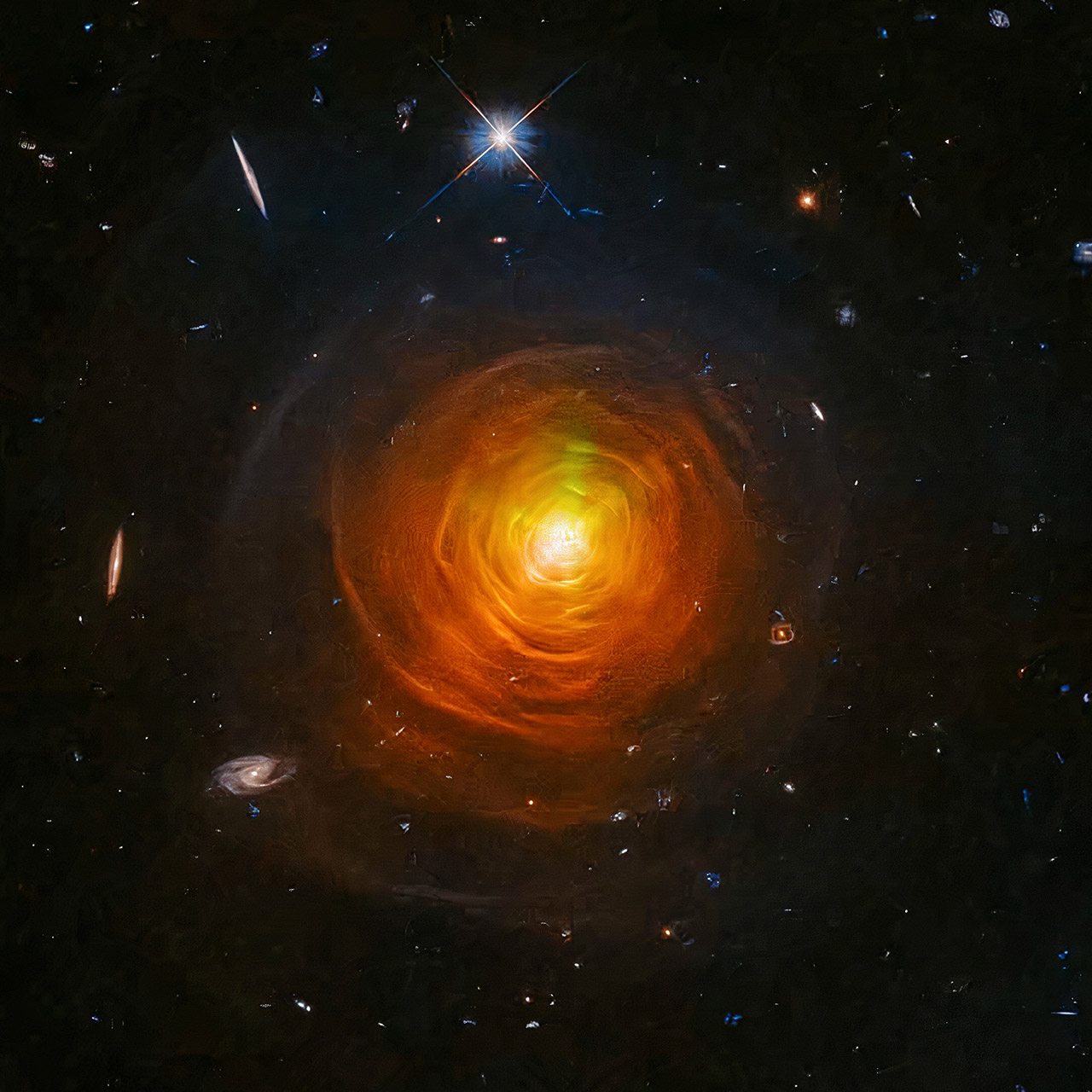
You’re not looking at “cobwebs”, but rather star’s outer layers, ejected into space as it nears the end of its life as a red giant. The image, captured using Hubble’s Wide Field Camera 3, reveals a turbulent envelope of gas and dust, with intricate shells and arcs possibly shaped by the star’s magnetic field or a nearby companion star.
Sale

Gskyer Telescope, 70mm Aperture 400mm AZ Mount Astronomical Refracting Telescope for Kids Beginners...
- Superior Optics: 400mm(f/5.7) focal length and 70mm aperture, fully coated optics glass lens with high transmission coatings creates stunning images...
- Magnification: Come with two replaceable eyepieces and one 3x Barlow lens.3x Barlow lens trebles the magnifying power of each eyepiece. 5x24 finder...
- Wireless Remote: This refractor telescope includes one smart phone adapter and one Wireless camera remote to explore the nature of the world easily...
However, the most interesting feature is the bright beams of light radiating from CW Leonis, which have changed in brightness over a mere 15 years, a flash in astronomical time. Astronomers believe these beams were caused by gaps in the dusty shroud, allowing starlight to illuminate surrounding dust like searchlights through fog.
The star’s turbulent envelope and those fluctuating beams continue to puzzle scientists, as they probe whether magnetic fields, a companion, or something else is at play. CW Leonis is a prime target because it’s the closest carbon star to Earth, offering a rare chance to study how dying stars seed the cosmos with carbon, the building block of life.