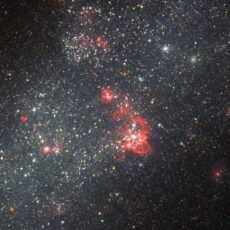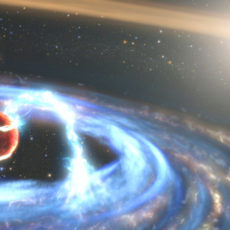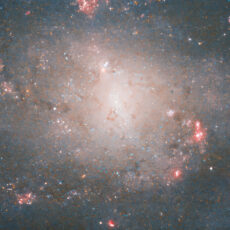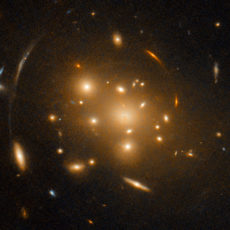

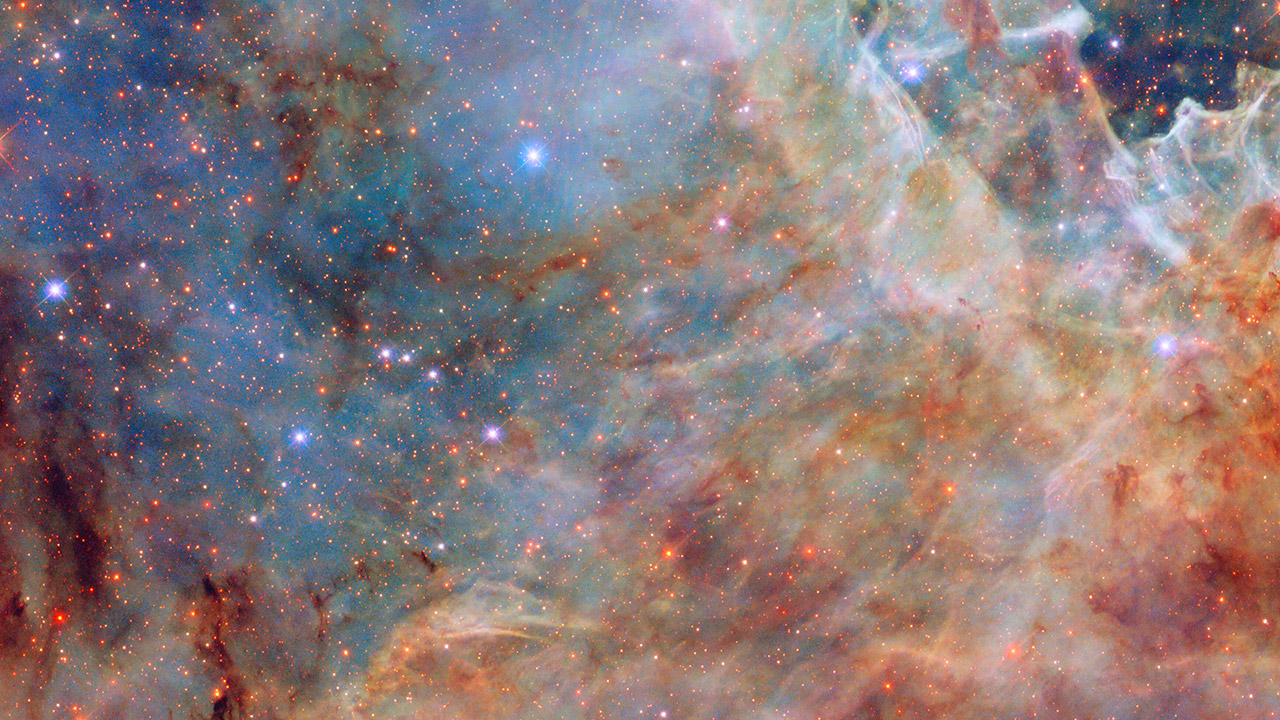
NASA / ESA’s Hubble Space Telescope captured this sparkling image of the outskirts of the Tarantula Nebula in the Large Magellanic Cloud, which is a dwarf galaxy situated located approximately 160,000 light-years away in the constellations Dorado and Mensa.
The Large Magellanic Cloud is only 10% to 20% as massive as the Milky Way, yet contains some of the most impressive star-forming regions in the nearby Universe. What you see here is the largest and most productive star-forming region in the local Universe. That’s right, the center of the Tarantula Nebula hosts the most massive stars known, which weigh in at approximately 200-times the mass of our Sun.
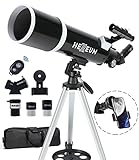
- Optimum Magnification: Our telescope for kids and adults is quipped with two replaceable excellent-quality eyepieces (25mm and 10mm) for 24X and 60X...
- Excellent Quality Optics: This telescope is 600mm(f/6.7) focal length and 80mm aperture, 80mm aperture to capture more light picture and multi-fully...
- Portable And Convenient: Comes with a phone adapter and an adjustable aluminum tripod. Wireless remote control and carrying bag make it easier for you...
The section of the nebula shown here features serene blue gas, brownish-orange dust patches and a sprinkling of multicolored stars. The stars within and behind the dust clouds appear redder than those that are not obscured by dust. Dust absorbs and scatters blue light more than red light, allowing more of the red light to reach our telescopes and making the stars appear redder than they are,” said the ESA.