Photo credit: Scottish Invasive Species Initiative (SISI)
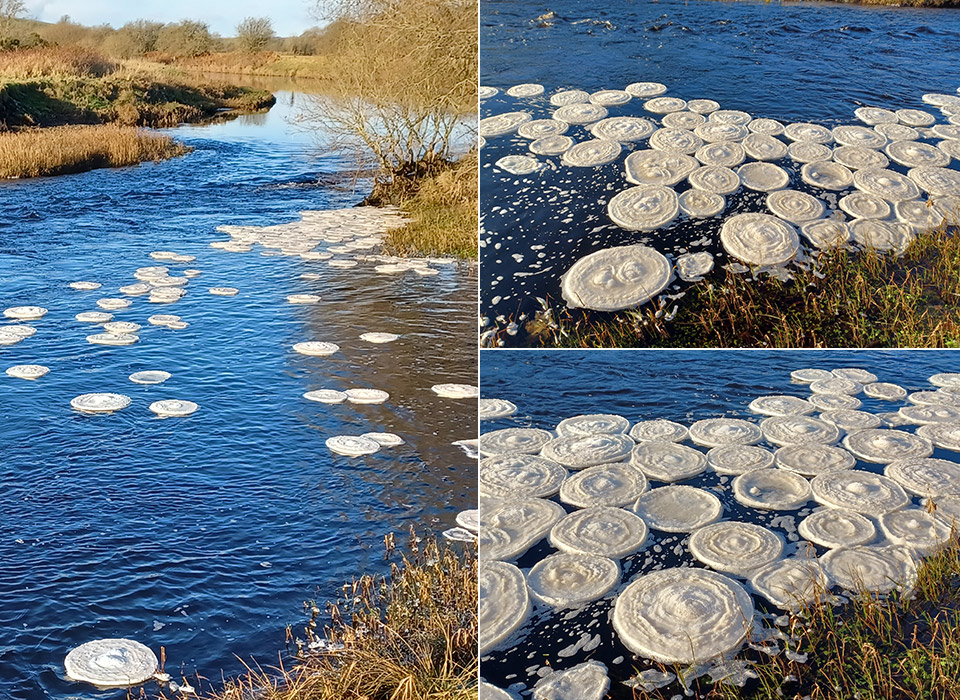
Ice pancakes recently showed up on the River Bladnoch in Galloway, Scotland due to the unexpected cold weather in the UK. They are normally found around Antarctica, Canada and most notably, Lake Michigan. For these to form, they require some specific weather conditions, such as the optimal temperature (right below freezing) and in areas with a bit of wave action.
This phenomenon occurs on rivers when frozen foam on its surface gets trapped in a spiraling eddy current. As sections of this frozen foam hits these swirling discs, they form into these flat pancakes that continue to grow between 8″ – 79″. However, on open bodies of water, these pancakes form as surface ice gets broken up and waves cause the chunks to smash against each other.

- 7-IN-1 ICE CREAM MAKER -- A FROZEN TREAT FOR EVERY CRAVING: Choose from 7 one-touch programs -- Ice Cream, Gelato, Sorbet, Milkshake, Smoothie Bowl...
- CREAMIFY TECHNOLOGY -- INCREDIBLY SMOOTH, CREAMY RESULTS: Ninja's exclusive Creamify Technology finely shaves through a uniformly frozen pint...
- MAKE IT YOUR WAY -- TOTAL INGREDIENT CONTROL: Create protein-packed ice cream, low-sugar sorbet, dairy-free treats, and vegan options -- all from...
With pancake ice, they’re tiny little floating icebergs, so they’re not going to stay in place very well. The hydrography and the circulation of Lake contributes to how long they last as well as the temperature and the wind,” said Andrea Vander Woude, a researcher at the National Oceanic and Atmospheric Administration’s Great Lakes Environmental Research Laboratory.
[Source]