
NASA’s James Webb Space Telescope captured a stunning image of HH 30, an edge-on protoplanetary disc located in the dark cloud LDN 1551, also known as the Taurus Molecular Cloud, located 450 light-years from Earth. Herbig-Haro objects like this one are basically small nebulae found in star formation regions, marking the locations where gas flowing out from young stars is heated into luminescence by shockwaves.
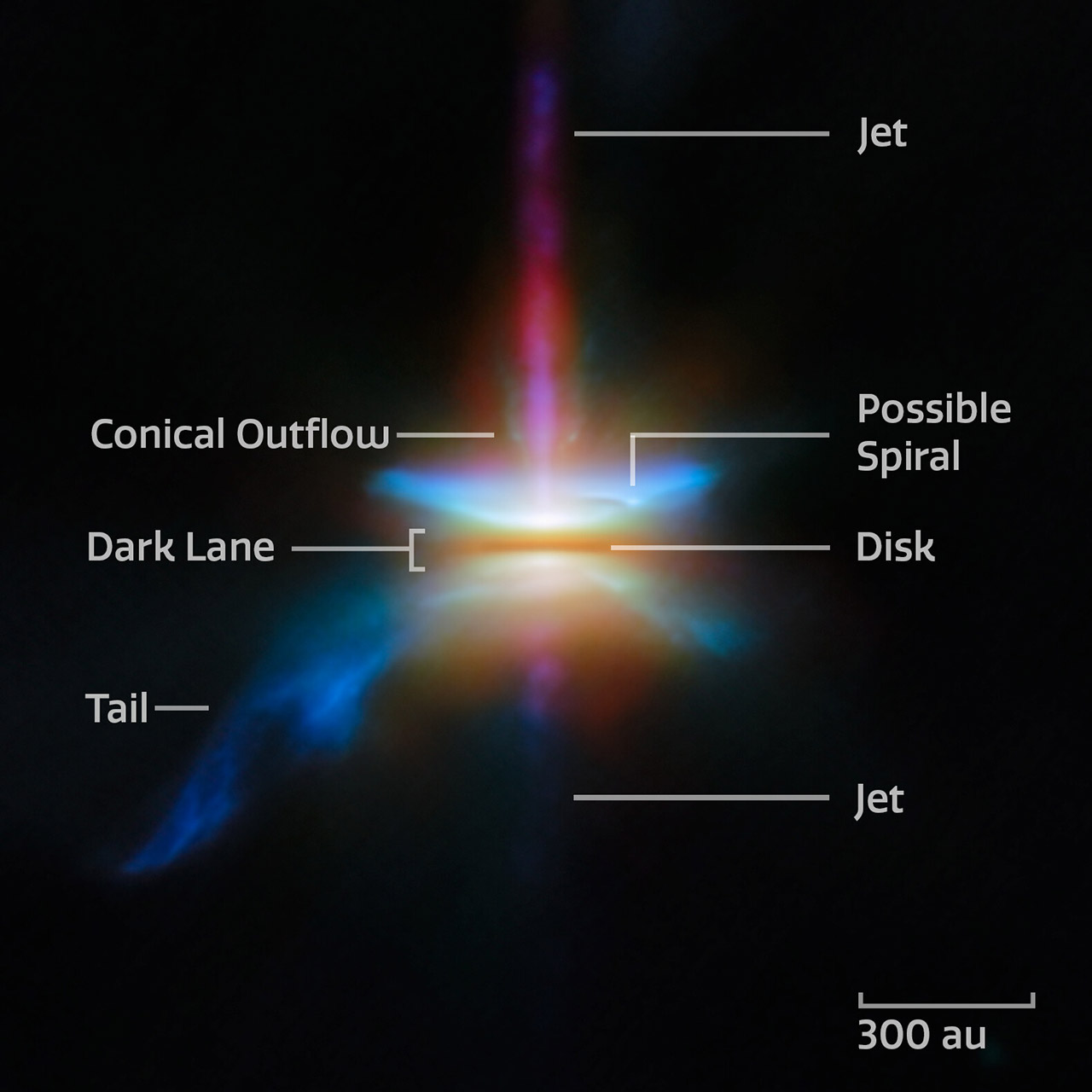
HH 30 depicts this outflowing gas as a narrow jet, while the source star is located on one end of the jet, hidden behind an edge-on protoplanetary disc that the star is illuminating. Discs seen from this view are of particular interest to astronomers, as it helps them study how dust grains drift and settle.
- INSPIRE CURIOSITY – The NASA Lunar Telescope allows your child to see the moon in incredible detail; the perfect gift for girls and boys interested...
- HIGH-QUALITY OPTICAL GLASS AND FINDER SCOPE – This easy-to-use telescope comes with a finder scope, low power, and high-power eyepieces; when used...
- TABLETOP TRIPOD & SMOOTH MOUNT SYSTEM – Use the included tripod to steady your Lunar Telescope for optimal viewing, with a smooth mounting system...
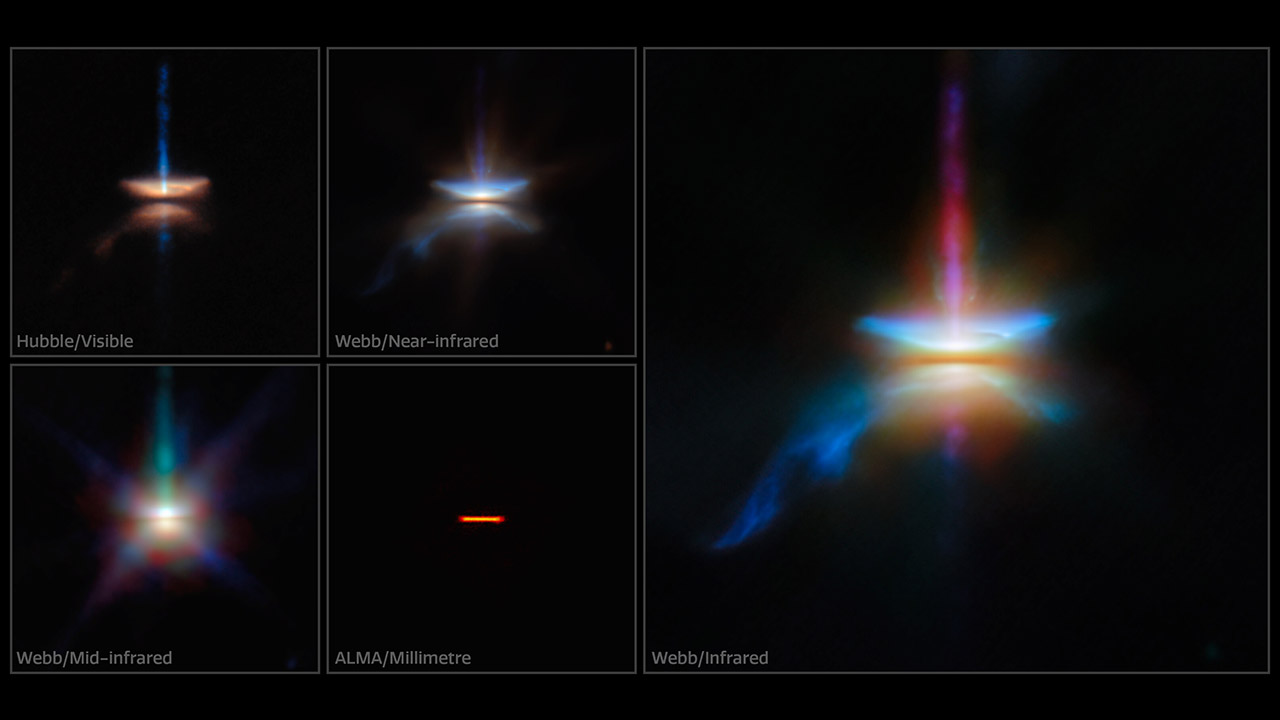
These Webb observations were taken as part of the Webb GO program #2562 (PI F. Ménard, K. Stapelfeldt), which aims to understand how dust evolves in edge-on discs like HH 30. Combined with the keen radio-wavelength eyes of ALMA, these observations show that large dust grains must migrate within the disc and settle in a thin layer,” said the ESA.