
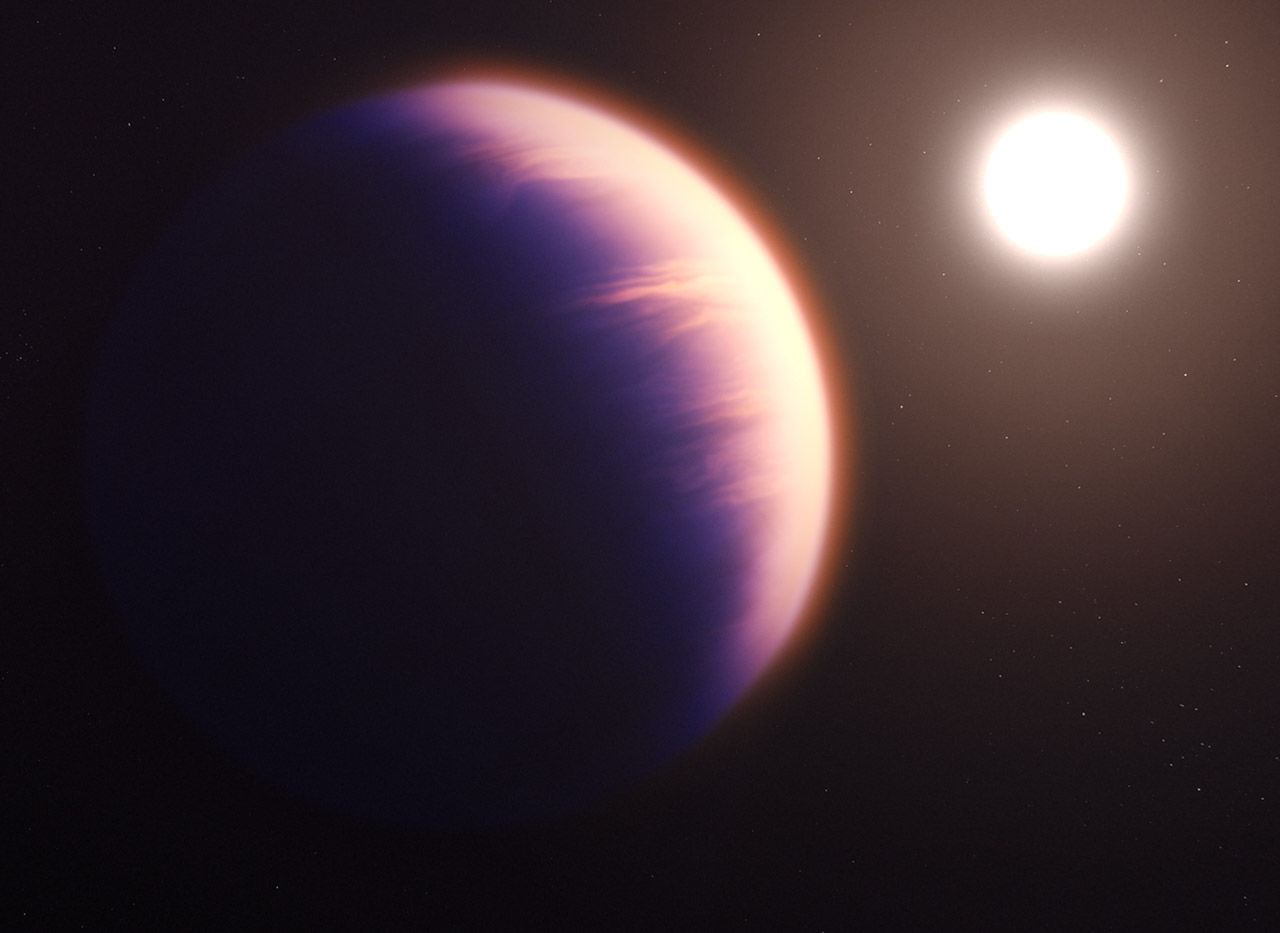

NASA’s James Webb Space Telescope (JWST) has for the very first time discovered clear evidence of carbon dioxide in the atmosphere of an exoplanet located outside the solar system. More specifically, a gas giant planet that orbits Sun-like star 700 light-years from Earth. In the future, JWST may be capable to detecting and measuring carbon dioxide in the thinner atmospheres of smaller rocky planets.
Officially known as WASP-39 b, this extremely hot gas giant has a mass is nearly equal to Saturn and a diameter 1.3 times greater than Jupiter and orbits very close to its star, completing one circuit in a little over four Earth-days. We can’t wait until JWST provides us with a closer look at carbon-rich exoplanets made of diamonds.

- BRIGHT, SHARP VIEWS ANYWHERE: Unlike many beginner telescopes, this quality refractor features fully coated glass lenses and a 70mm aperture for...
- PERFECT FIRST TELESCOPE FOR BEGINNERS: Designed for adults and kids to enjoy together, this beginner-friendly telescope sets up in minutes and...
- EASY NO-TOOL SETUP: No complicated assembly or tools needed. The full-height tripod and telescope tube set up in seconds and pack neatly into the...

As soon as the data appeared on my screen, the whopping carbon dioxide feature grabbed me. It was a special moment, crossing an important threshold in exoplanet sciences,” said Zafar Rustamkulov, a graduate student at Johns Hopkins University and member of the JWST Transiting Exoplanet Community Early Release Science team.


