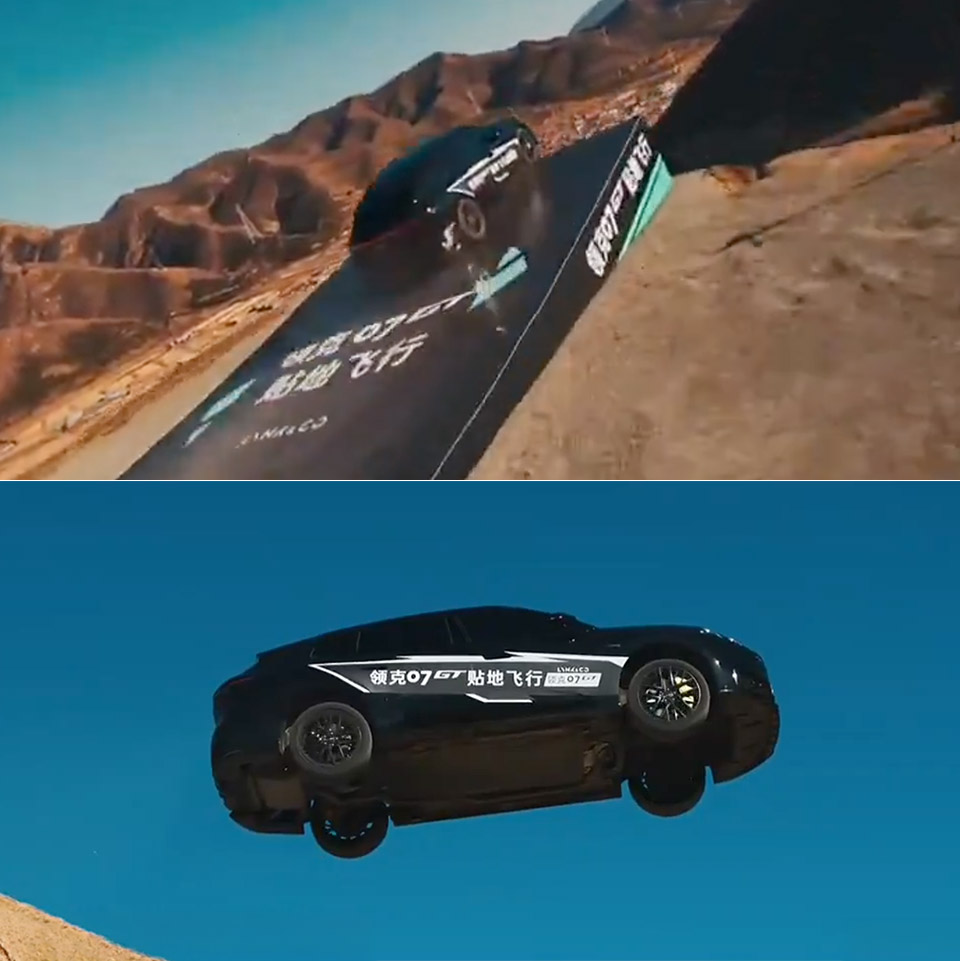
On November 16 in Zhangjiakou, northern China, a production-condition Lynk & Co 07 GT wagon began its sequence at 60 km/h across a 100-meter stretch of continuous corrugated steel road. Suspension and body mounts absorbed the repeated impacts from the washboard surface before the car accelerated toward a ramp at the edge of a steep drop nearly 100 meters high. It reached the ramp at 70 km/h, or about 43 mph, left the ground, and then tumbled six full rotations down the mountainside slope until it came to rest on the valley floor.
In the ongoing battle for most dramatic car safety demo, Lynk & Co has decided to launch a 07 GT off the end of a runway and over a cliff. It went well. https://t.co/oZuglCHP0X
— Inside China Auto (@InsideChinaAuto) November 19, 2026
When the car stopped moving, all four doors swung open exactly as they were intended to. The incident caused no considerable damage to the cabin, and there were no signs of a breach or distortion. The glass ceiling fractured significantly due to the forces involved, however it remained in place rather than shattering inwards as one might expect. During the rollover, the side curtain airbags deployed and remained inflated for more over six seconds, which coincided with the total duration of all impacts. The battery and gasoline tank had no symptoms of leaking, smoke, or fire, which was a huge relief. Of course, the only actual damage was to the exterior and suspension, which were primarily cosmetic.

- Remote Controlled Tesla Cybertruck!
- Includes Car and Remote Control! Track/Accessories Sold Seperately!
- 1:64 Scale Diecast Toy Vehicle
The 07 GT’s A- and B-pillars are made of 2000 MPa hot-formed steel and have a single piece of boron steel door ring. This prevents the automobile from collapsing under roof and side loads, which are similar to those encountered in a rollover. There are energy-absorbing zones in the front and back that are designed to push force away from the passengers’ seats.
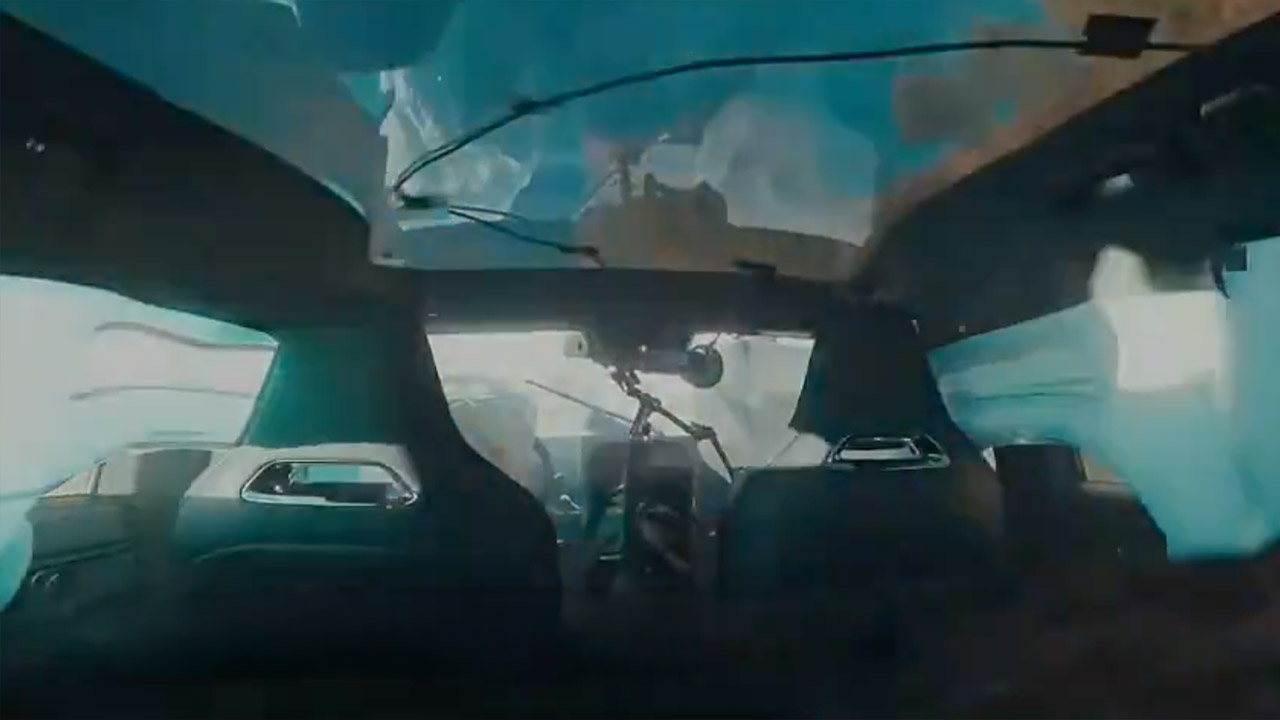
The engine is also engineered such that in the event of a crash, it will slide down and not become trapped inside the cabin. The magnetorheological suspension (which dealt with the earlier corrugated section) adjusts its damping in roughly a millisecond, although to be honest, this test was all about the car’s passive structure and restraints once it was flying. This was just one component of a much larger manufacturing event that subjected six Lynk & Co vehicles through 17 extreme activities, including underbody bashes, pole hits, and a few more rollovers.
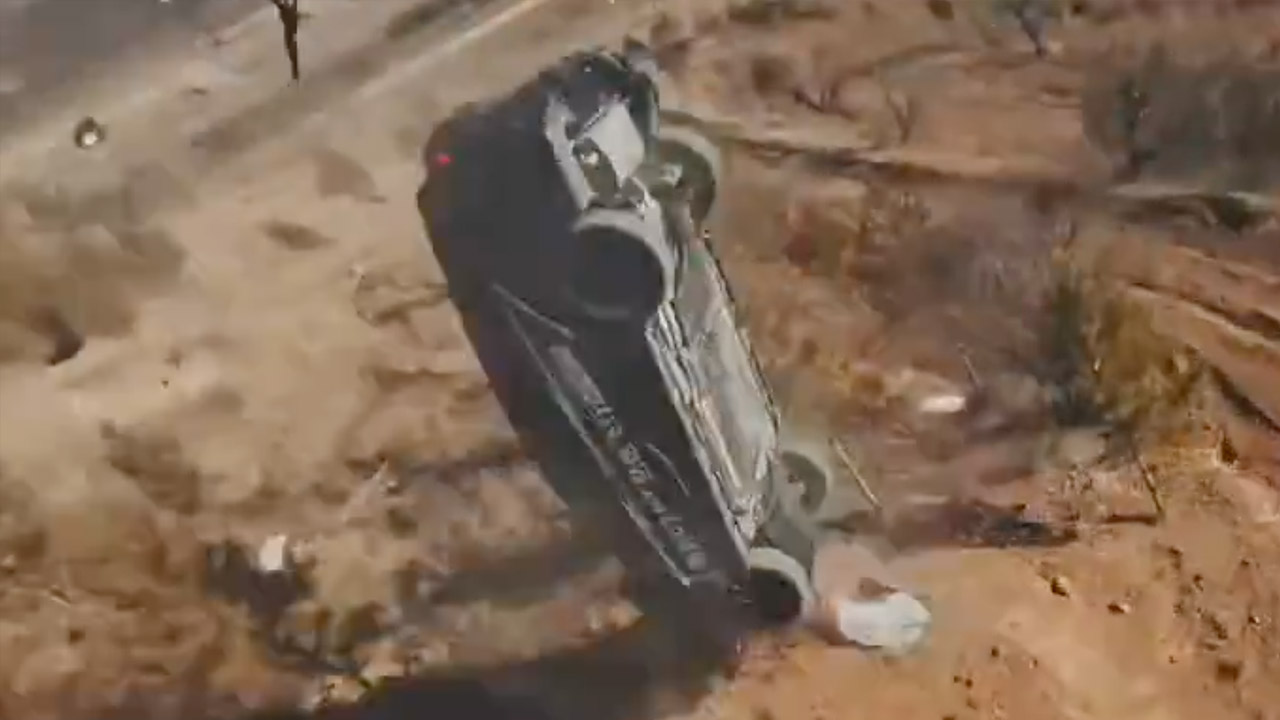
Geely, the parent firm that also owns Volvo, staged the demonstration using actual production cars rather than a specially prepared prototype. Global communications chief Chen Qu later stated on social media that the outcome, aside from Volvo, demonstrated that the firm produces the safest automobiles on the market. The 07 GT will be distributed in Europe via Volvo outlets beginning in 2027. Of course, older versions already received a five-star Euro NCAP rating, but this model has yet to undergo independent lab testing.
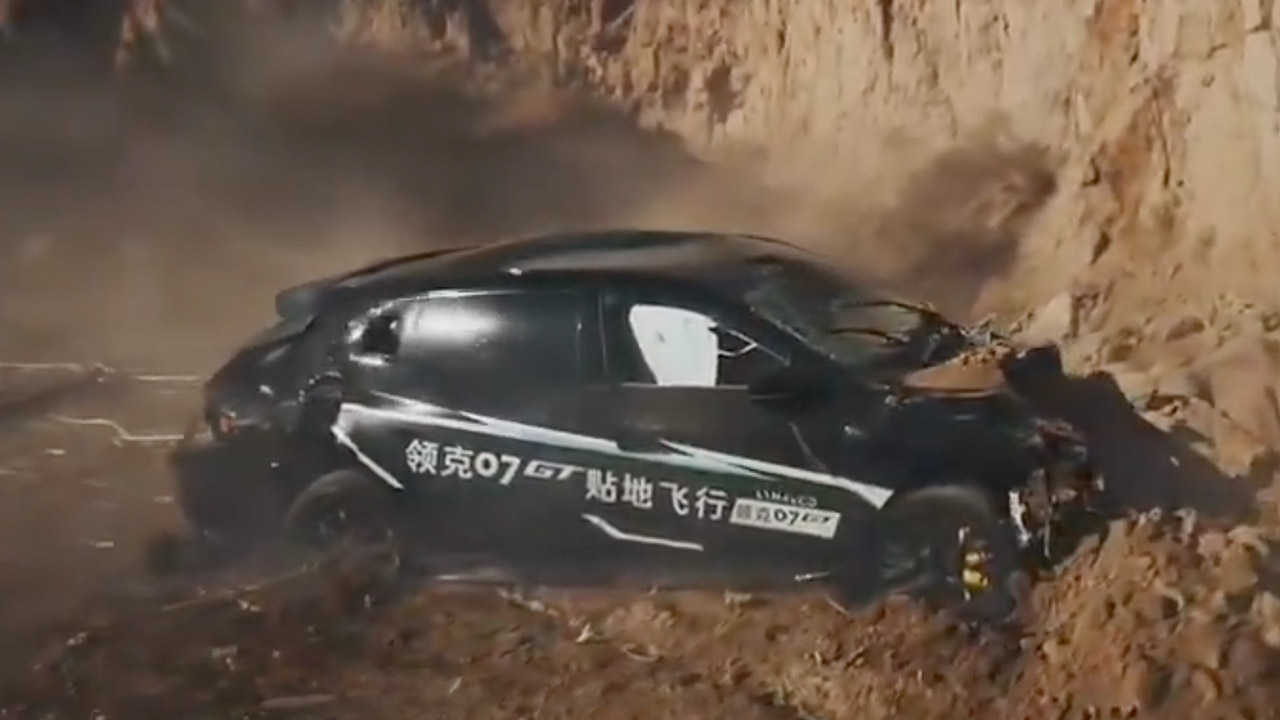
Standard crash protocols put dummy impacts through repeating frontal, side, and pole collisions, all with the same old fixed barrier shapes and safety regulations. One uncontrolled mountainside tumble, no matter how meticulously you film it, will not have the same results or be reproducible by anyone in a regulatory position. The intact doors and consistent airbag pressure demonstrate that the body and restraints remained sturdy despite the precise sequence of loads encountered that day. Whether that translates to all of the many types of accident angles and speeds you may find in the real world is a completely separate question that only third-party testing can assist you answer before purchasers in new markets make their decisions.