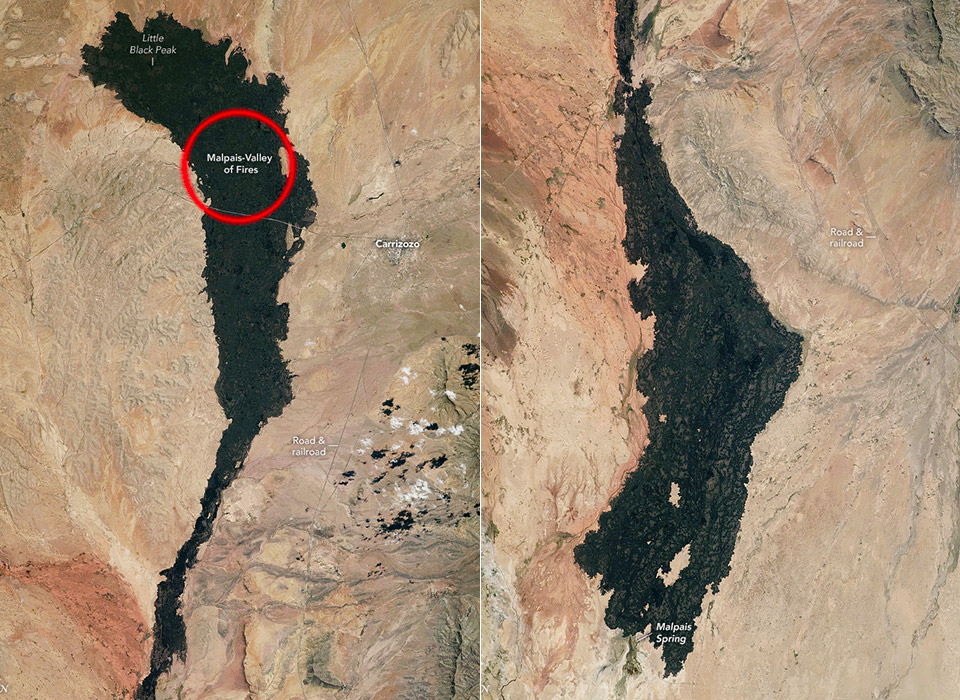

You’ve seen the Tonga volcano eruption from space, now check out what Carrizozo Malpaís, a large basaltic lava flow in central New Mexico, looks like as seen from the ISS. What you’re looking at is Little Black Peak, an inactive cinder cone located at the northern end of Carrizozo Malpaís that erupted approximately 5,000 years ago, and lasted several decades.
This event created the second youngest lava flow in New Mexico and one of the longest flows from the Holocene Epoch. Measuring from the northernmost to southernmost points, it stretches a staggering 50 miles (75 kilometers) across the Chihuahuan Desert. If you look closer at the scattered lighter areas within the flow, you’ll discover different types of lava features, including fissures, collapses, depressions, or bare areas without lava.

- Bundle Includes: 1x DJI Neo 2, 1 x Battery, 1 x DJI Neo 2 Gimbal Protector, Neo 2 Standard Accessories, 1 x Propeller Guard, 1 x Gimbal Bumper Guard.A...
- Lightweight & Portable Design - Weighing just 151g [9] and C0 certified, this compact drone features full-coverage propeller guards for safer...
- Palm Takeoff & Landing [1], Gesture Control [2] - Enjoy easy palm takeoff and landing, plus intuitive gesture controls for hands-free operation and...

Desert vegetation like prickly pear cactus, perennial flowers, and juniper trees can grow within these features. A road bisects the upper region of the lava flow, and a railway connects to the city of Carrizozo. Malpaís Spring extends from the south side of the flow, just north of the White Sands Missile Range testing site,” said NASA.