
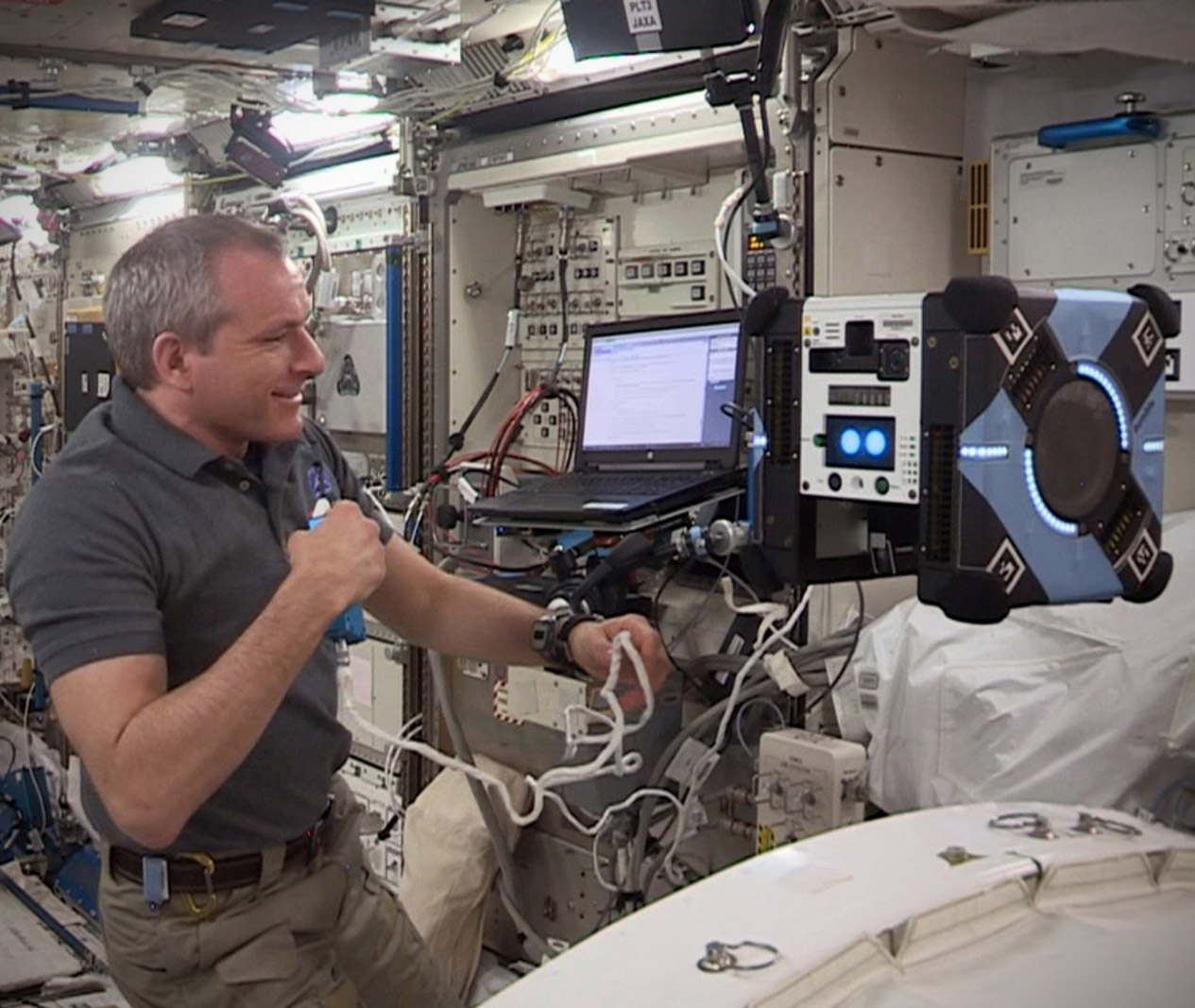

NASA’s Astrobee system consists of three cubed-shaped robots, software and a docking station used for recharging. They use electric fans as a propulsion system that allows them to fly freely through the micro-gravity environment of the International Space Station. Cameras and sensors help them “see” and navigate their surroundings, while a perching arm enables them to grasp station handrails in order to conserve energy or to grab and hold items. One of the robots, named “Bumble,” flew on its own for the first time on June 14th just to test basic movements like flying forward and rotating.
In the future, Bumble will perform increasingly complex moves to show that it’s ready for service. There’s another robot (Honey) already working on the ISS, while a third robot (Queen) is expected to launch in July. NASA’s ultimate goal is for robots like the Astrobee series to serve as custodians. They’ll be there to perform upkeep and assistance so that astronauts can focus on their missions instead of monotonous tasks.

- Feed a passion for science and technology – Kids can learn more about the challenges of space exploration with this LEGO Technic NASA Mars Rover...
- Conduct a test flight – This advanced building kit for kids ages 10 and up includes a buildable toy version of NASA’s Ingenuity helicopter, which...
- AR brings the mission to life – The accompanying augmented reality app experience lets kids dive into the details of the rover and its mission

