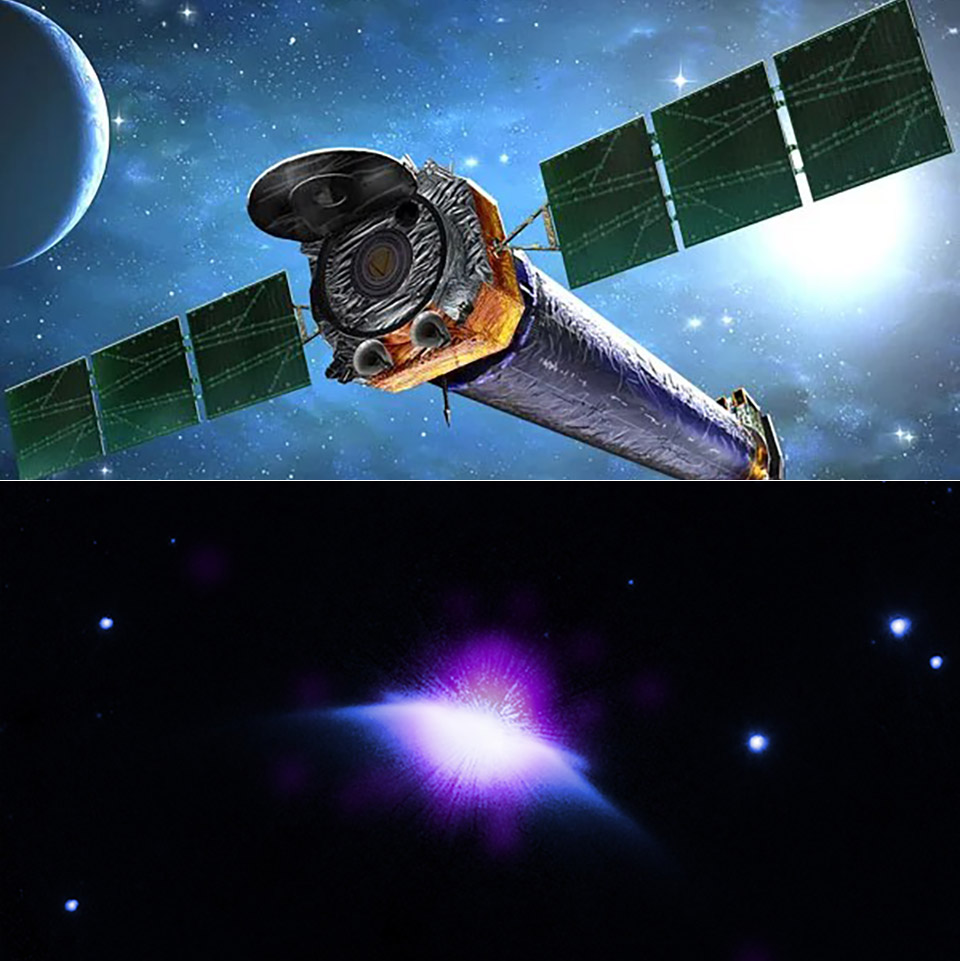
Astronomers pointed NASA’s Chandra X-ray Observatory at HD 61005, a star in the Puppis constellation that is approximately 120 light-years away. This star has roughly the same weight and temperature as our own Sun, but it is approximately 100 million years younger, a billion years or so younger than the Sun’s current age of 5 billion years. As one would anticipate from a young star, the surface of HD 61005 emits a far larger flow of charged particles; its wind is around three times faster and 25 times denser than our own solar wind.
Chandra detected the wind churning out an astrosphere, a gigantic bubble that encases the star. The bubble arises when the star wind collides with the cooler gas and dust in the surrounding interstellar medium, warming it all up and producing X-ray emissions that Chandra can detect. The bubble’s diameter is 200 times that of the distance between Earth and the Sun, making it a huge structure. There’s a curved bow shock at the front, similar to a wave swelling up ahead of a boat as the star advances across space.

- BUILD AN OFFICIAL NASA ROCKET – Kids prepare to explore outer space with the LEGO Technic NASA Artemis Space Launch System Rocket (42221) building...
- 3-STAGE ROCKET SEPARATION – Young builders can turn the hand crank to watch the rocket separate in 3 distinct stages: solid rocket boosters, core...
- STEM BUILDING TOY FOR KIDS – This educational rocket kit was created in collaboration with NASA and ESA to showcase the authentic system that will...
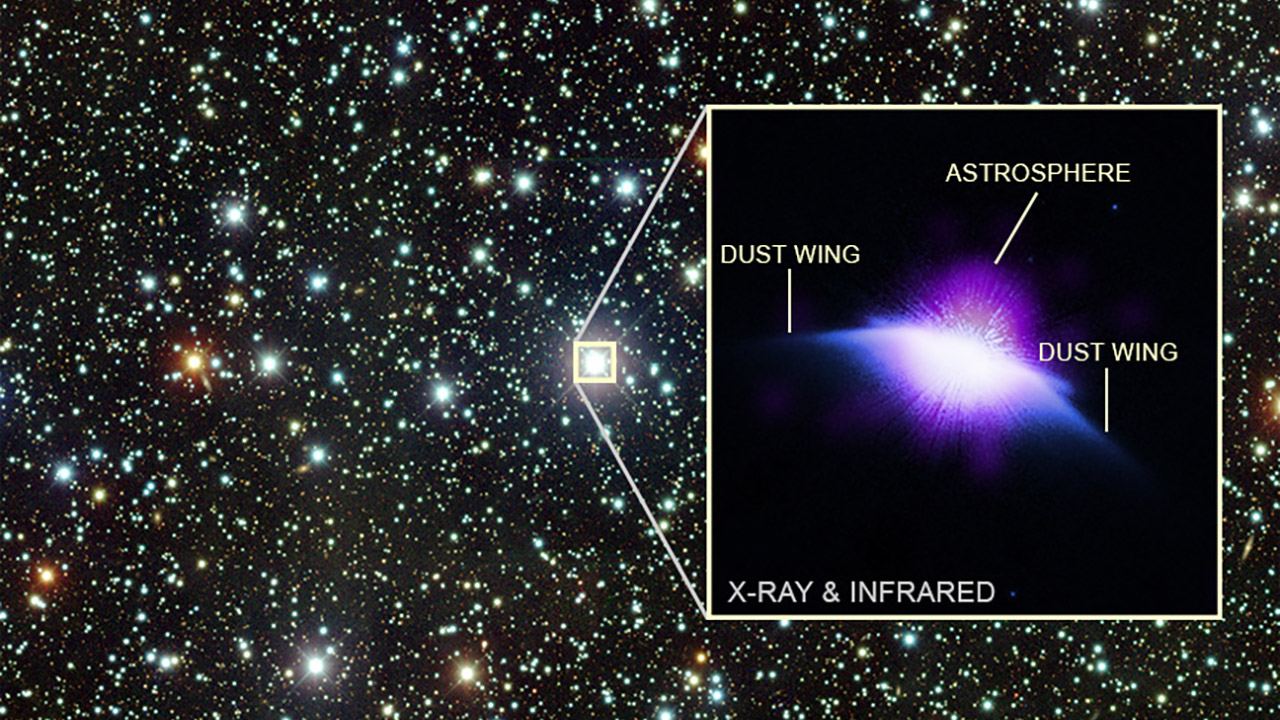
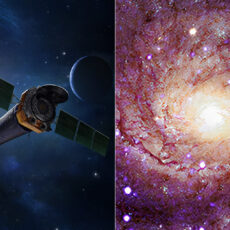
The images show Chandra’s X-ray data in purple and the Hubble Space Telescope’s infrared views in blue and white. The star is portrayed as a bright point with a burning purple aura surrounding it, representing the heated gas that fills the astrosphere. The star is dubbed “the Moth” because of the wedge-shaped trail of dust it leaves behind. This is because previous infrared scans revealed wing-like structures in the system’s debris disk.
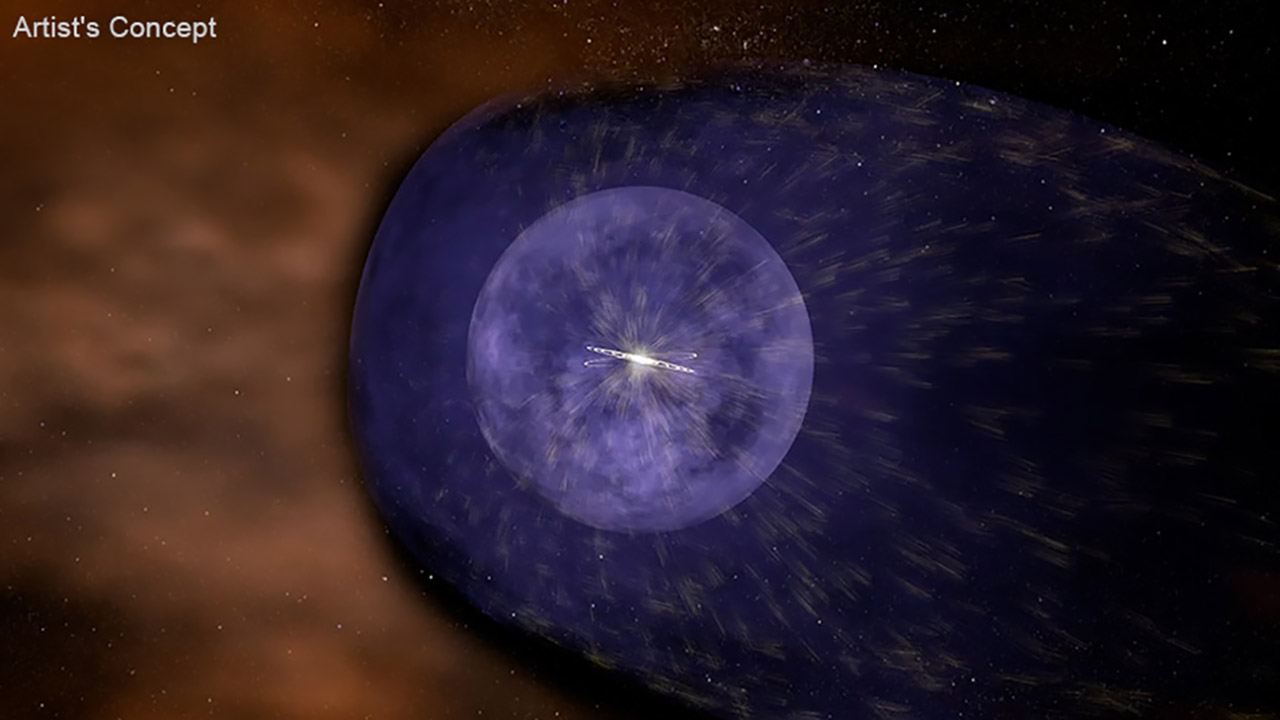
This is the first time astronomers have successfully imaged an astrosphere around a star nearly identical to the Sun. We’ve seen these things before around hotter, more massive stars in different locations, but HD 61005 provides us a good peek at what our own heliosphere (the protective bubble around the Sun) probably looked like a long time ago.
HD 61005 is traveling through a region where the interstellar medium is packed at a density that is approximately 1,000 times that of our own Sun. That is what makes the astrosphere visible to us in X-rays. Initially, we used a one-hour Chandra exposure in 2014, which suggested some protracted emissions, but we followed it up with a 19-hour deeper study in 2021, which confirmed the shape and breadth of the bubble.