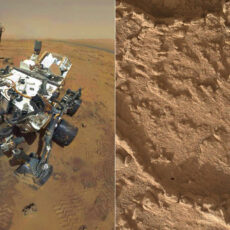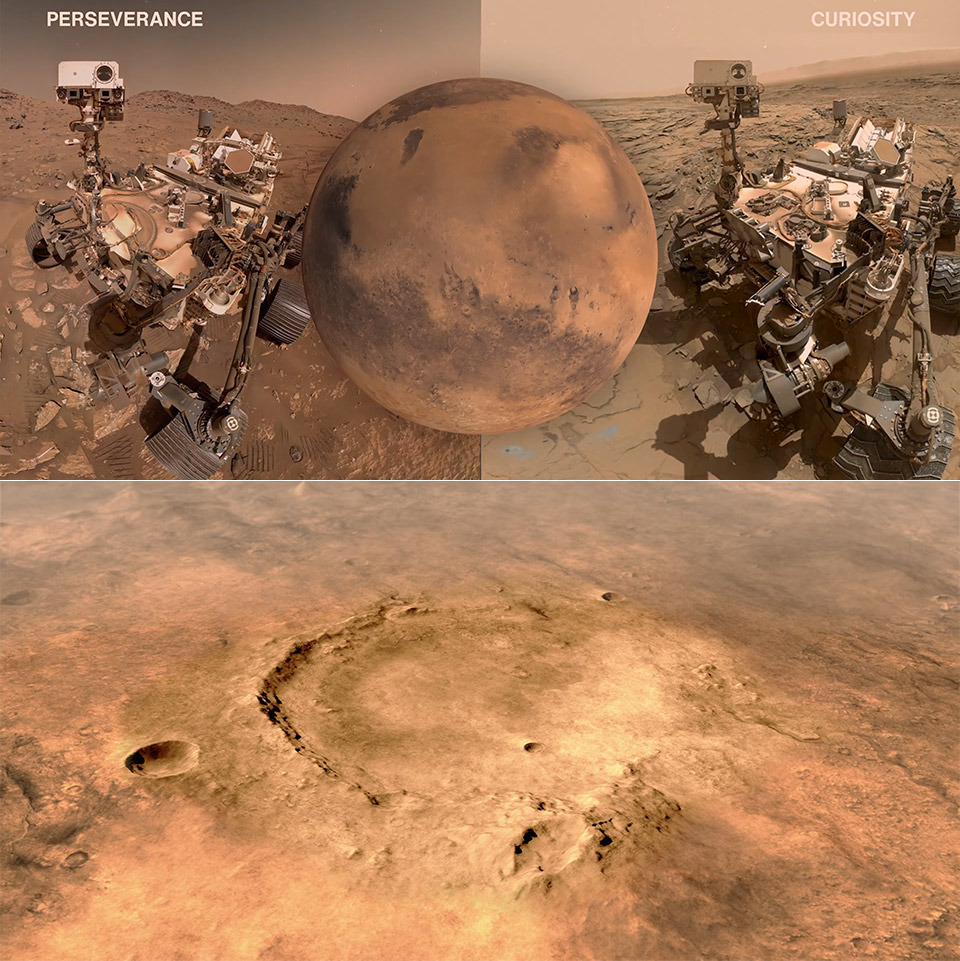
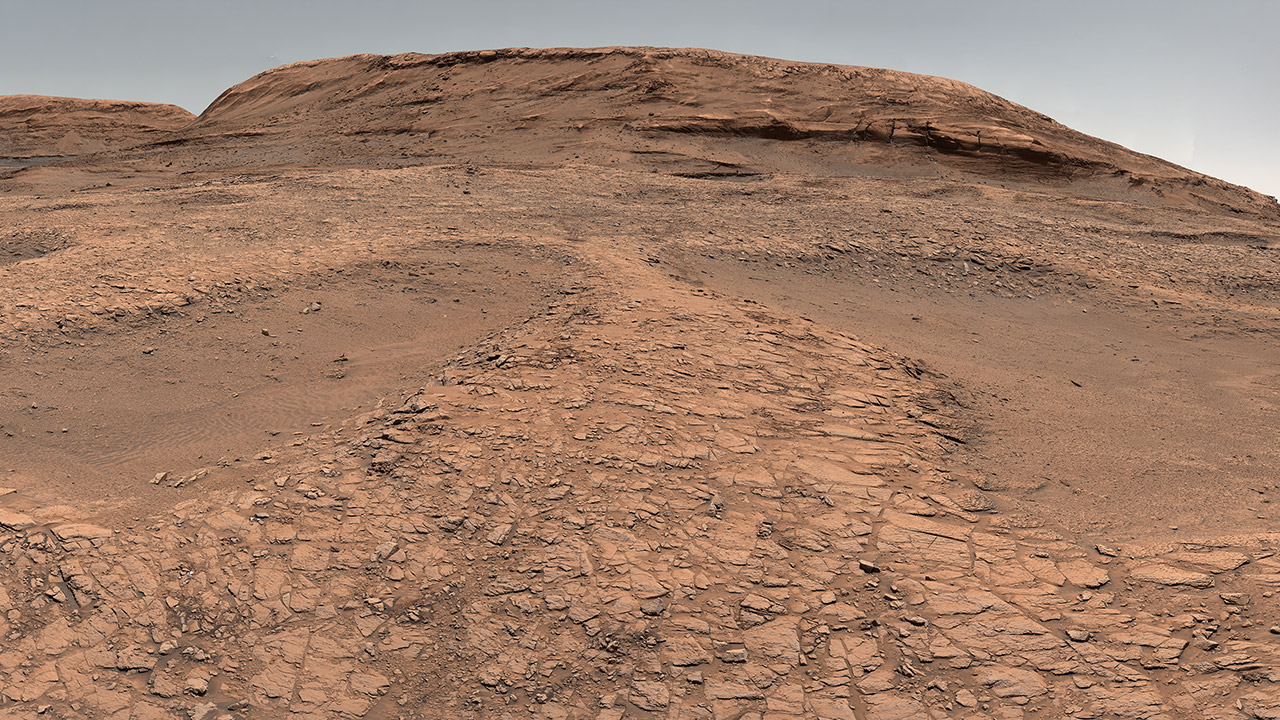
NASA’s Curiosity rover captured some incredible 360-degree images from the foothills of Mount Sharp deep inside Gale Crater. It was all stitched together from 1,031 separate photos taken between November 9th and December 7th, 2025. What a sight that is, as the dirt out there forms low ridges resembling massive spiderwebs. Water used to seep through fractures in the bedrock, leaving minerals that are significantly more resistant to erosion than the surrounding rocks.
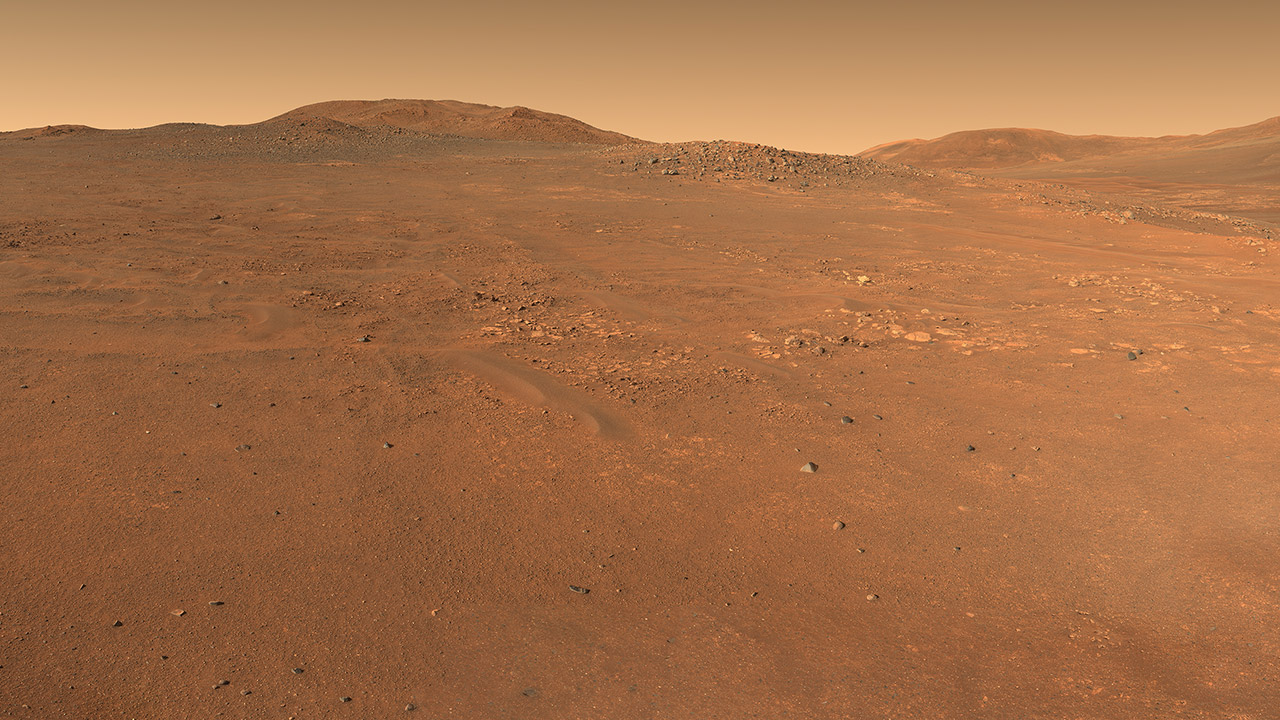
Perseverance joined in a little later, taking its own 360-degree photo shoot from a location named Lac de Charmes on the rim of Jezero Crater. That job requires 980 photos taken between December 18th, 2025 and January 25th, 2026. What it discovered, and what a treat to observe, are the ancient rock strata exposed at the crater’s edge, which are among the oldest in the solar system. In fact, both rovers are 2,345 miles apart, but they have a bird’s-eye perspective of billions of years of Martian history.

- Feed a passion for science and technology – Kids can learn more about the challenges of space exploration with this LEGO Technic NASA Mars Rover...
- Conduct a test flight – This advanced building kit for kids ages 10 and up includes a buildable toy version of NASA’s Ingenuity helicopter, which...
- AR brings the mission to life – The accompanying augmented reality app experience lets kids dive into the details of the rover and its mission
Curiosity arrived at Gale Crater in 2012 and has since been climbing Mount Sharp, uncovering a new chapter in the planet’s story with each layer it covers. Meanwhile, Perseverance landed at Jezero Crater in 2021 and is now on a journey that will lead it to much older ground. One rover is driving through younger and younger rock, while the other is going further into history books. The central question in all of this is whether Mars ever had conditions conducive to life.
As it turns out, the engineers who put Perseverance and Curiosity together designed them to be roughly the same size and form as a small SUV. Perseverance weighs 1,050 kg, compared to Curiosity’s 899, because to more gear and a somewhat larger body. Both rovers use the same basic engine, a radioisotope thermoelectric generator that transforms heat from plutonium decay into consistent electricity to keep them going through dust storms and long winters.
Curiosity has its own drill for grinding rock into a fine powder for the onboard lab to examine; instruments known as SAM and CheMin heat the powder and separate the minerals before sniffing for any gases that may have been emitted from those ancient samples. Scientists discovered some amazing things throughout their research, including the fact that Gale Crater formerly had a lake with the perfect chemistry and nutrition for small bacteria. They’ve also discovered organic molecules in a variety of locations, including a couple that have only recently become known.
Perseverance is taking a different approach to its approach. It is performing a solid core extraction with a twist, as it cuts out cores about the size of a piece of chalk and seals each one inside a metal tube, 23 of which are currently on the rover, and a backup stash of 10 are sitting on the surface in a depot where they can be picked up on future missions for a more in-depth analysis back on Earth, using much more advanced equipment than the rover is carrying. Perseverance also has X-ray and Raman spectrometers, which allow it to scan rock surfaces for chemical traces that may indicate prior life without having to tear them apart.
Both rovers are still going strong, with Curiosity having traveled 36.86 kilometers in more than 4,883 Martian days and showing no indications of slowing down anytime soon. Meanwhile, Perseverance has covered 41.57 kilometers in just under 1,837 sols and has lately earned the useful ability to identify its own location on orbital maps without having to sit about waiting for orders from Earth.