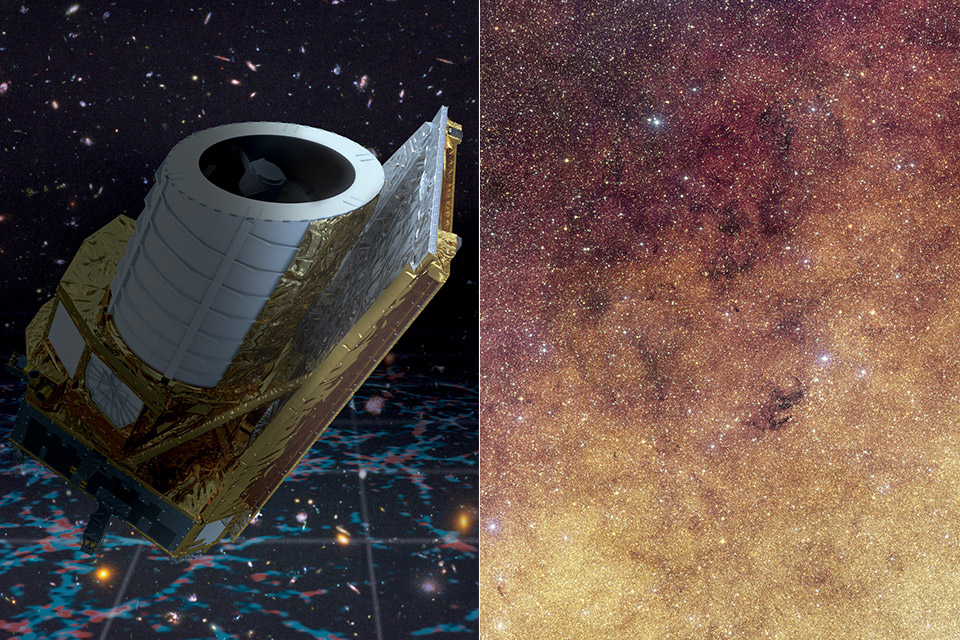
Astronomers just received the largest and sharpest visible-light portrait ever assembled of the Milky Way’s central bulge. The European Space Agency’s Euclid telescope produced this six-gigapixel mosaic during a single day of observations in March 2025, packing more than sixty million stars into one frame along with dark dust clouds and pockets where new stars are forming.
The image spans a vast expanse of sky that most space telescopes cannot capture in a single glance. To get the complete image, 9 separate snaps from Euclid’s camera were stitched together, with each section covering more ground than the entire Moon from Earth. The original data was black and white, but colors were added later using similar observations from the Canada France Hawaii Telescope, which greatly improved the identification of different types of stars and gas.

- Milky Way wall art décor – Create a large Milky Way Galaxy piece of art with this LEGO building kit for adults
- LEGO 3D-effect wall décor – A Milky Way Galaxy artwork created from 3,091 layered LEGO bricks and pieces to produce a 3D effect with depth and...
- Packed with features – Wall art includes some of the Milky Way’s most famous stars, clusters and other spectacles, including Trappist-1, The...
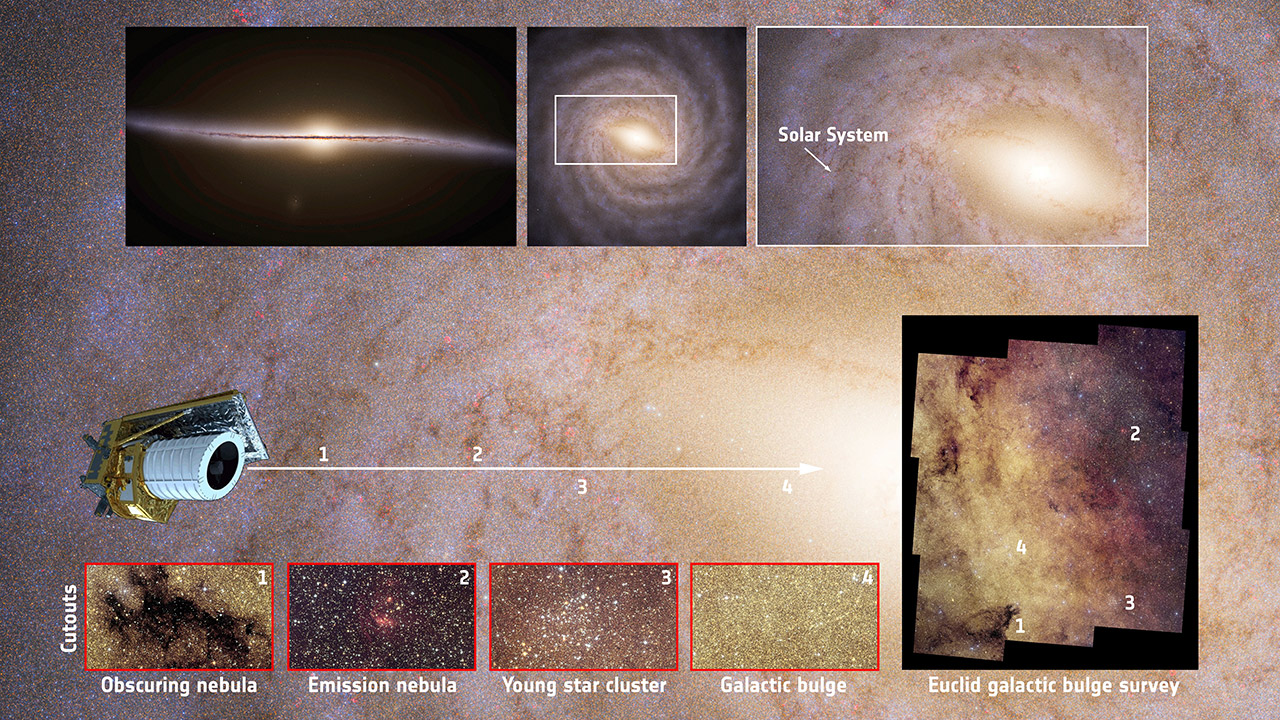
The middle of the frame is covered in golden yellow stars that are so tightly packed that it resembles a sparkling sprinkle of glitter on sand. The galactic bulge, a massive center structure containing 8 billion stars, is primarily composed of older, colder stars. Bits and pieces of deeper colors and channels cut through everything like black ink blots or wisps of smoke. These are dense clouds of dust and gas soaking up the light from the stars behind them.
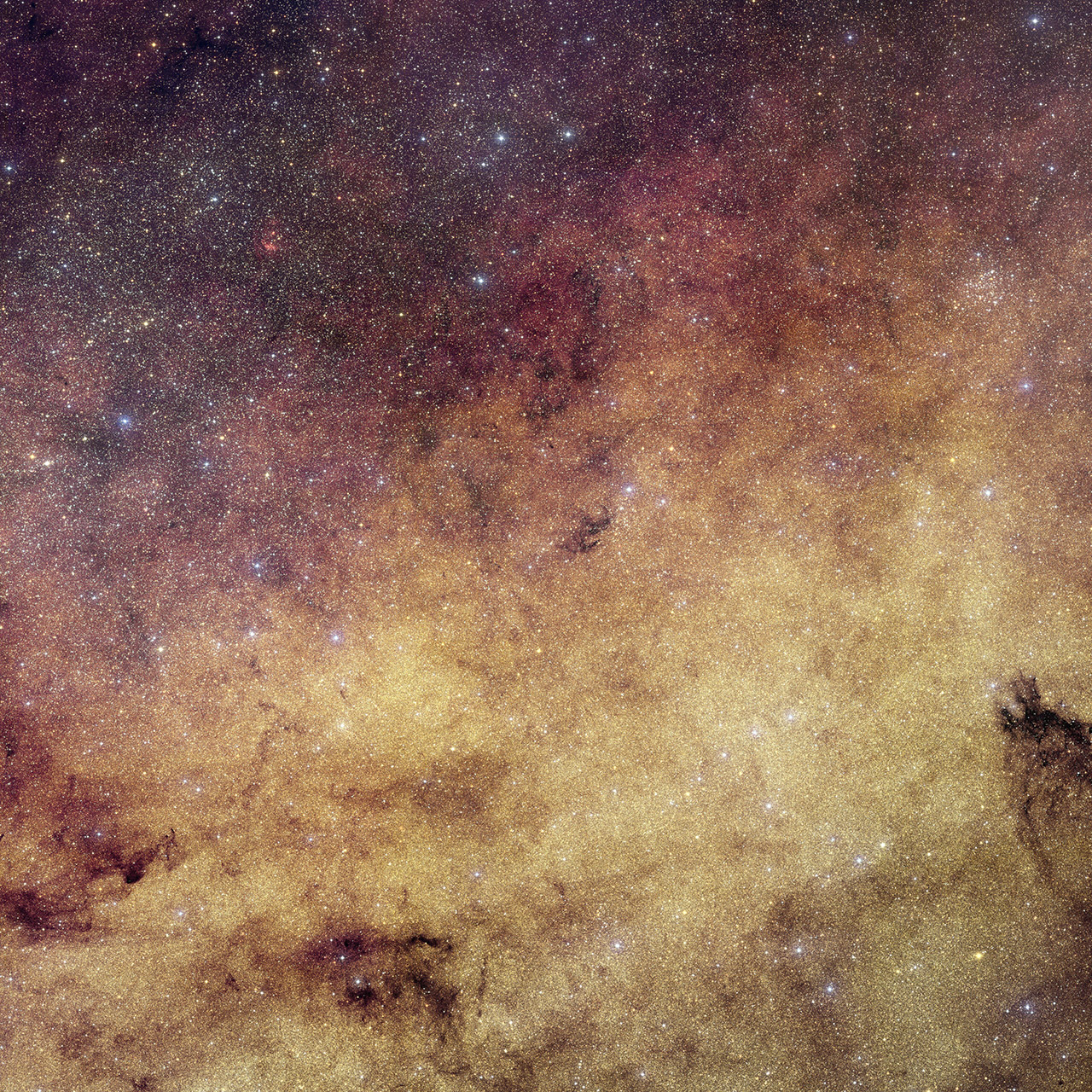
As you move up the image, the color palette changes slightly, with the reds and purples becoming more stronger and some dazzling blue lights standing out against a faint red glow. These blue lights are actually young, enormous stars that recently formed in one of the Milky Way’s spiral arms. Their light ionises the hydrogen gas around them, resulting in the red glow seen in spots. Everything is visible from a distance of approximately 26 000 light years away, and you’d have to go through a lot of intervening material in our galaxy’s disk to see it.
The amount of detail here is incredible, especially given how bright and packed the galactic center is generally, which swamps the detectors with all that brightness and dust, but Euclid’s built-in sharpness allows it to separate individual stars even in the most congested locations. The resolution is equivalent to the Hubble camera, but it can capture 270 times more sky in each frame.
A ground-based telescope like Keck would take a whopping 2,000 hours to cover the same ground with the same level of quality. To be honest, the true value of this shot stems from using it as a baseline for future observations. Astronomers will be able to compare it to later images to discover microlensing events, which occur when the gravity of a foreground star and any planets it may have temporarily increases the light from a background star.
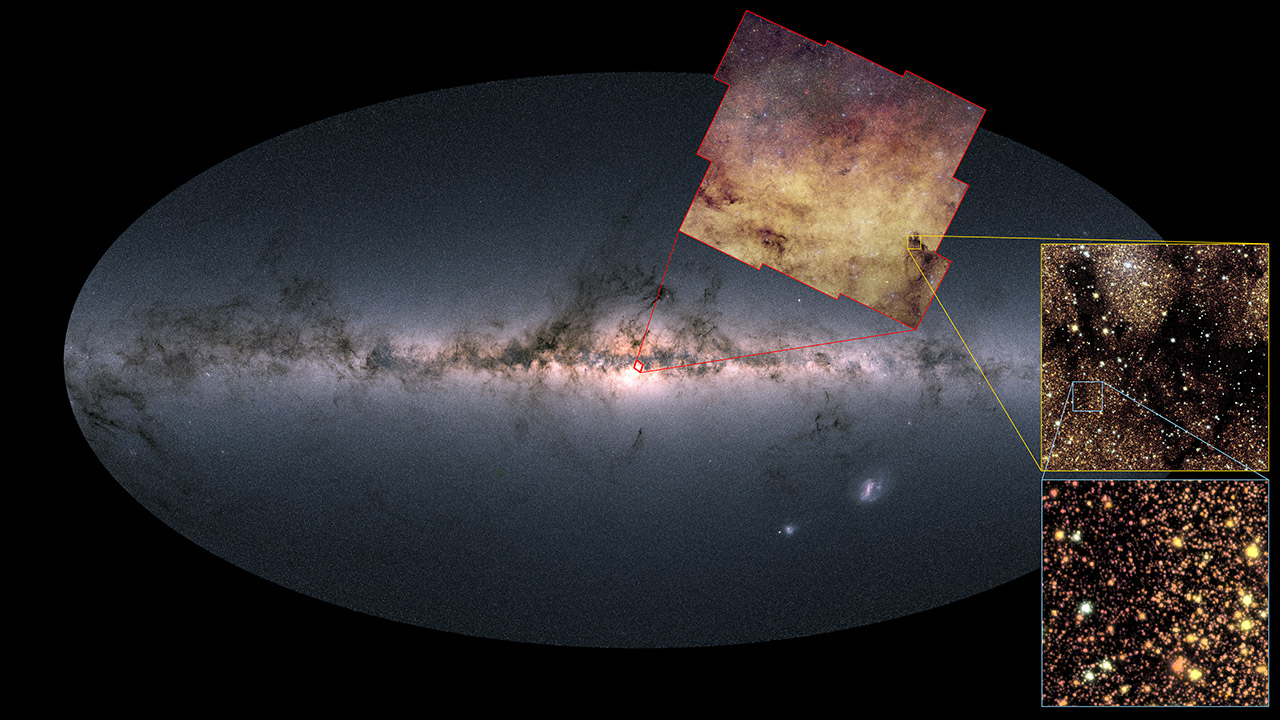
The way this brightens allows you to tell if a planet exists, and repeating the process allows you to compute the planet’s mass. Over the last 20 years, astronomers have discovered over 300 exoplanets near the galactic core. Euclid’s map of the stars presently contains 51 known planets, and it will aid in the finding of many more, as well as determining the masses of planets that have already been detected, such as one icy globe that has been present for the past 20 years.