DEEP Robotics built its latest firefighting tool around the X30 quadruped platform and gave it a high-pressure pulse water cannon. The result lets crews attack flames in places too unstable or toxic for people to enter right away. Instead of rolling in with heavy hoses and facing immediate danger, operators stay back and direct precise bursts of water or foam while the robot handles the close work.
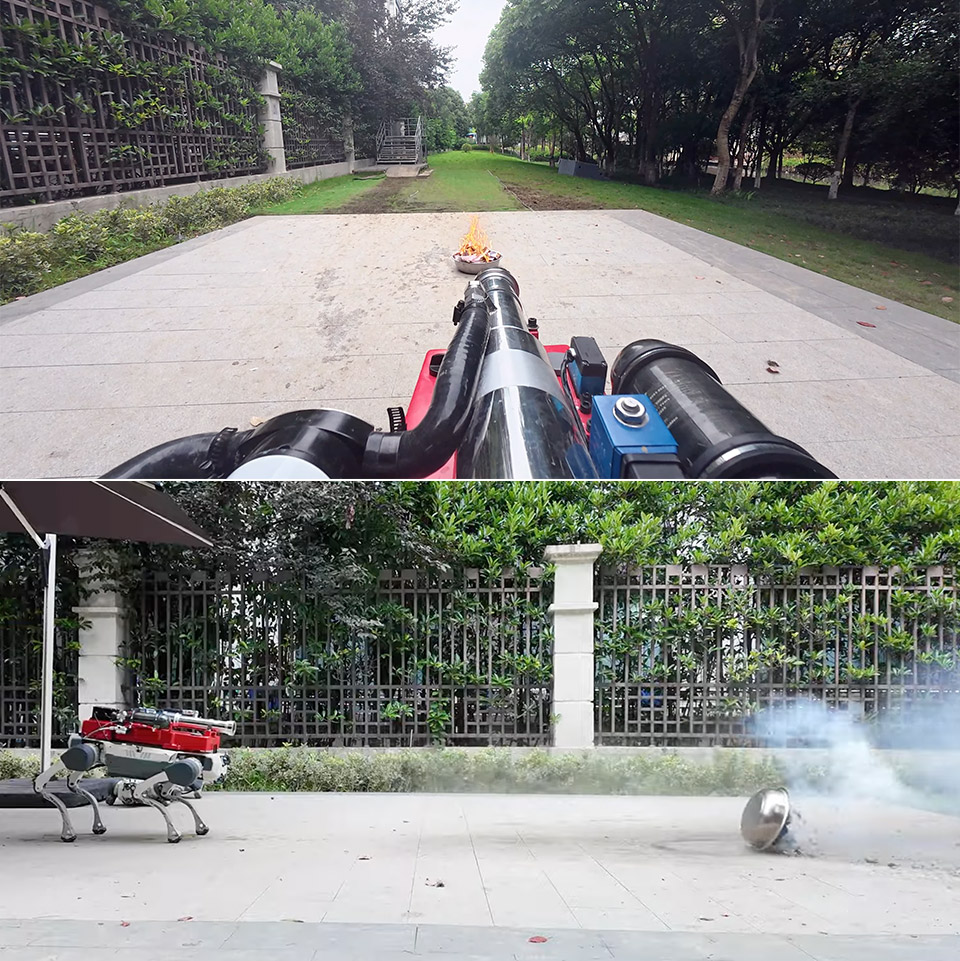
Recent demo footage has surfaced, showing the machine moving across an outdoor patio, getting into position, and then releasing a thick cloud of fine suppressant on a small controlled fire. The spray mist spreads quickly and visibly slows the flames without interfering with people close. The same capability applies to larger industrial situations where smoke, heat, and structural dangers make direct human entrance time-consuming and risky.

- 【Next-Generation Robotic Companion: Meet the Unitree Go2 Robotic Dog】 The Unitree Go2 X is a powerful and intelligent quadruped robot designed for...
- 【Intelligent Navigation with 3D LiDAR & Obstacle Avoidance】 Featuring ultra-wide 3D LiDAR with 360°x96° perception, the Go2 X detects obstacles...
- 【High-Definition Vision & Seamless App Integration】 A front HD camera streams 1280x720 video to the app. Control the robot, view real-time data...
The X30 base is already pretty tough when it comes to tackling rough terrain. It can easily ascend industrial stairs with 45-degree slopes, step over obstacles taller than 20 centimeters, and maintain balance on slippery metal grating, loose gravel, wet surfaces, and muddy factory floors. That important because a fire scene may contain collapsed scaffolding, spilled materials, or flooded areas, and this robot is equipped to handle them. The firefighting version carries the additional weight of the cannon system, yet it travels with the same smooth stability.
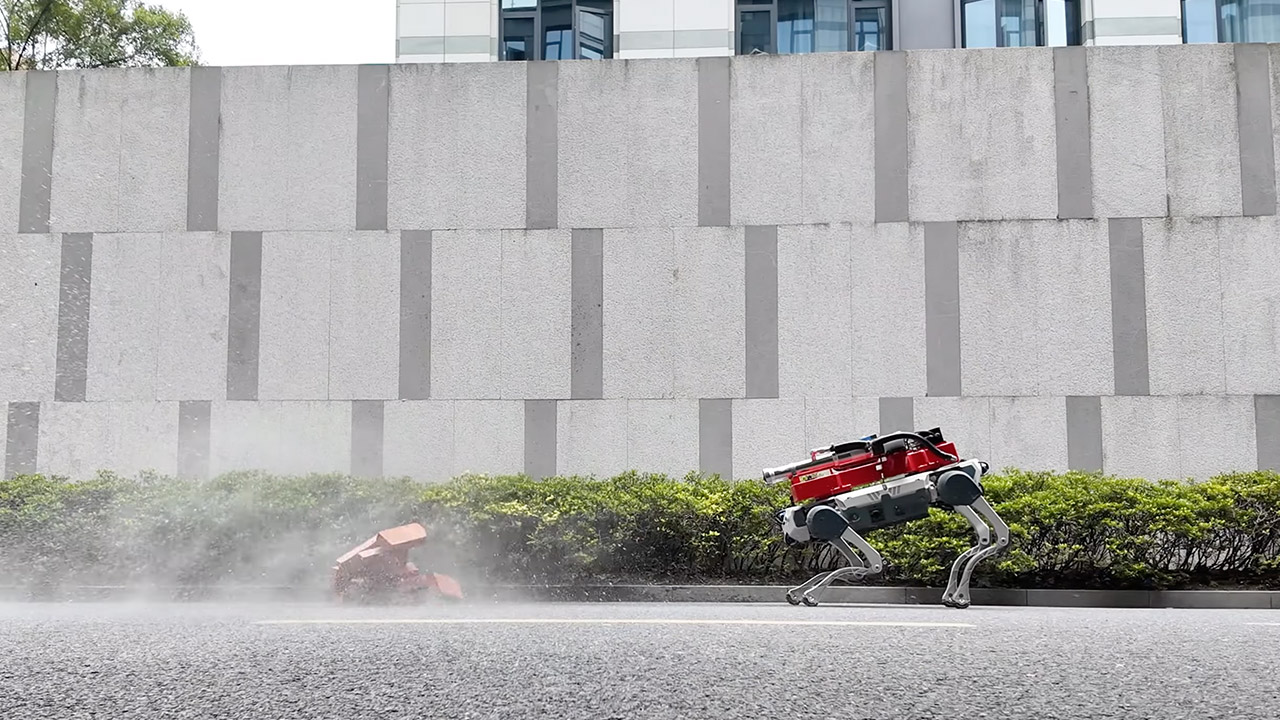
Even when visibility is reduced to zero, the sensors provide the operator with a pretty clear view. The LiDAR generates 3D maps in real time, while the depth cameras, infrared imaging, and high-resolution vision sensors all work together to allow the robot to navigate, detect heat sources, and avoid new threats as conditions change. Dual-spectrum cameras cut straight through the smoke, and gas detection offers an extra layer of protection against chemical or hazardous-material fires. All data is sent back to the command point via low-latency lines, and in some cases, drones or other robots provide additional viewpoints.
The power comes from batteries that last longer than previous generations, ranging from 2.5 to 4 hours depending on the load and how much it moves. The system has a quick-release feature that allows staff to swap out the pack in seconds without the use of any equipment, allowing them to keep the operation rolling even when one unit is required to remain stationary for an extended period. The entire system has an IP67 classification, so it can withstand dust and a little water spray without shutting down.
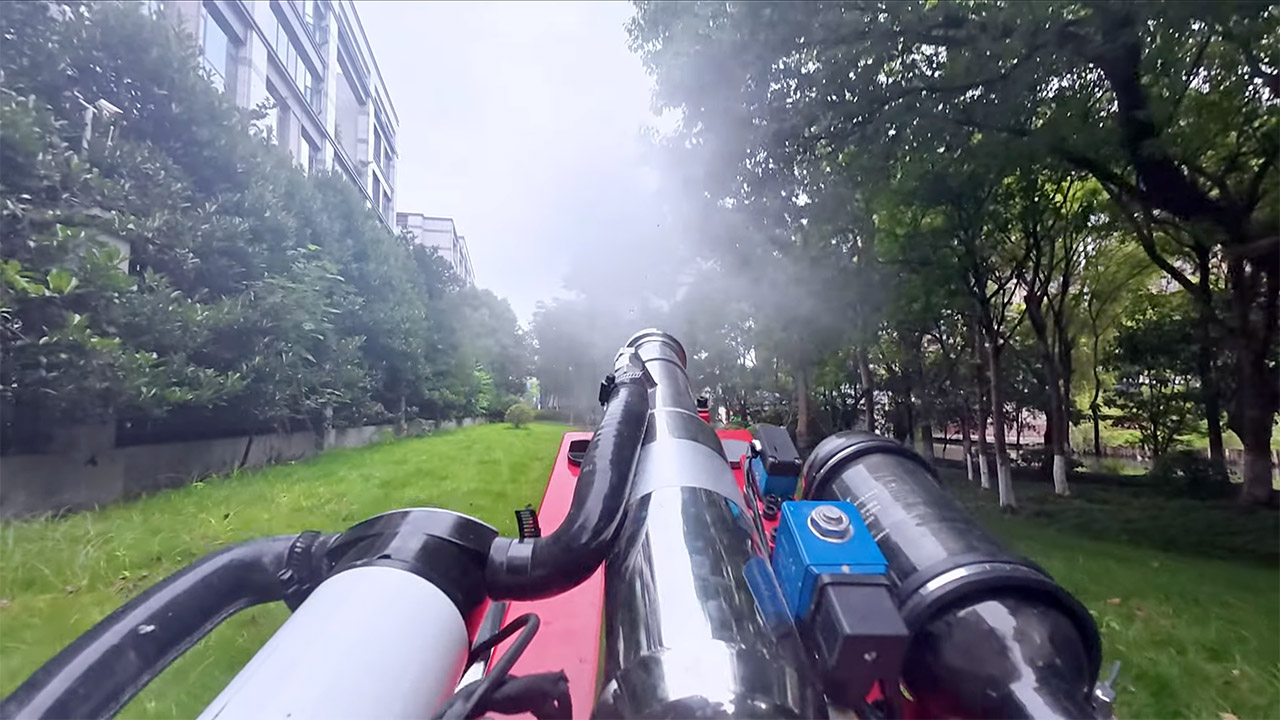
The pulse delivery method on the cannon itself represents the most significant departure from traditional firefighting gear. It doesn’t employ a continuous stream that soaks everything in its path; instead, it produces quick, intense bursts or a fine micron-level mist. According to technical specifications, a single liter of water can produce almost 1700 liters of fast-moving pulsed mist. This fine substance absorbs heat quickly, gets between the fire and the oxygen surrounding it, and can penetrate into narrow spaces or around barriers far better than a solid jet. The operator may alter the patterns and angle remotely, allowing them to tailor the spray to the unique situation, whether it’s a wide-area suppression or a targeted hit on a particular hotspot.
The wireless cannon configuration has a range of 60 meters, with some setups providing coverage of up to 120 degrees. This keeps the robot and its operators away from the “death zone,” which is where temperatures and structural collapse hazards are highest. There does appear to be a linked hose option in certain demos, which allows them to maintain a continuous flow from a hydrant or a tender while the robot moves forward. In each case, the goal is to provide effective suppression while keeping the public at a safe distance.